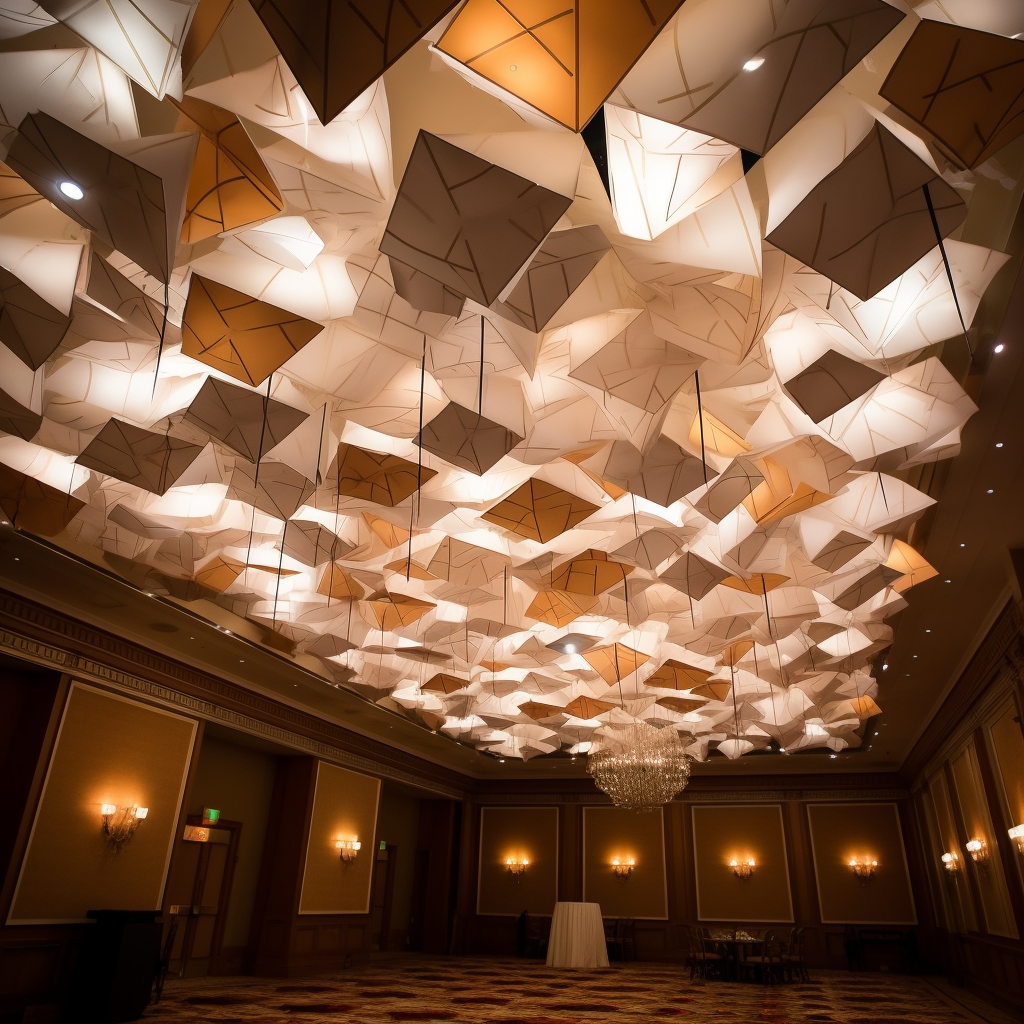
In the Heart of Hangzhou: Clubmed’s Urban Oasis, a New Resort by dwp
Insights Blog
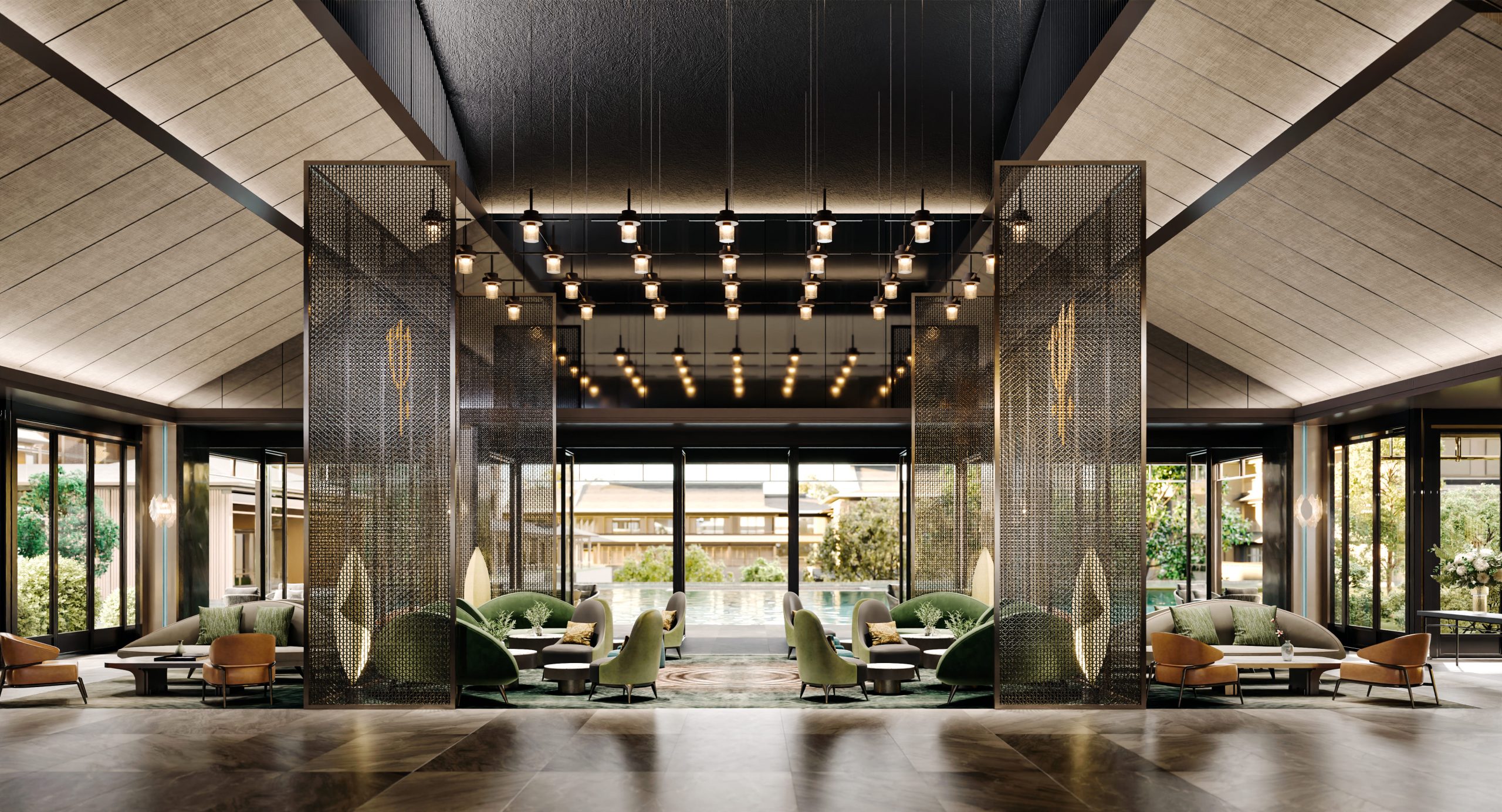
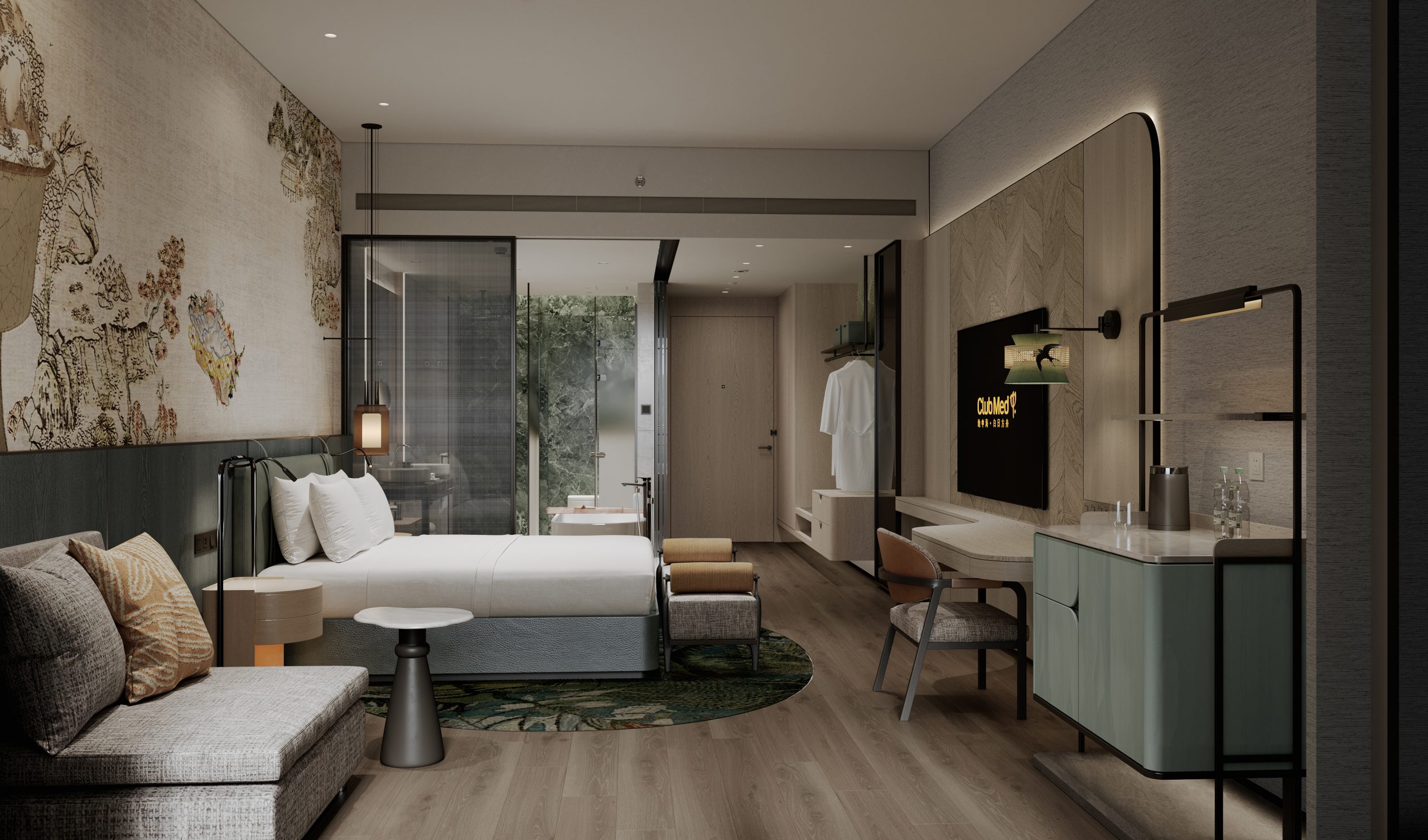
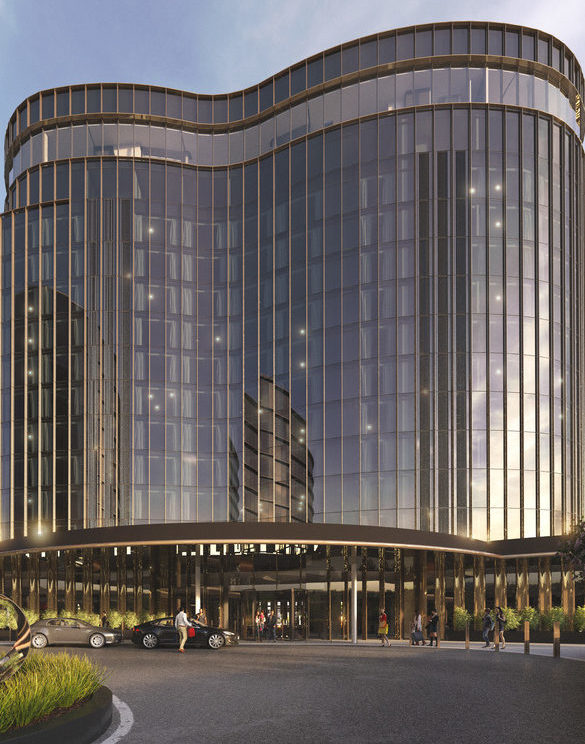
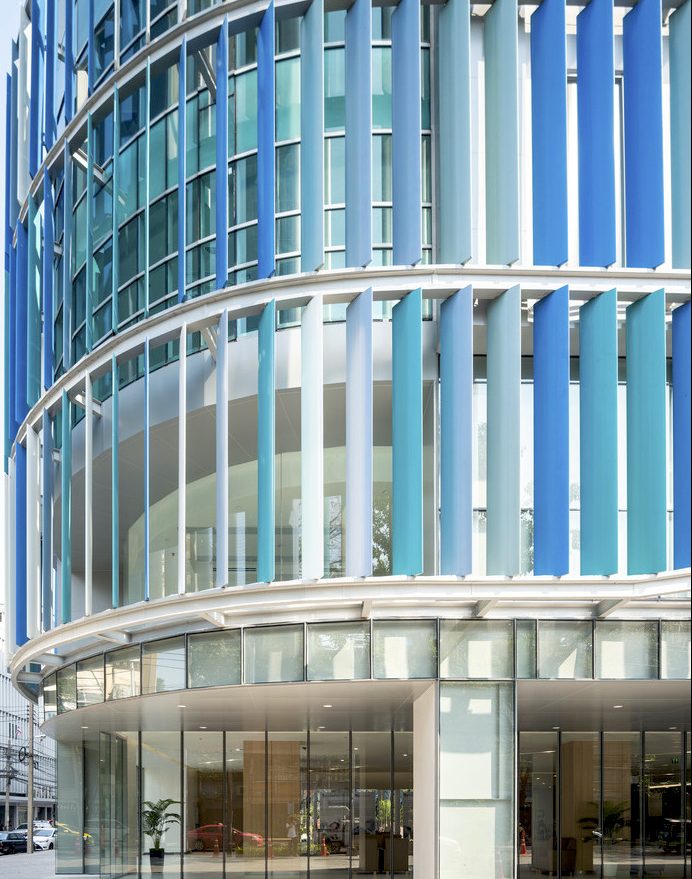
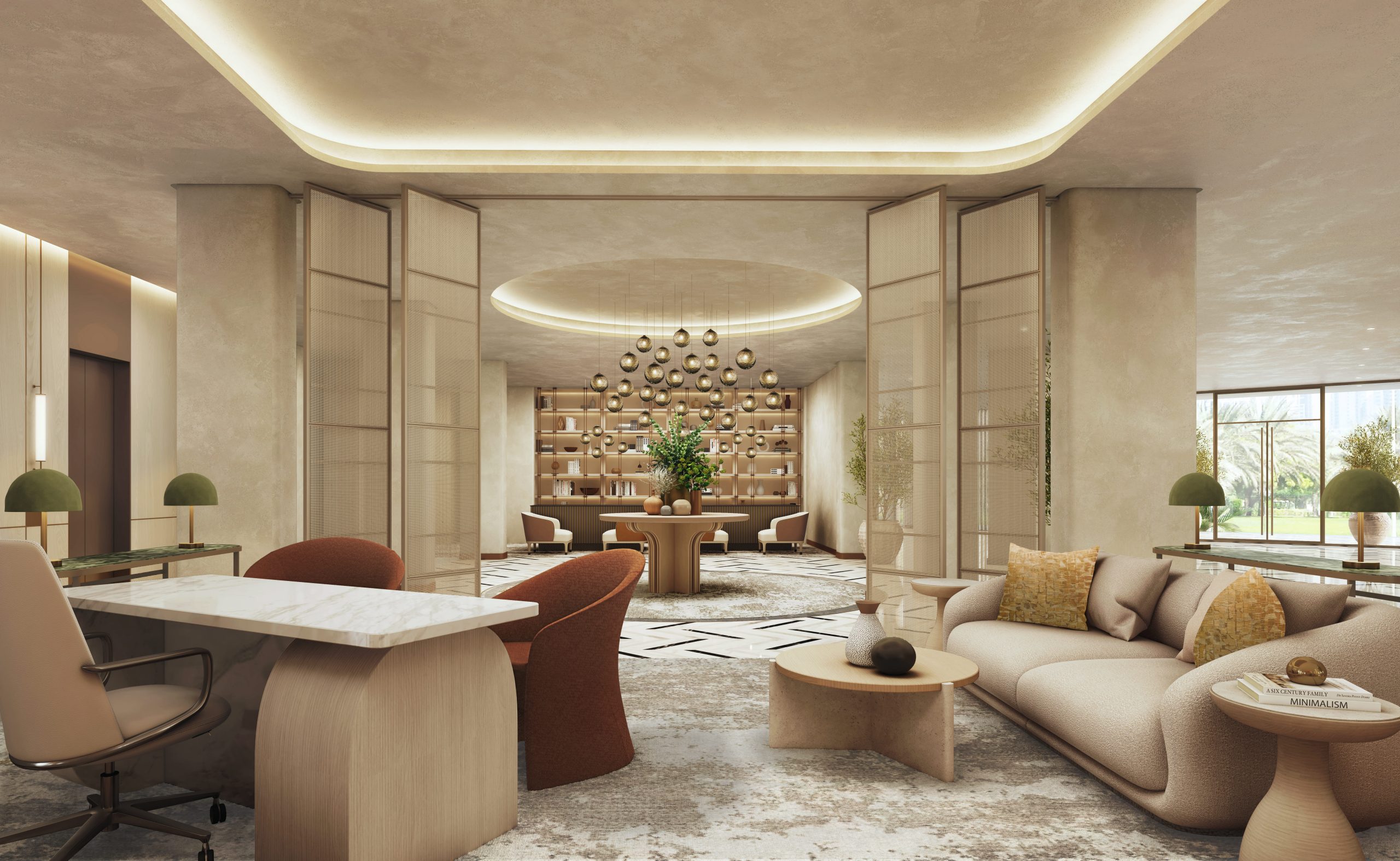
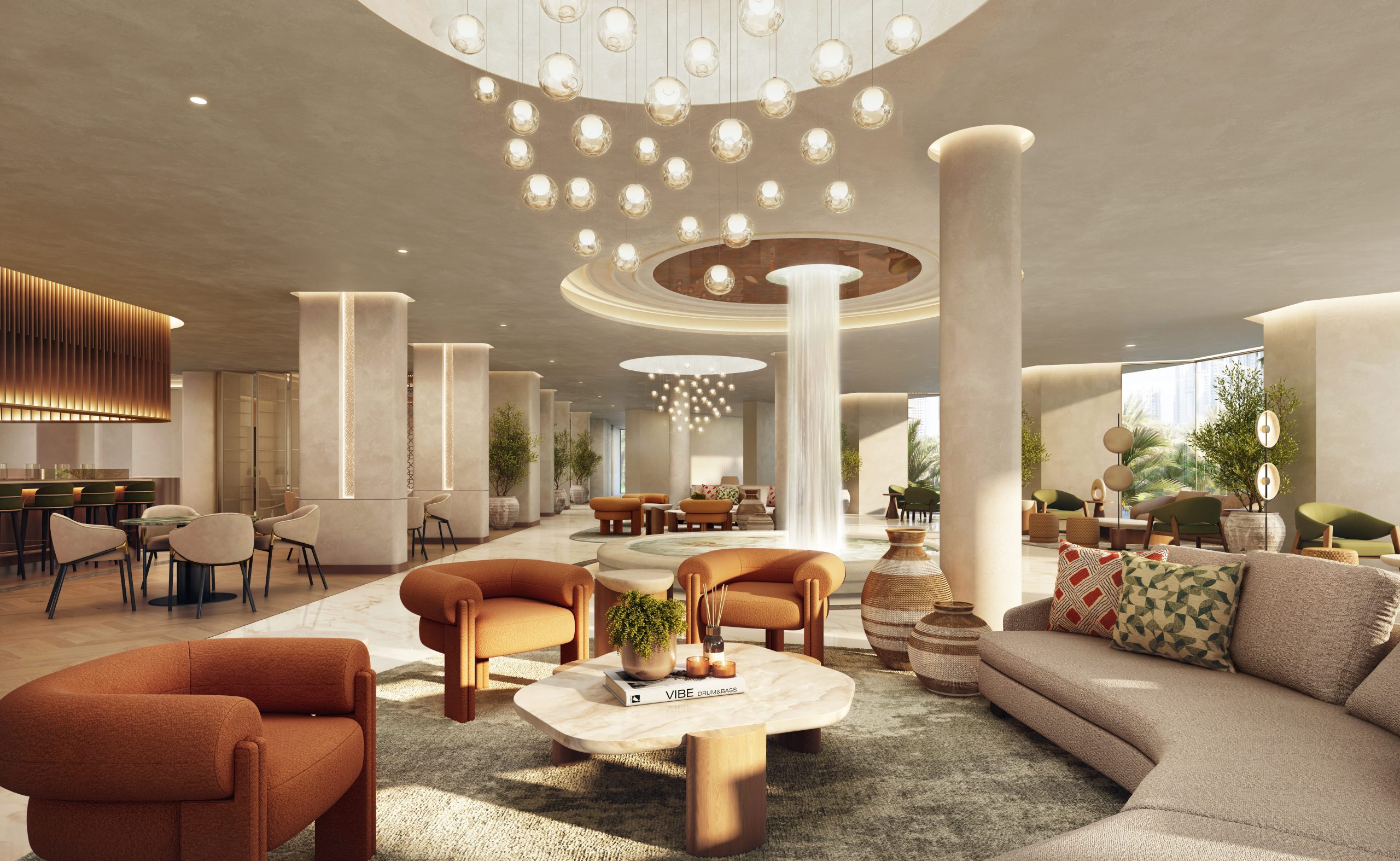
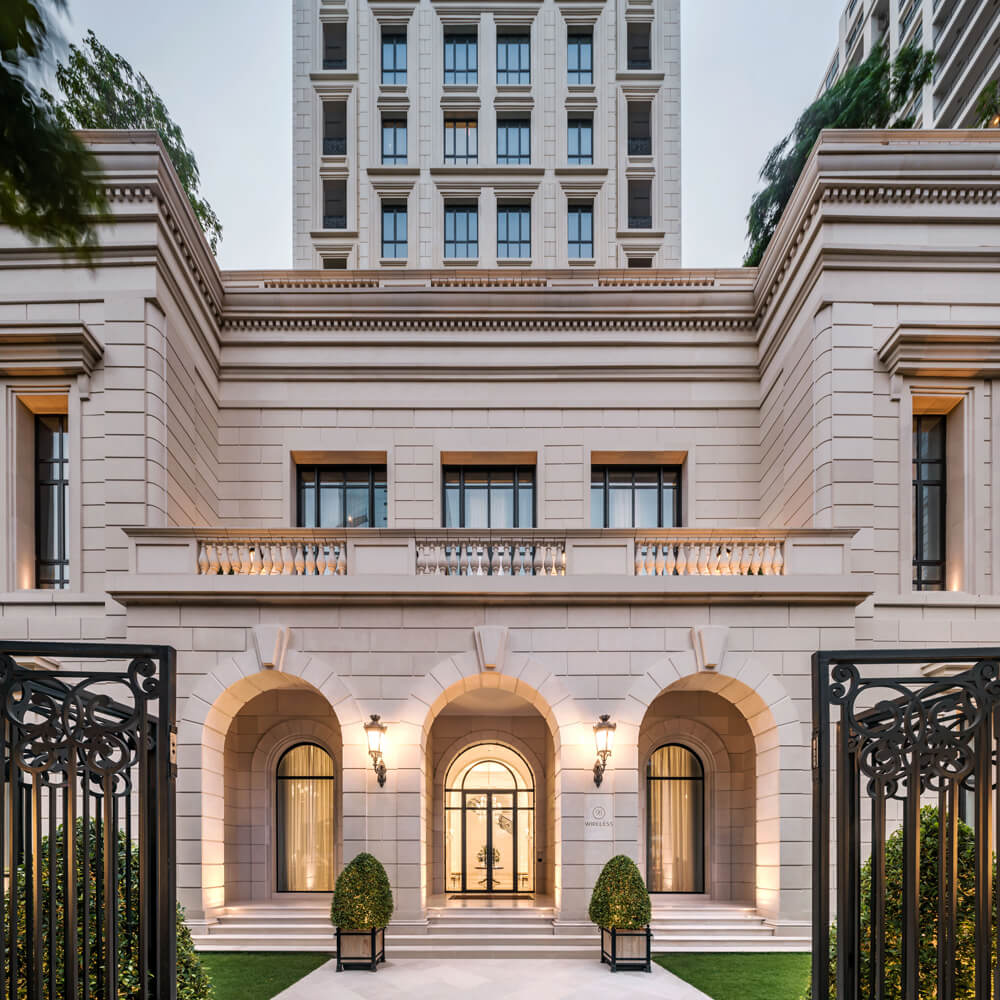
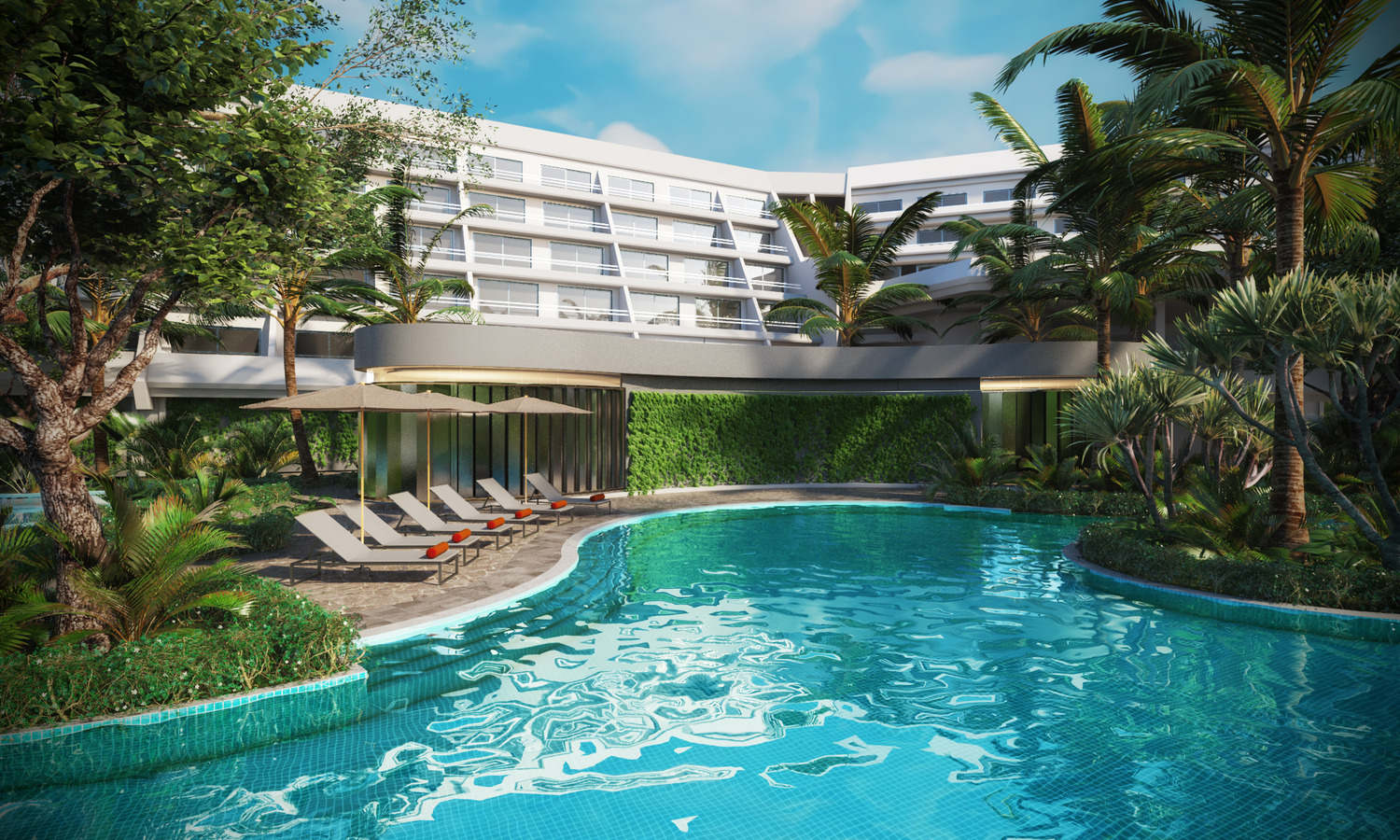
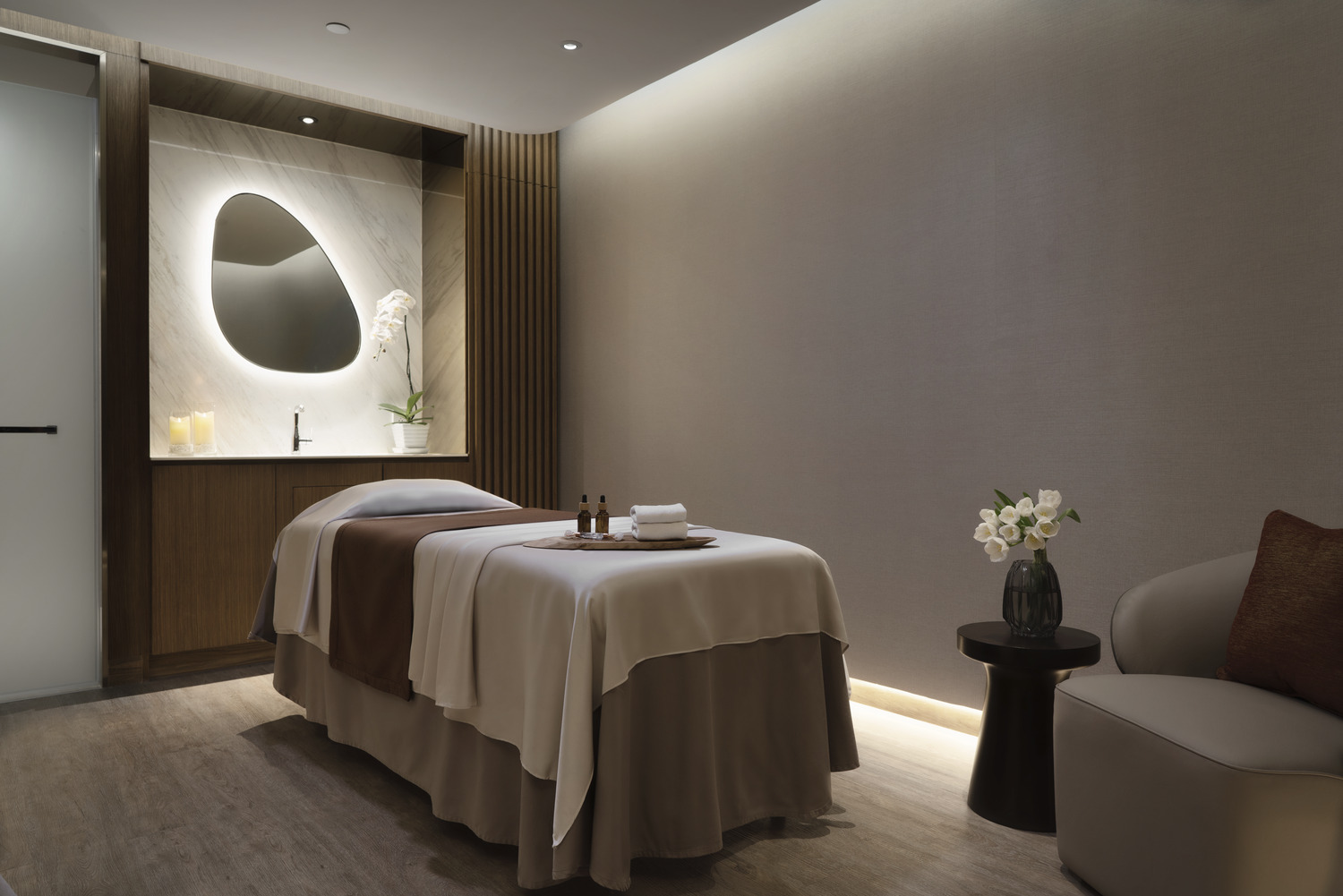
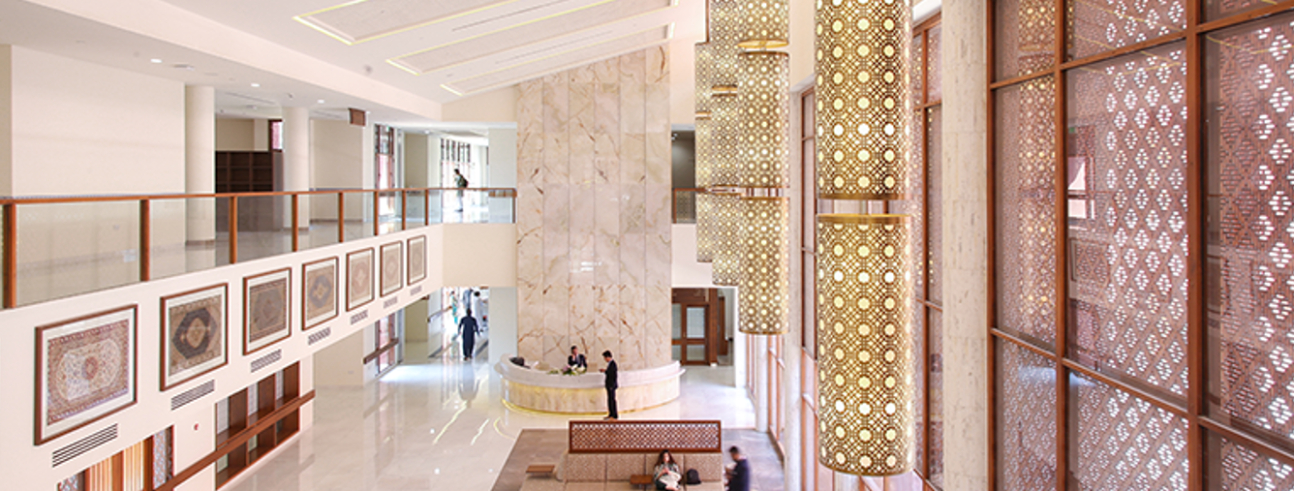
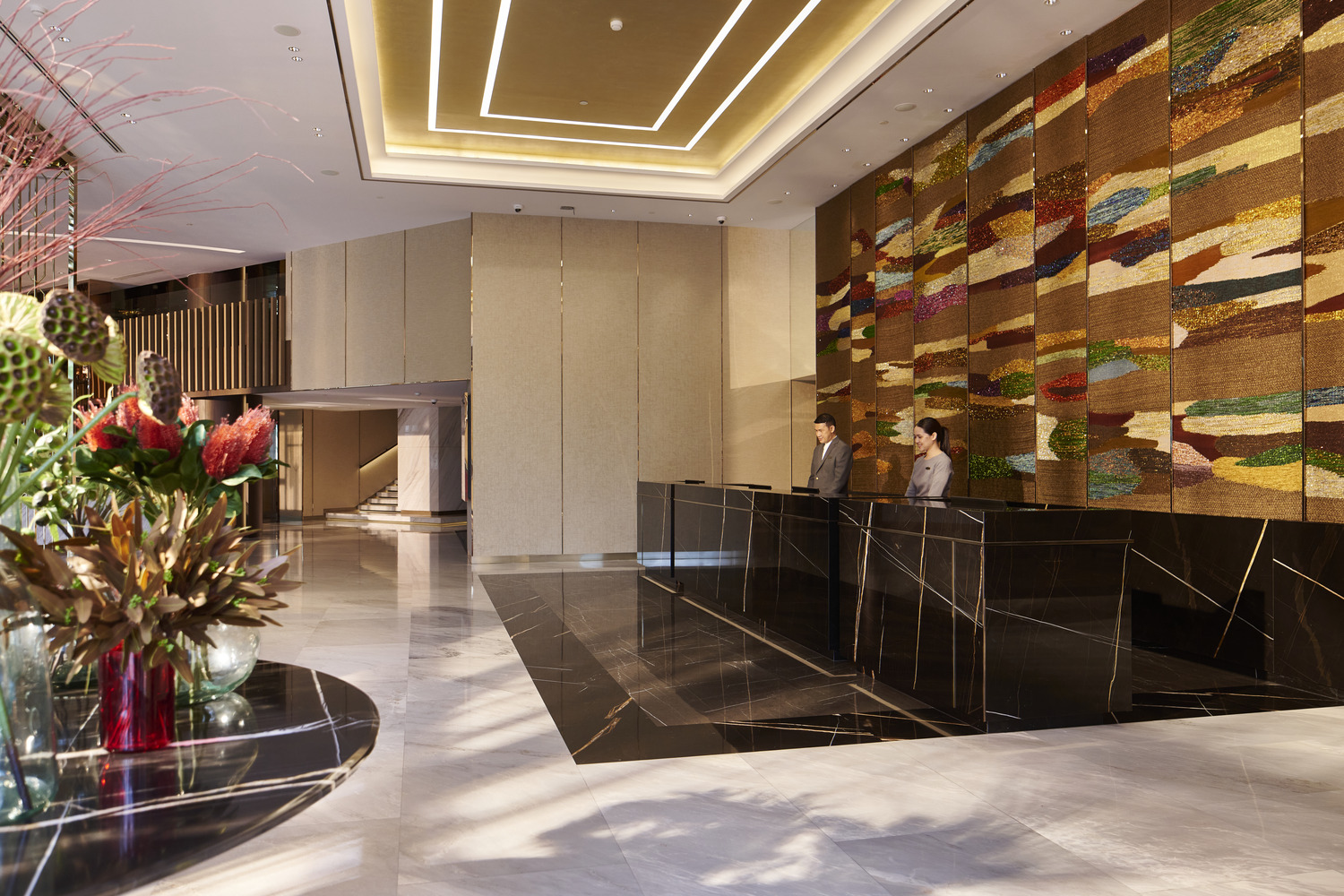
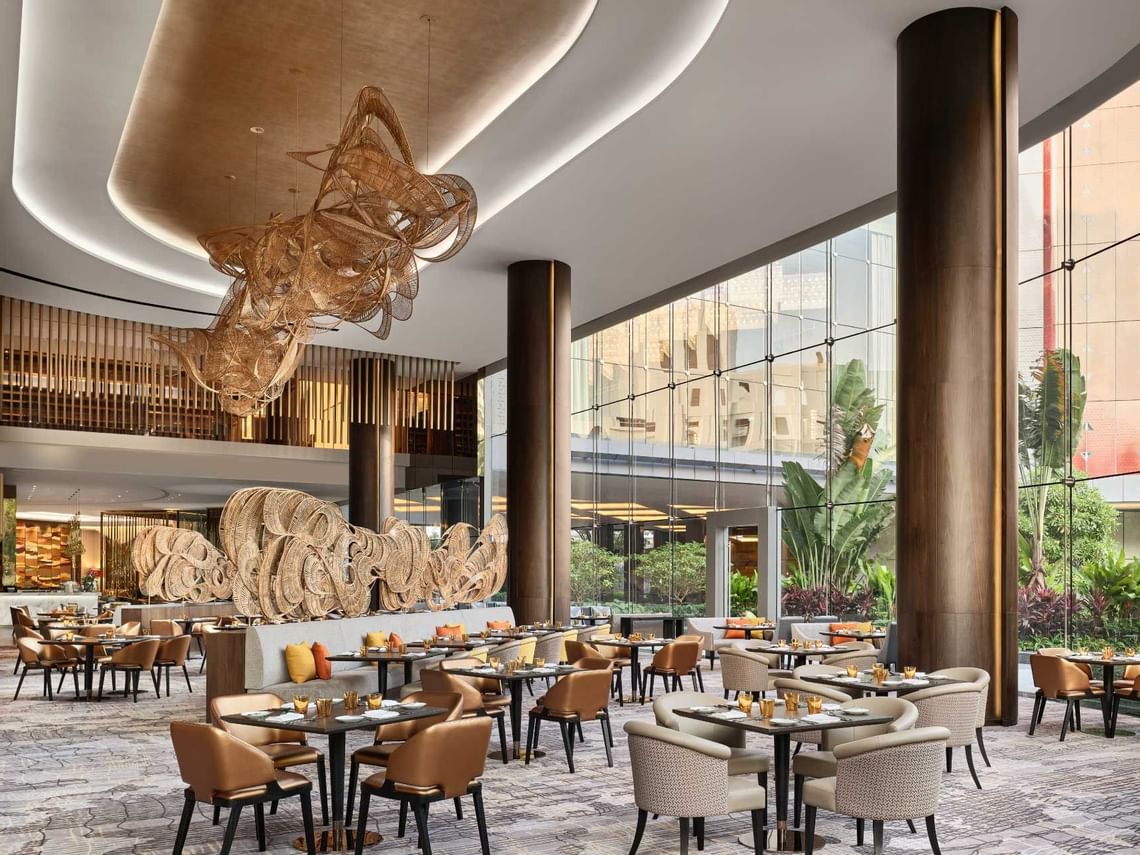
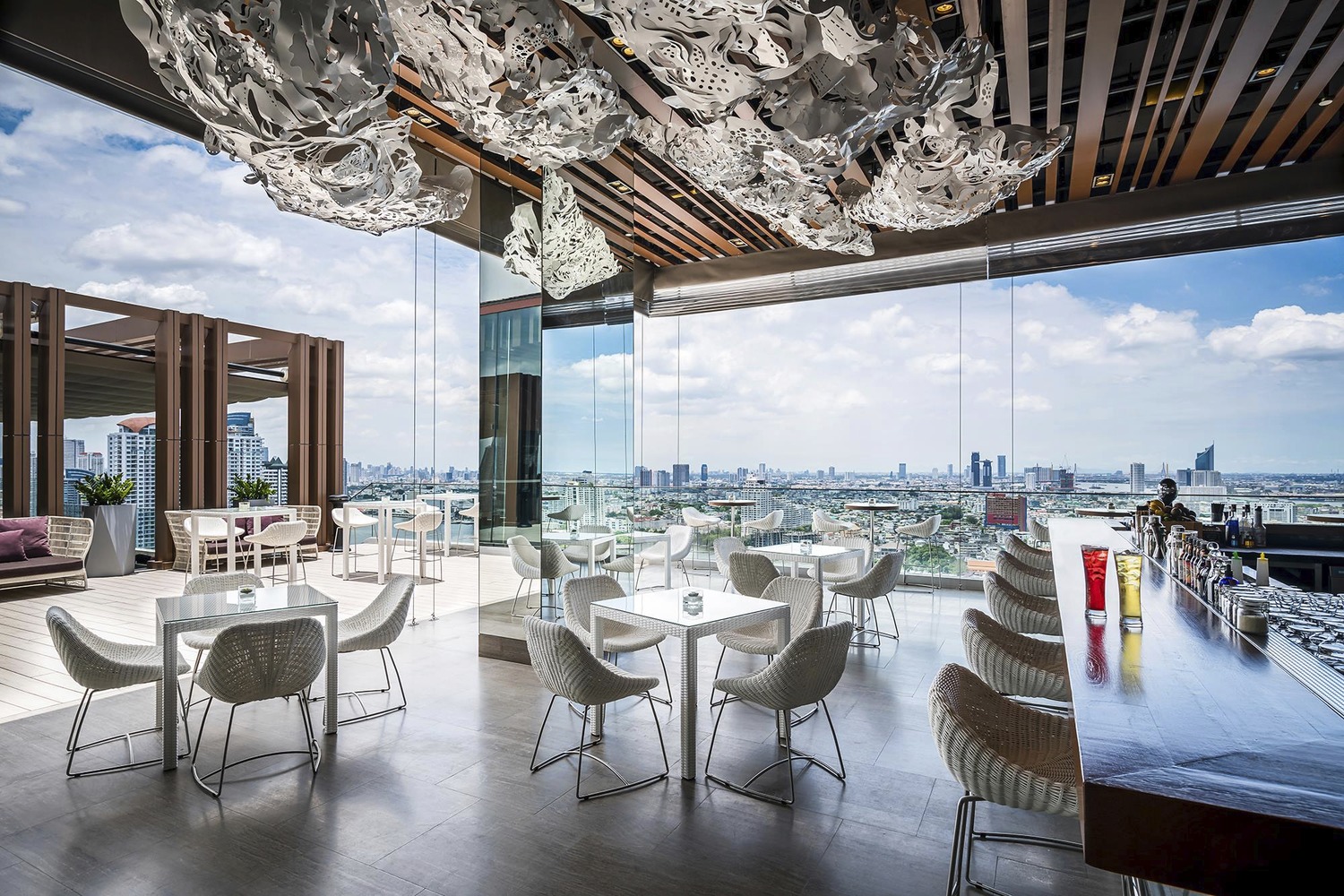
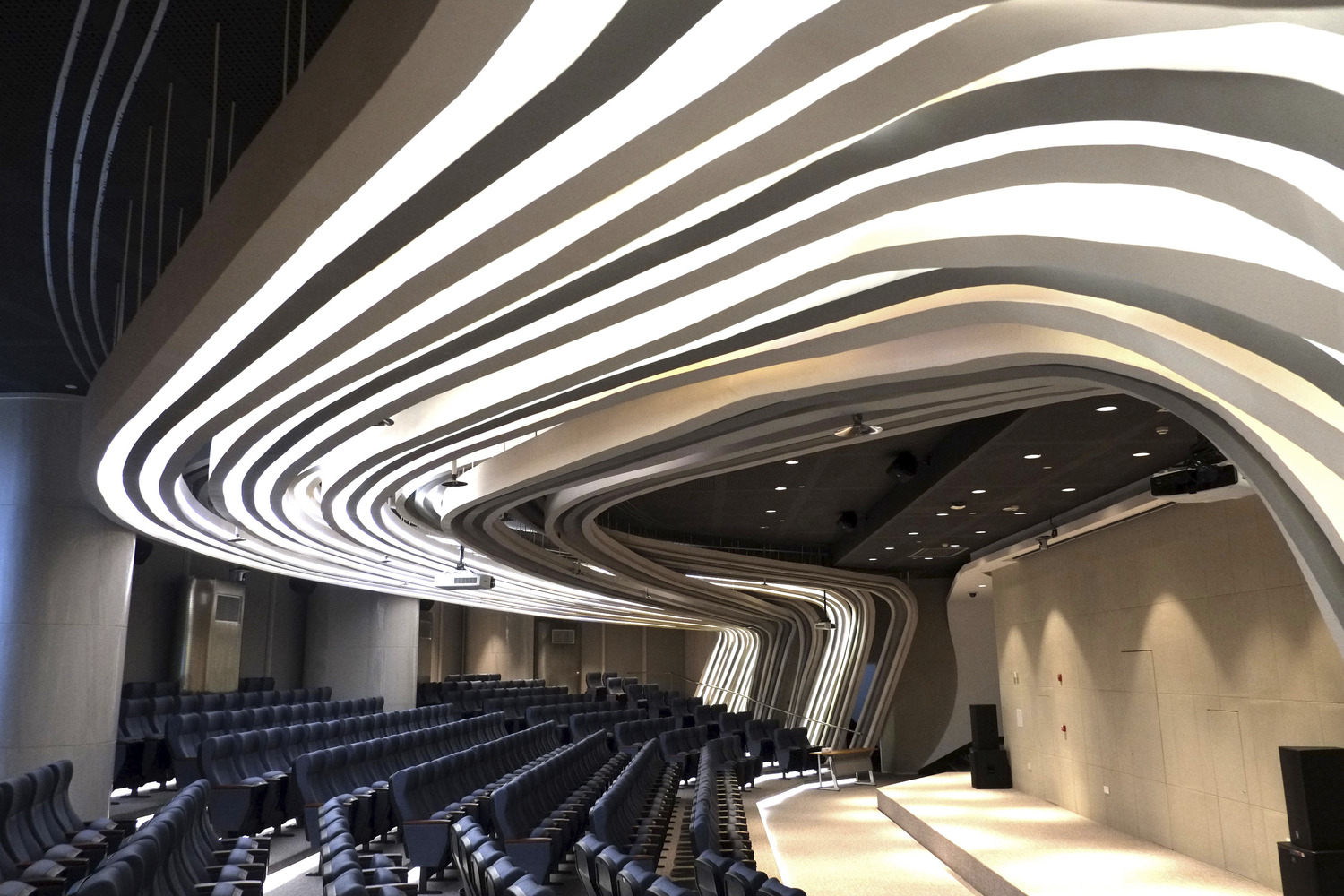
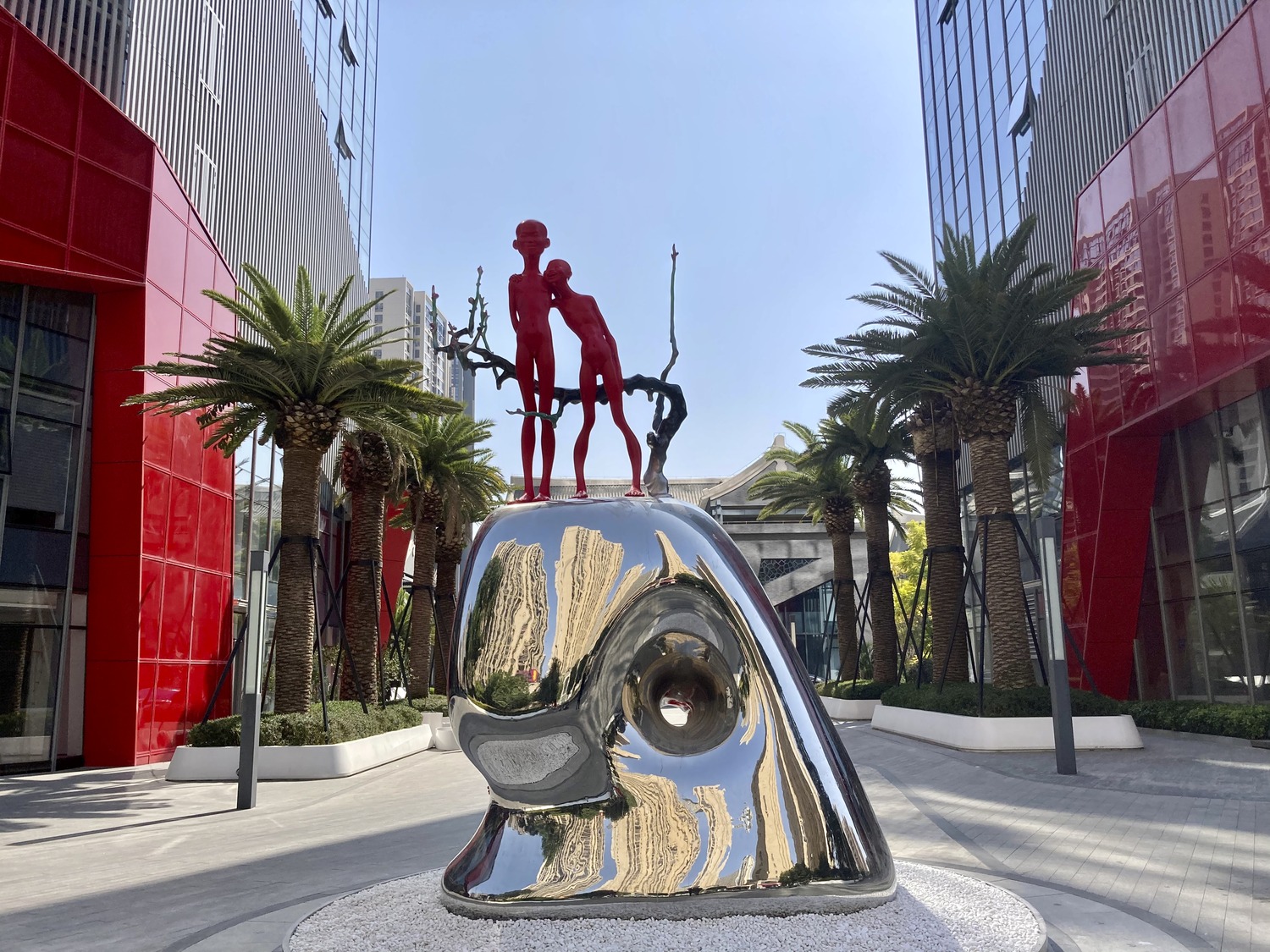
Design Worldwide Partnership (dwp) has marked its presence in hospitality design with the Urban Oasis by Club Med Hotel in Hangzhou. This project represents a significant chapter in luxury hospitality design and demonstrates dwp’s commitment to innovative and artistic architecture. “This project allows us to explore new design dimensions, offering a unique identity for Club Med and Hangzhou,” noted Mingzhong Song, Managing Director of dwp’s Shanghai studio.
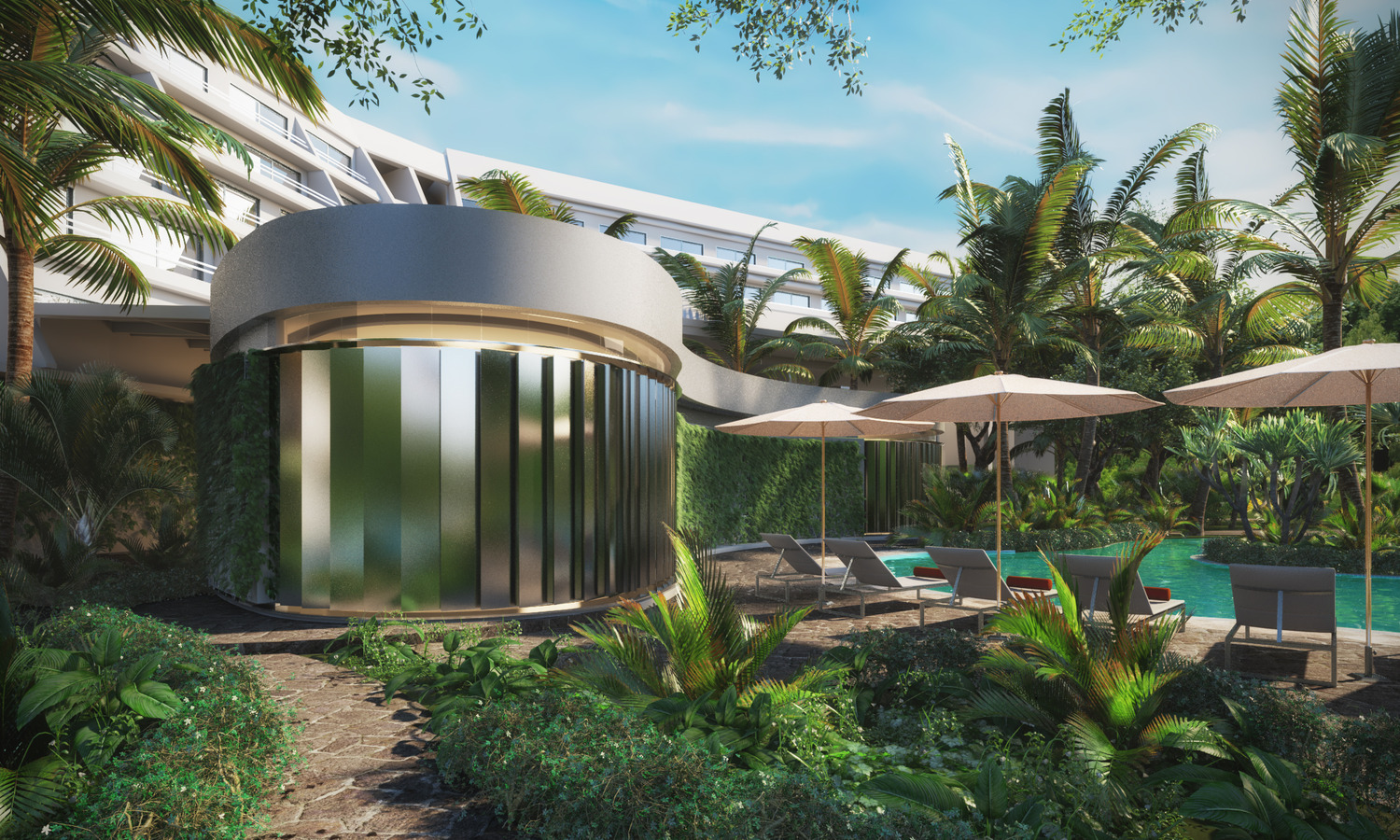
Located in the lush green setting of Longwu in Hangzhou, famous for its Longjing Tea, the Urban Oasis by Club Med Hotel aims to introduce a new dimension of luxury in the area. This five-star hotel in Longwu combines luxury with cultural elements.
Club Med, known for its all-inclusive resort concept, presents the Urban Oasis Hotel as a fresh urban leisure resort brand. Just a 40-minute drive from Hangzhou East Railway Station, the hotel blends business and leisure, cultural tourism, and relaxation.
“The Urban Oasis is more than a hotel; it’s a blend of historical charm and modern luxury,” said Ms. Rhoda Peng, dwp’s Business Development Manager for China. “We sought to integrate the Southern Song Dynasty’s essence with today’s luxury and comfort.”
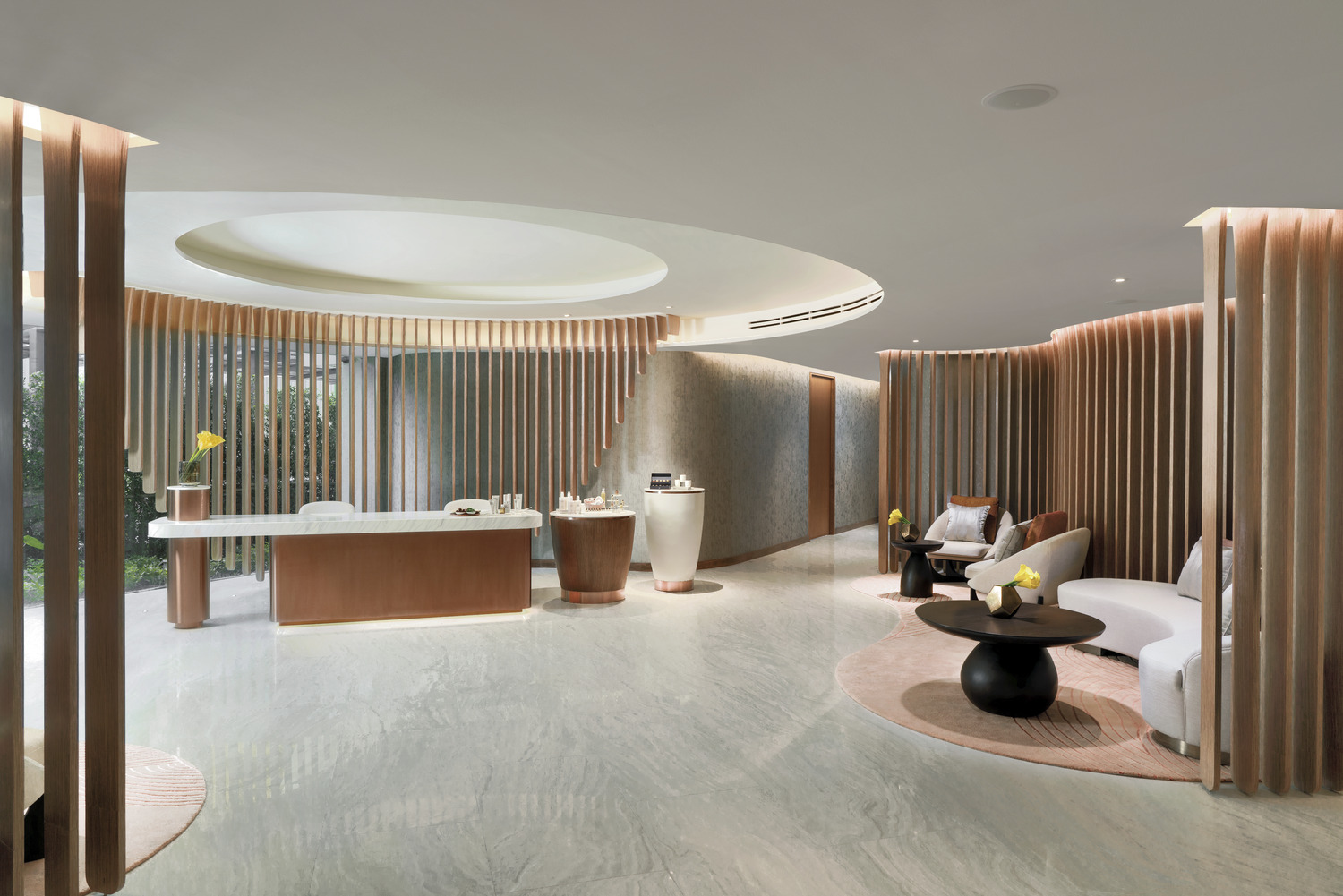
The hotel’s design, both architectural and interior, honors the Southern Song Dynasty. The design philosophy aims to create a city sanctuary that offers peace and elegance.
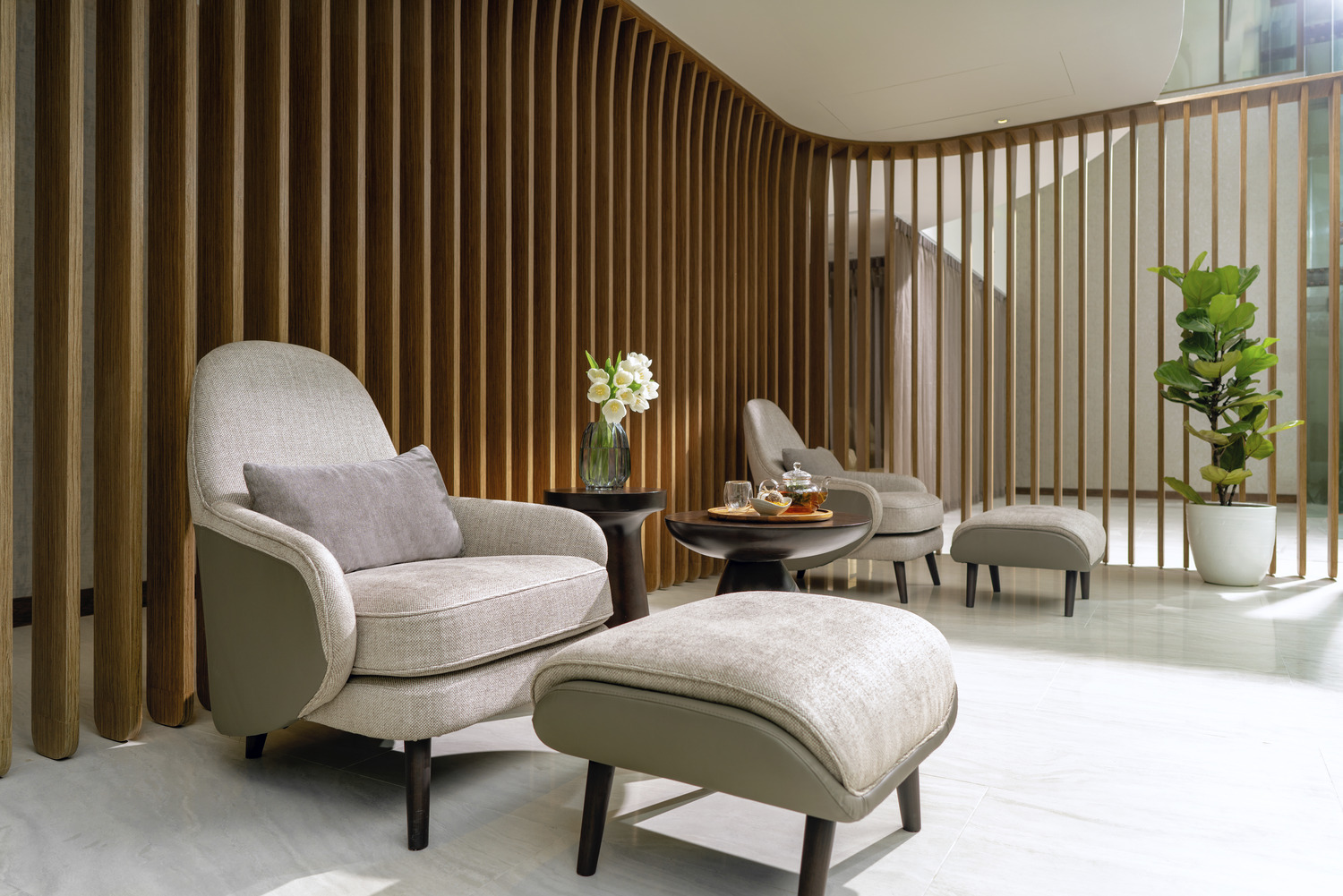
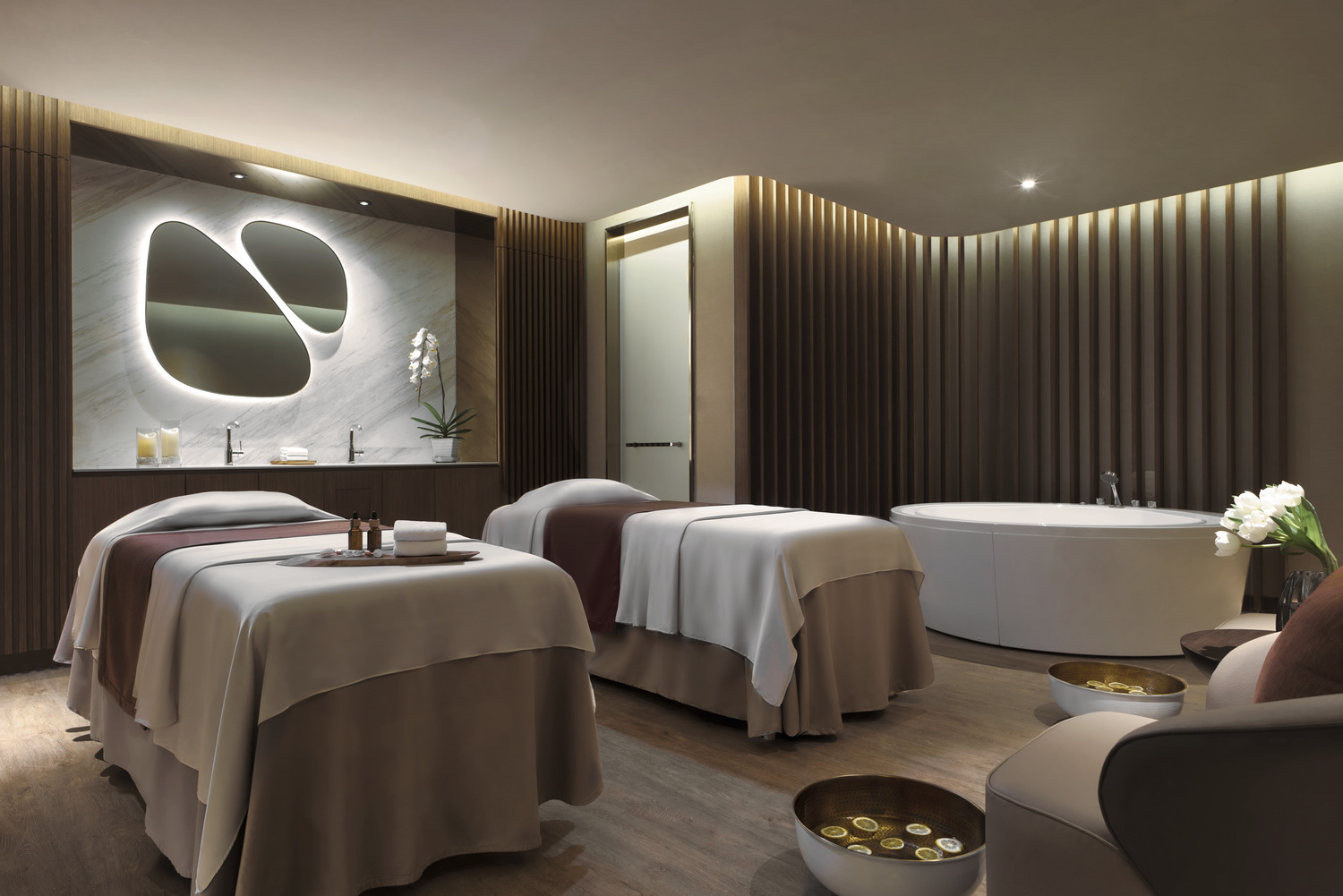
The Urban Oasis boasts 300 guest rooms and offers a variety of facilities, including a ballroom, conference rooms, diverse dining options, a tea lounge, a gym, a swimming pool, and children’s activities. Club Med has designed these facilities for different preferences and needs.
dwp’s role in the Urban Oasis Hotel, covering the interior design, highlights their appreciation for Hangzhou’s peaceful environment and historical richness. They strive to create spaces that resonate emotionally, offering peace and a historical connection.
The Urban Oasis by Club Med Hotel in Longwu, Hangzhou, is not just a destination; it represents a blend of luxury, cultural depth, and elegance. “At dwp, we aim to create more than just designs; we strive to deliver experiences that harmonize historical elegance with modern comfort,” Mr. Mingzhong said.
This new addition to Club Med’s portfolio is set to enhance the luxury hospitality sector in Hangzhou, combining Southern Song Dynasty’s heritage with modern amenities for todays lifestyle focused guest.
Share
Tags: Abu dhabi, Agile workspace, Archi, Architect, Architecture, Artist, Asia, Bangkok, Bar, BIM, Blog, Boutique, Business, Civic, Construction, Content, Creativity, Culture, Design, Designer, Digital, Digital technology, Digital transformation, Digitisation, Drink, Dubai, Education, Experience, F&B, Food, Future, Health, Hicap, Ho chi minh, Hospitality, Hotel, Hotel design, Information, Innovation, Interior, Interior design, Interior designer, Interview, Knowledge, Lebua, Lifestyle, Luxury, Luxury design, Luxury interior, Marriott, Profile, Residential, Restaurant, Saigon, Sky, Studio, Success, Sustainibility, Tech, Technology, Thailand, Trends, Video, Vietnam, W hotel, Women
dwp China Studio: A Unique Blend of Global Vision and Local Expertise
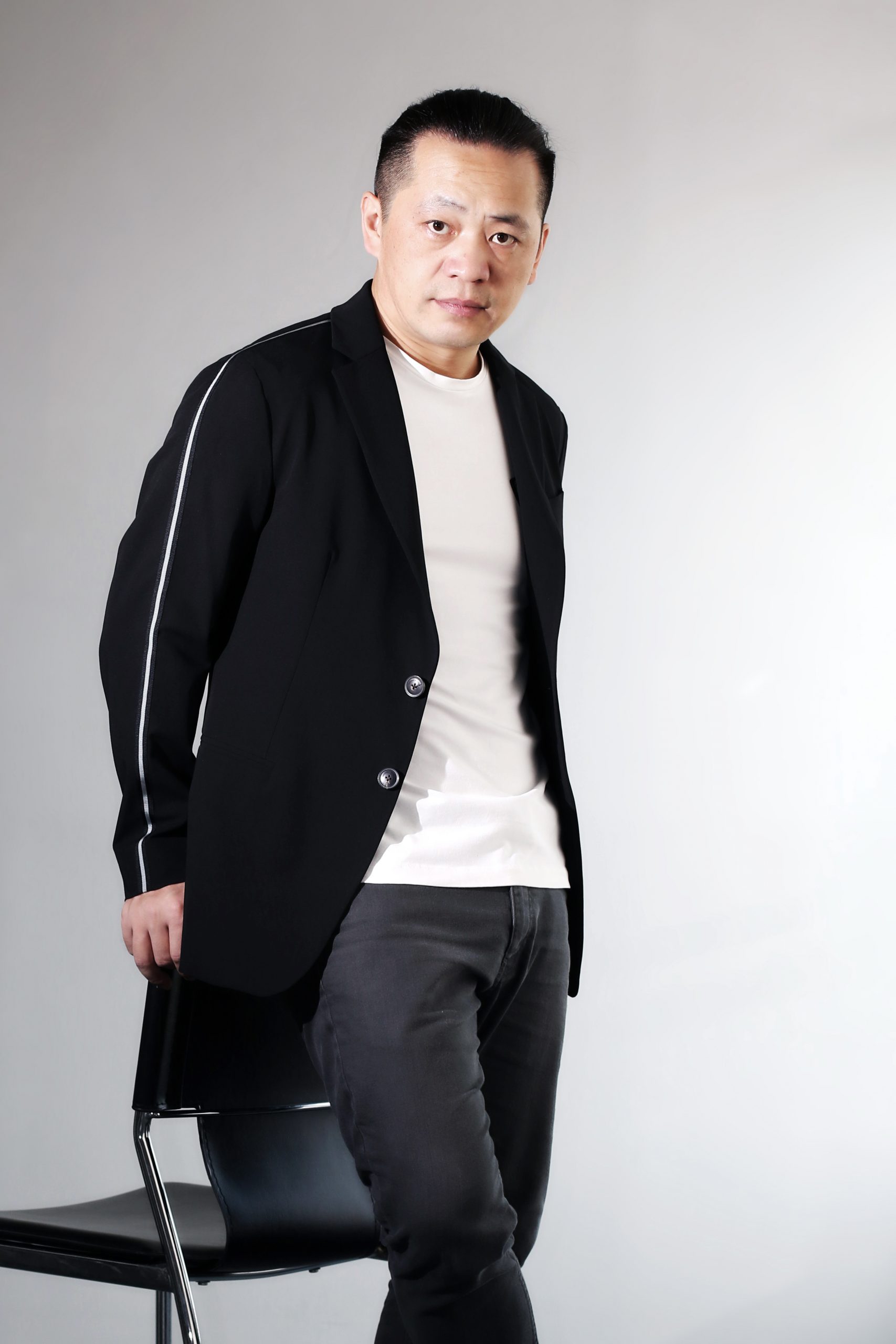
The dwp China Studio is witnessing a significant moment with the return of a distinguished local talent. Song’s journey has come full circle, beginning his career at dwp and now leading the charge at the China studio. With over 25 years in the design field, Song has spearheaded significant projects across China, working closely with renowned international organisations. His design approach emphasises immersive experiences, underlining his commitment to unique, contextually relevant design strategies.
At dwp China, Song’s integration means blending his unique design sensibilities with the studio’s ethos. His expertise is not just in design but also in incorporating technological advancements and maintaining high quality standards in every project.
Mingzhong Song, Managing Director | dwp Shanghai
Song’s leadership is complemented by the talents of Chen Yang, known for her precise aesthetic judgement, and Meng Tong, a Design Director with a significant impact. Their combined experience is set to leave a lasting mark on China’s design landscape. The team, comprising diverse skills, is poised for recognition.
Meng Tong, Design Director | dwp Shanghai
Meng Tong, a veteran in architectural design, is celebrated for his work with major brands like IHG and Marriott. His deep understanding of Chinese traditional culture and architecture, combined with his knowledge of governmental requirements, has been crucial in his success with urban planning and skyscraper projects. Meng’s design philosophy centres around creating distinct narratives for each project, aligning with client visions while meeting expectations.
Chen Yang, Design Director | dwp Shanghai
Chen Yang, another key member at dwp China, is recognised for her precision and meticulous approach. Her experience spans luxury interior designs and finishing at HBA China and advanced prototype work. Her design ethos marries practicality with beauty, aiming to exceed what is expected.
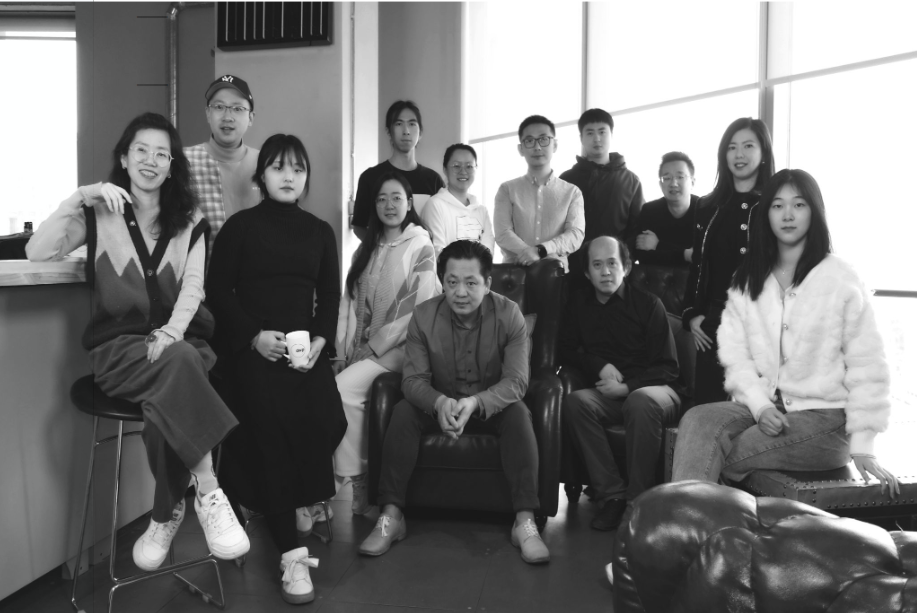
The dwp China Studio stands out for its blend of experienced wisdom and fresh perspectives. Under the leadership of Song and his team, the studio is making strides in both the cultural and commercial realms in China. Their designs are not just innovative but also deeply connected to Chinese heritage.
With the support of Chen Yang and Meng Tong, the studio offers a range of skills tailored to the Chinese market. Their work garners respect both locally and internationally, continually elevating design standards.
Partnering with dwp’s global network, the China Studio adds an international dimension to its projects. This fusion of ideas ensures that while their work is globally relevant, it remains in harmony with Chinese cultural and design principles. As a result, dwp China Studio produces designs that are globally captivating and authentically represent Chinese design, solidifying its place in the international design community.
Share
Tags: Abu dhabi, Agile workspace, Archi, Architect, Architecture, Artist, Asia, Bangkok, Bar, BIM, Blog, Boutique, Business, Civic, Construction, Content, Creativity, Culture, Design, Designer, Digital, Digital technology, Digital transformation, Digitisation, Drink, Dubai, Education, Experience, F&B, Food, Future, Health, Hicap, Ho chi minh, Hospitality, Hotel, Hotel design, Information, Innovation, Interior, Interior design, Interior designer, Interview, Knowledge, Lebua, Lifestyle, Luxury, Luxury design, Luxury interior, Marriott, Profile, Residential, Restaurant, Saigon, Sky, Studio, Success, Sustainibility, Tech, Technology, Thailand, Trends, Video, Vietnam, W hotel, Women
Unveiling the Creative Genius and Team focused Strategy Behind dwp’s Dubai Studio
Insights Blog
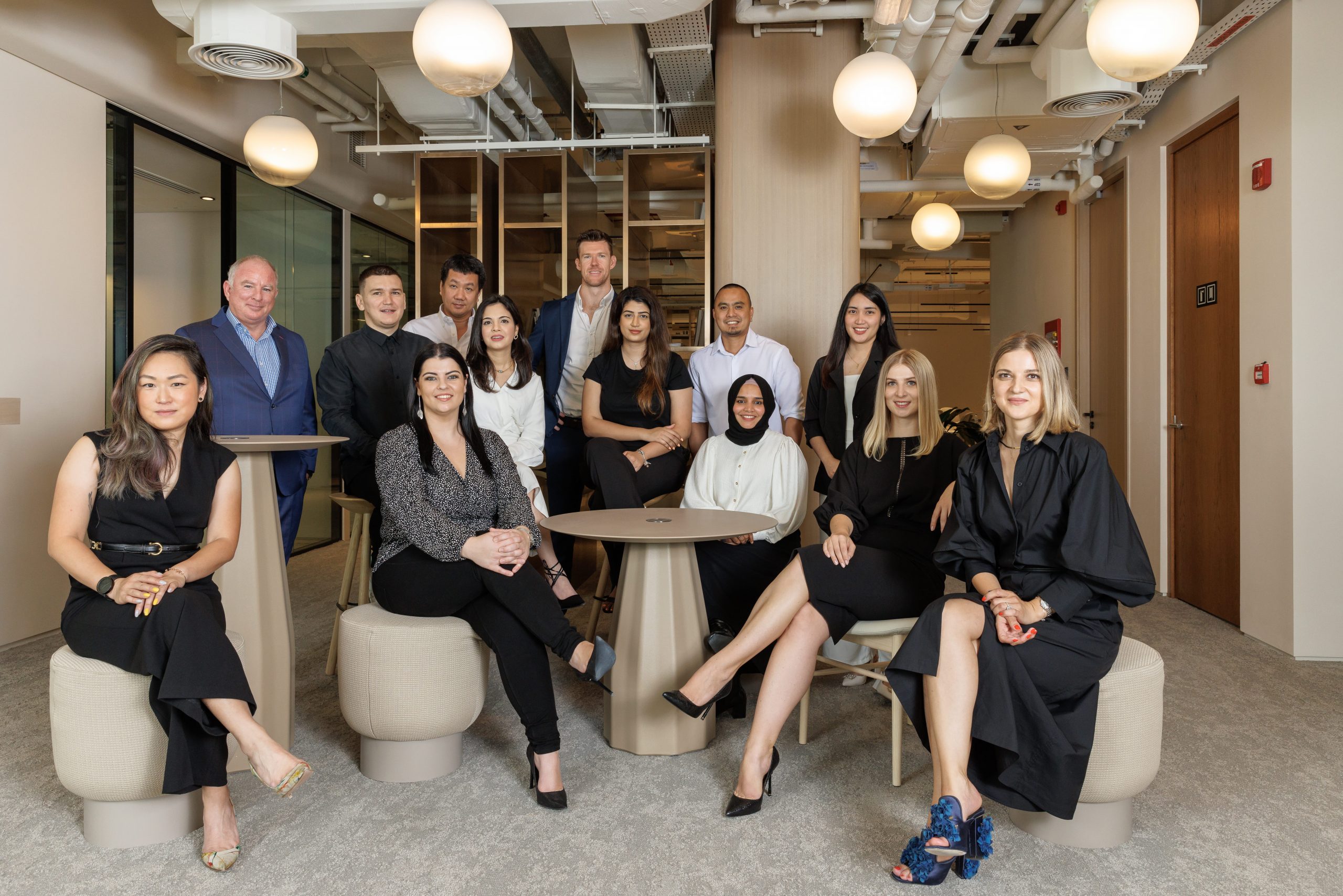
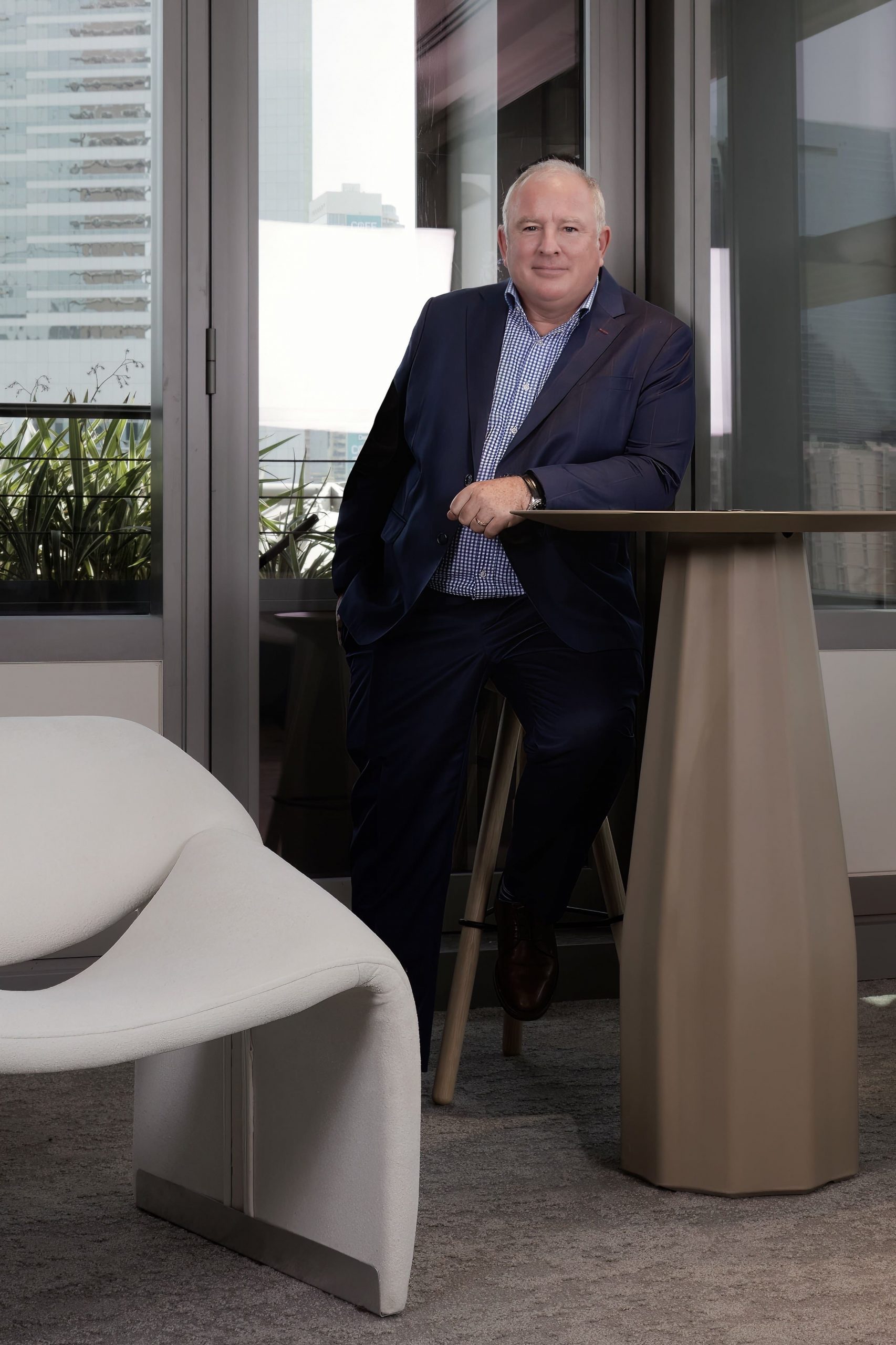
Charlie Kelly | Regional Managing Director in Middle East
dwp: We’re here today with Charlie Kelly, Regional Managing Director of dwp’s Middle East design studio based in Dubai. Charlie, your studio is making waves in the design industry, especially in the realm of employee well-being and its positive impact on business. Can you talk us through your philosophy?
Charlie Kelly: Absolutely. At dwp’s Dubai studio, we believe that employee satisfaction is the catalyst for both innovation and growth. Our ethos is anchored in nurturing a work environment that fosters creativity, mentorship, and personal development. By investing in our people, we’ve created a motivated workforce that has helped us attract some of the most remarkable talents in the design industry.
dwp: Speaking of talents, the word is that award-winning designer Mira Kurniawan recently joined your team. How has her arrival impacted your studio?
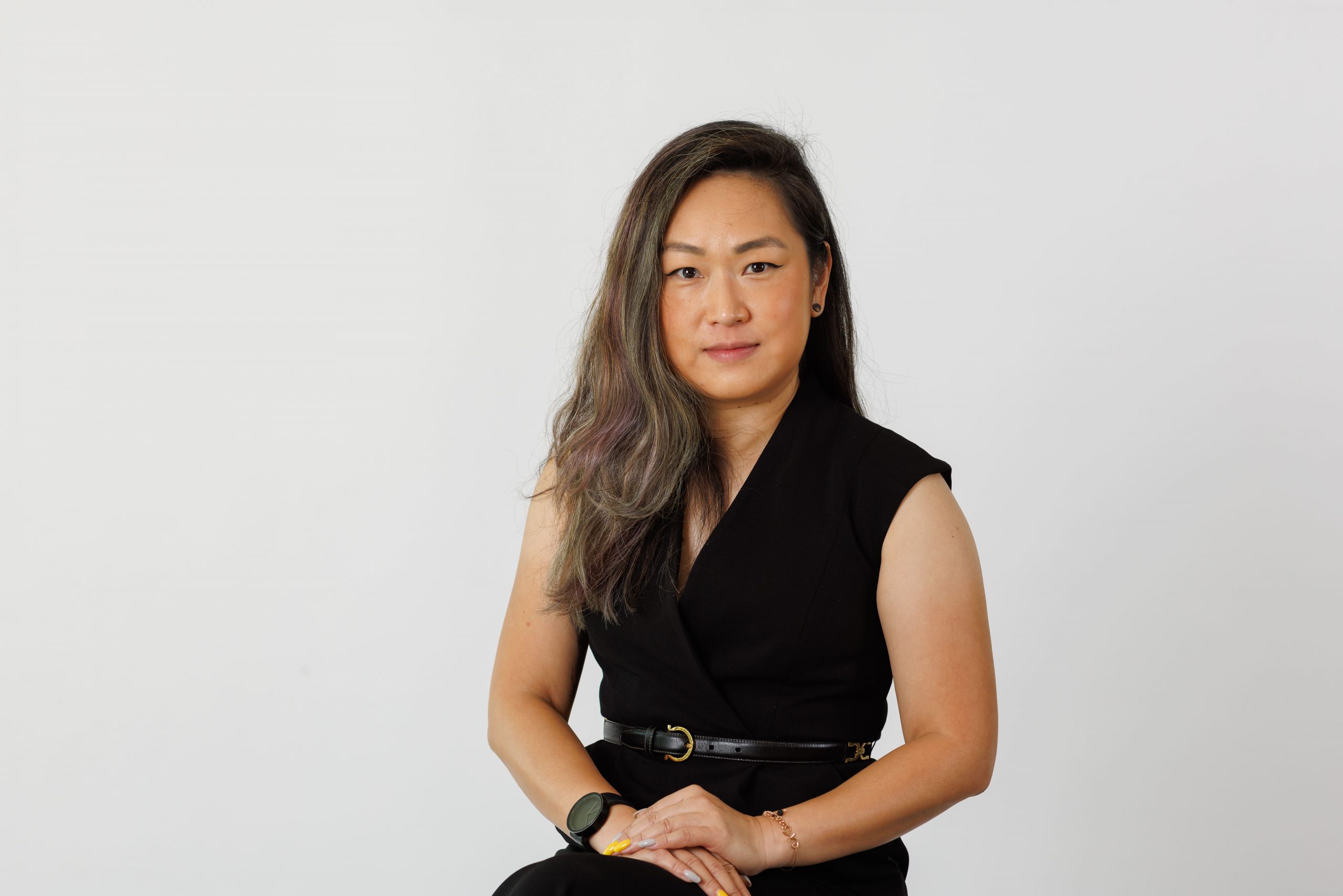
Mira Kurniawan | Associate Design Director Interior Design
Charlie Kelly: Mira is an incredible asset. Her blend of aesthetic prowess, interpersonal skills, and an indomitable spirit has already made an indelible mark on our team. She’s leading our hospitality portfolio, and we’re seeing the profound impact of her creative insights. Her addition perfectly complements our ethos and strategy, and I’m confident she’ll play a critical role as we look to expand in the region.
dwp: It’s evident that your studio is more than just a workplace; it’s a think tank of creativity and innovation. Can you elaborate on the kind of culture you’ve built and how it feeds into your business strategy?
Charlie Kelly: Our culture is predicated on respect, collaboration, and work-life balance. These pillars are fundamental because they encourage the free exchange of ideas and also instil a deep sense of fulfilment within our team. By acknowledging and rewarding the contributions of our employees, we’ve built a culture that makes everyone feel integral to our success. This feeds directly into our business strategy of delivering exemplary designs that align with our clients’ vision.
dwp: As your team continues to expand, what’s your vision for dwp’s Dubai studio in terms of its influence in the industry?
Charlie Kelly: We aim to continue pushing the boundaries of interior design and architecture. With a growing cadre of visionary designers, we’re setting ourselves up to become an industry leader. We’re currently in a period of expansion, and our impact extends well beyond the studio. We’ve set a trajectory that we believe will redefine interior design in the region, and with our commitment to employee well-being fueling this growth, we’re poised for a transformative journey ahead.
dwp: What’s next for dwp’s Dubai studio as you look to further establish your foothold in the Middle East?
Charlie Kelly: We’re deeply committed to sustainability and plan to contribute thought leadership in areas like climate-resilient design and sustainable urbanism. As the world prepares for key global events like COP28, we’re aligning our strategies to be at the forefront of these important conversations, especially here in the Middle East where these issues are extremely pertinent.
dwp: Charlie, the synergy between dwp’s global studios seems to be a strategic advantage. Can you elaborate on how the Dubai studio specifically collaborates with other dwp locations to achieve design excellence for international clients?
Charlie Kelly: Absolutely. Our global offices, each with its own set of skills and area expertise, cross-collaborate on a regular basis. This not only allows us to offer a broader service range but also to inject multi-cultural perspectives into our designs, which is invaluable in today’s globalised world.
dwp: Could you give us a concrete example of such a collaboration?
Charlie Kelly: Certainly. A recent project that stands out involved our Vietnam studio. They specialise in commercial spaces, and they were spearheading a banking design initiative. They reached out to us in Dubai for our expertise in integrating cutting-edge technologies and sustainable design features. This collaborative effort culminated in a project that truly went above and beyond the client’s expectations, both in terms of design aesthetics and operational functionality.
dwp: Handling global collaboration must involve some complexities. What strategies have you employed to mitigate these challenges?
Charlie Kelly: You’re correct. Geographical distance and different time zones can present challenges. However, we leverage cutting-edge communication and project management technology to stay connected. Our corporate culture also promotes active collaboration across time zones, making these potential barriers non-issues.
dwp: And how does this strategy of international collaboration impact the work quality and reputation of the Dubai studio?
Charlie Kelly: It’s been transformative. The level of knowledge exchange and talent sharing that comes from these collaborations significantly elevates the quality of our work. It allows us to handle larger, more intricate projects while maintaining a global standard of design excellence.
dwp: Would it be fair to say, then, that this global collaborative approach is a defining feature of dwp’s business strategy?
Charlie Kelly: Absolutely, it’s a cornerstone. This collaborative ethos enriches our creative output, increases our service scope, and allows us to offer culturally nuanced, top-notch designs to our diverse client base. It gives us a competitive edge in an increasingly interconnected world.
In summary, dwp’s Dubai studio is taking a pioneering approach by treating global collaboration as a strategic asset. Through fostering strong relationships with other dwp locations the Dubai team is able to deliver innovative, culturally-aware design solutions that meet and exceed the complex needs of a global clientele.
dwp: Charlie, thank you for giving us this inside look at the business and creative strategy shaping dwp’s Dubai studio. Your approach to employee well-being as a cornerstone for innovation and business growth offers invaluable insights.
Charlie Kelly: It’s been a pleasure. We’re just getting started, and I’m thrilled about what the future holds for our team and the industry at large. By focusing on employee well-being as a business strategy, dwp’s Dubai studio is setting a new standard in the design industry. Coupled with its commitment to sustainable solutions and its ability to attract top-tier talent, the studio is on an upward trajectory that is making it an emerging leader in design both in the Middle East and globally.
Share
Tags: Abu dhabi, Agile workspace, Archi, Architect, Architecture, Artist, Asia, Bangkok, Bar, BIM, Blog, Boutique, Business, Civic, Construction, Content, Creativity, Culture, Design, Designer, Digital, Digital technology, Digital transformation, Digitisation, Drink, Dubai, Education, Experience, F&B, Food, Future, Health, Hicap, Ho chi minh, Hospitality, Hotel, Hotel design, Information, Innovation, Interior, Interior design, Interior designer, Interview, Knowledge, Lebua, Lifestyle, Luxury, Luxury design, Luxury interior, Marriott, Profile, Residential, Restaurant, Saigon, Sky, Studio, Success, Sustainibility, Tech, Technology, Thailand, Trends, Video, Vietnam, W hotel, Women
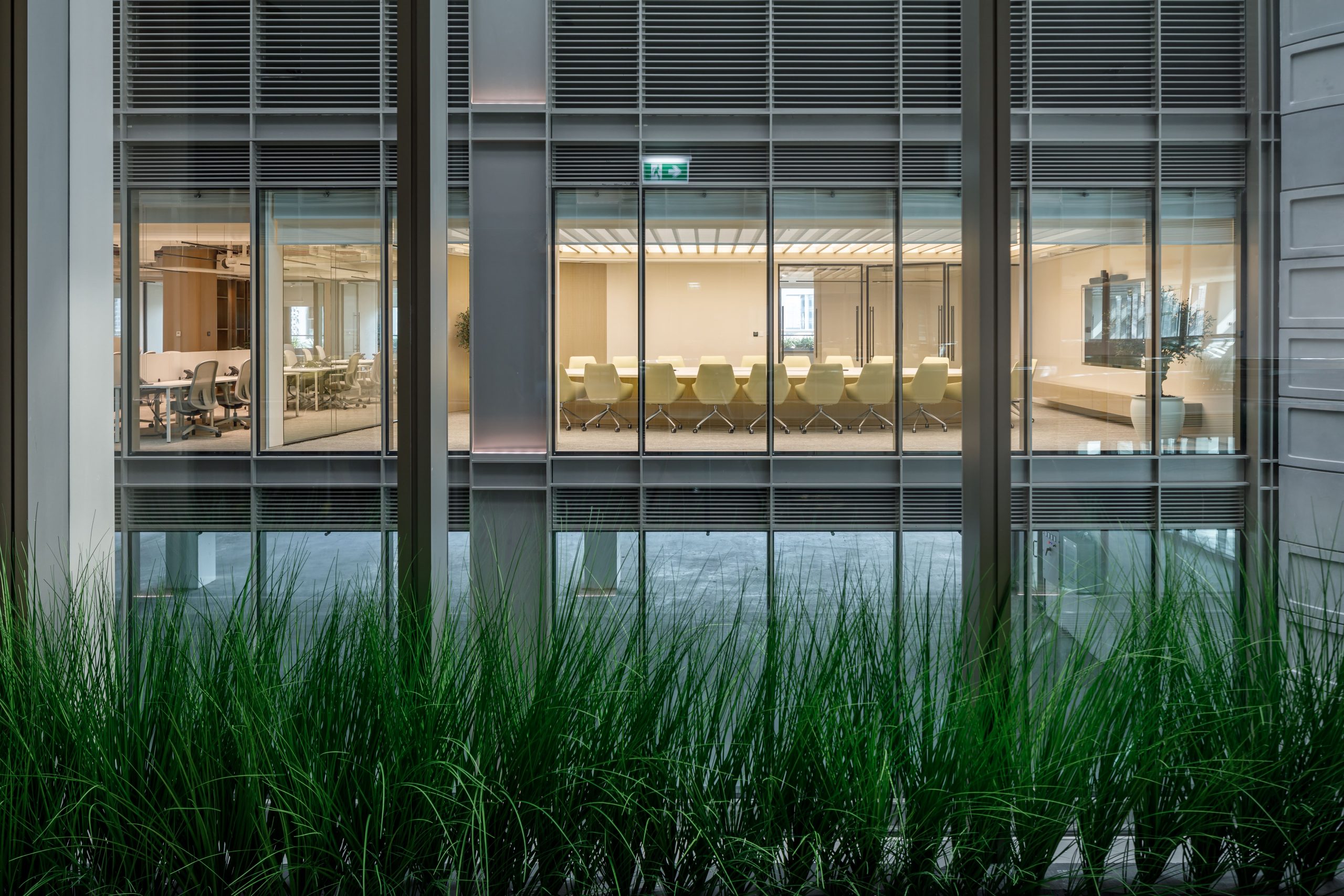
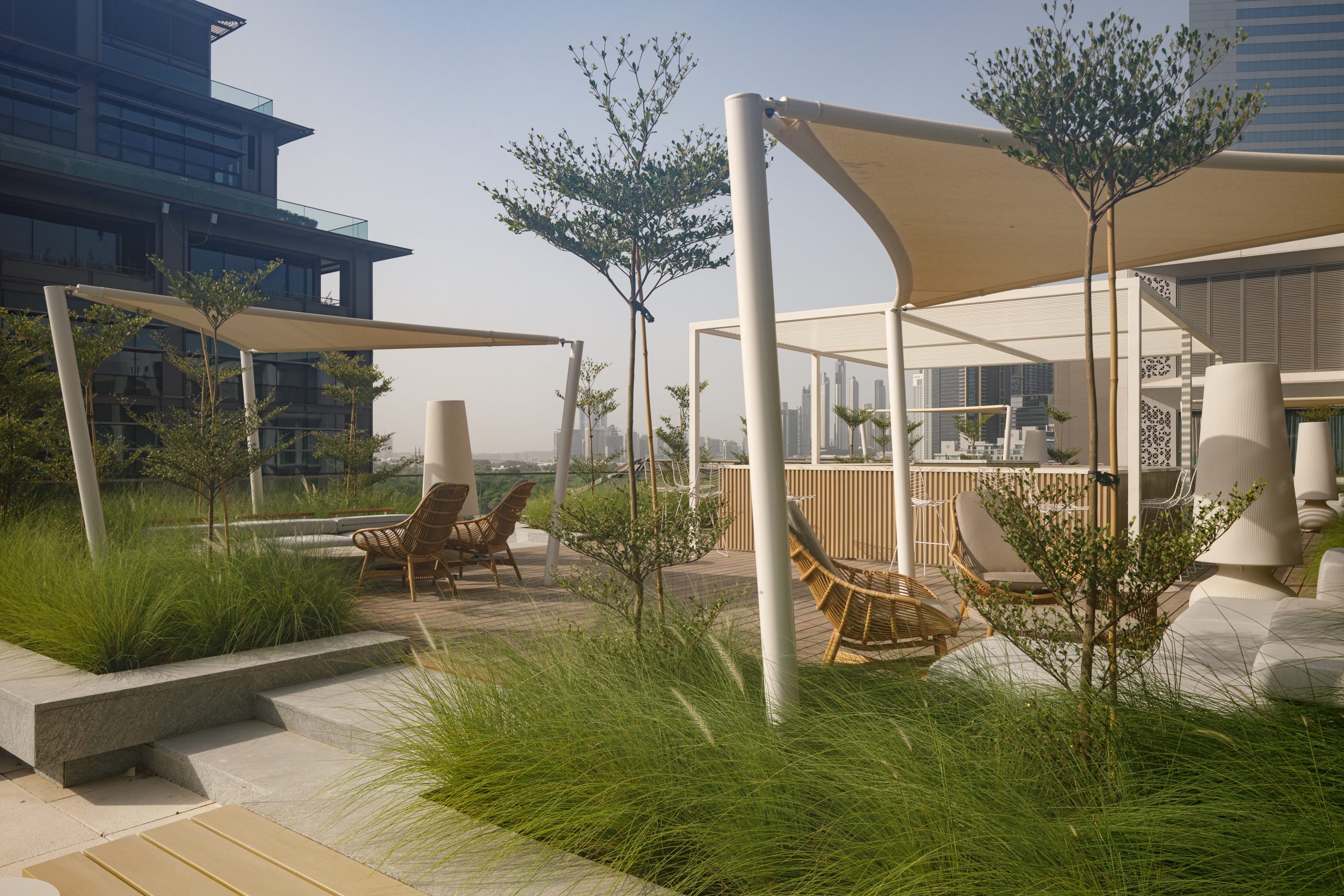
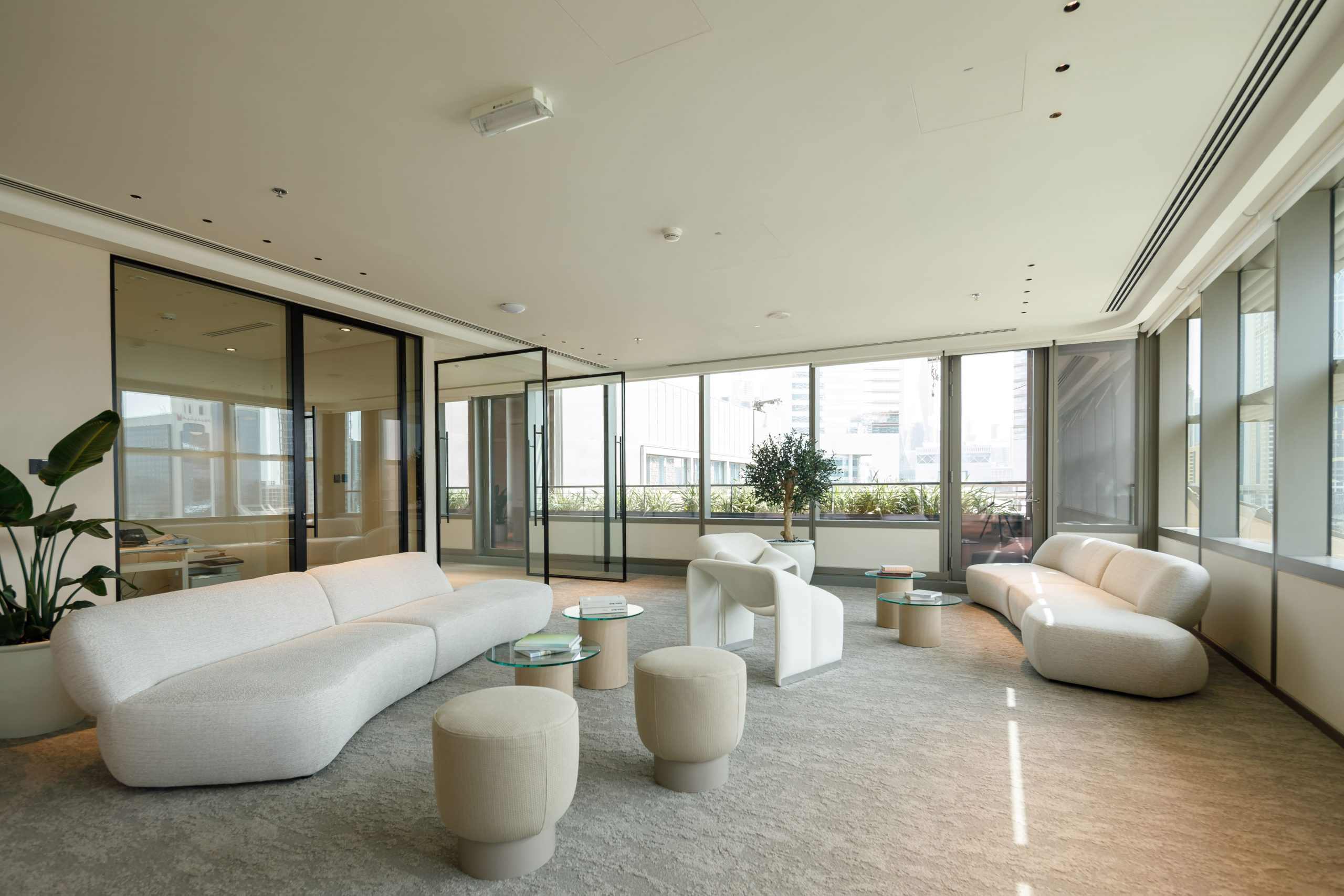
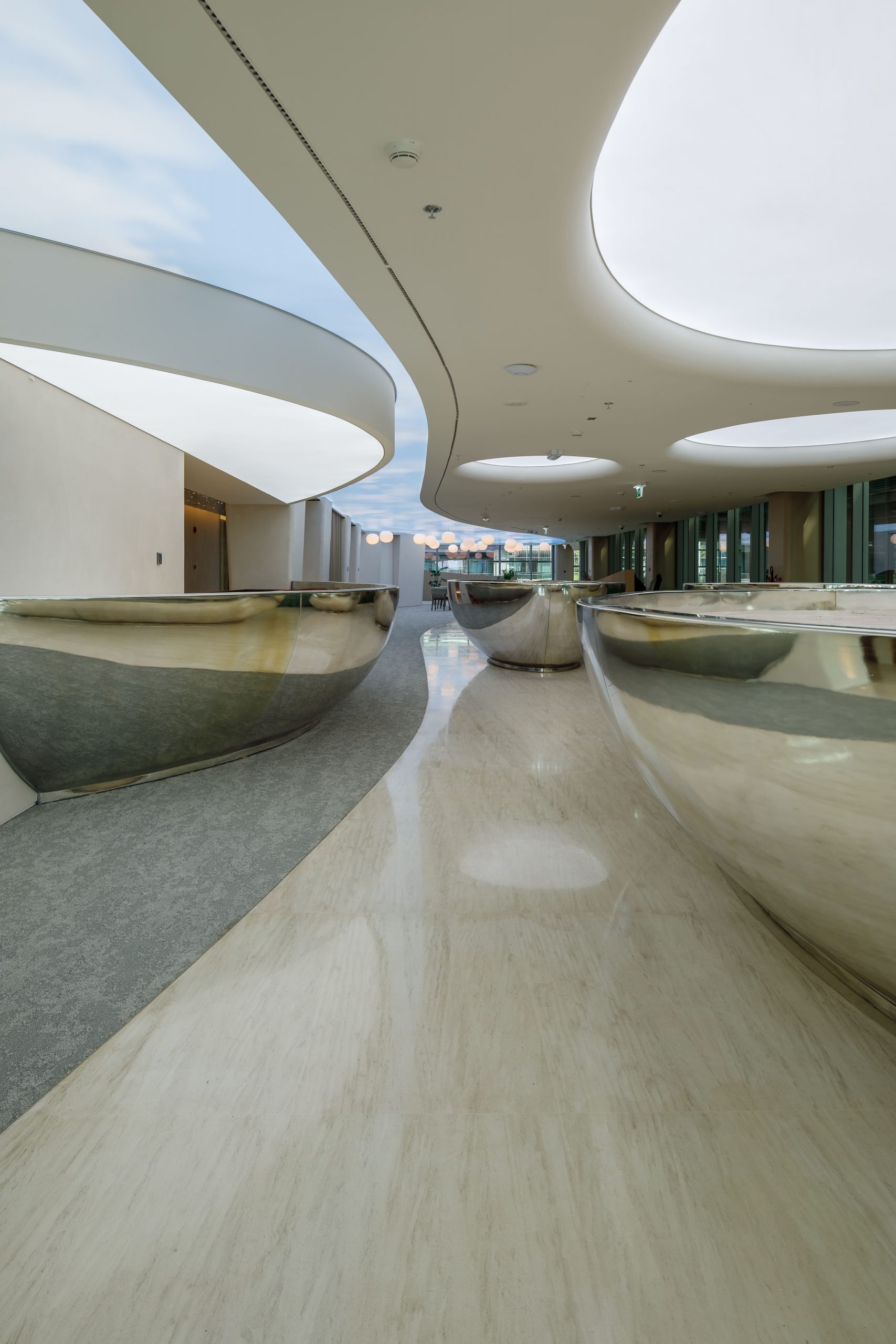
In the bustling heart of Dubai’s International Financial Centre, One Central Building 5 is now home to the new offices of Ora, a name synonymous with luxurious minimalism and modern elegance. The location offers immediate amenities and food & beverage options, along with a stunning backdrop of Dubai’s iconic Emirates Towers. But what sets this office apart is not just its prime locale—it’s the result of an extraordinary vision, rendered into physical form by the design team at dwp|dubai.
Led by Adriana Graur, Erol Anefi, Morgan Heur, and Anastacia Schmidt, the dwp|dubai team embarked on a meticulous design journey, beginning with a comprehensive analysis of the base building and concluding in a seamless handover. Their execution of the client’s visionary brief was an exercise in rigorous attention to detail. Each design element was crafted in close alignment with the contractor, achieving a unified and elevated aesthetic.
The project was marked by a harmonious collaboration with Ora’s in-house design team from Egypt. This partnership ensured that every facet—from material selection to furnishings and equipment—was in accord with Ora’s global brand ethos. Moreover, a commitment to sustainable design was foundational to their joint efforts, underscored by a focus on natural light infusion and acoustic optimization, all in compliance with LEED standards.
Ora’s signature style is a deft intermingling of luxury and minimalism. Their properties embody this by weaving together modern and traditional elements, punctuated by bursts of carefully chosen colors and a balanced incorporation of natural materials such as wood, stone, and metal.
But the Ora brand goes beyond mere aesthetics. At its core, it demonstrates a deep-rooted commitment to modernism, innovation, sustainability, and cultural resonance. This guided dwp in designing a workspace that not only fosters collaboration through an open-plan layout but also accommodates the diverse demands of a contemporary office through thoughtfully integrated private workspaces. The design also pays homage to the UAE’s rich cultural heritage, intertwining it effortlessly with Ora’s design principles.
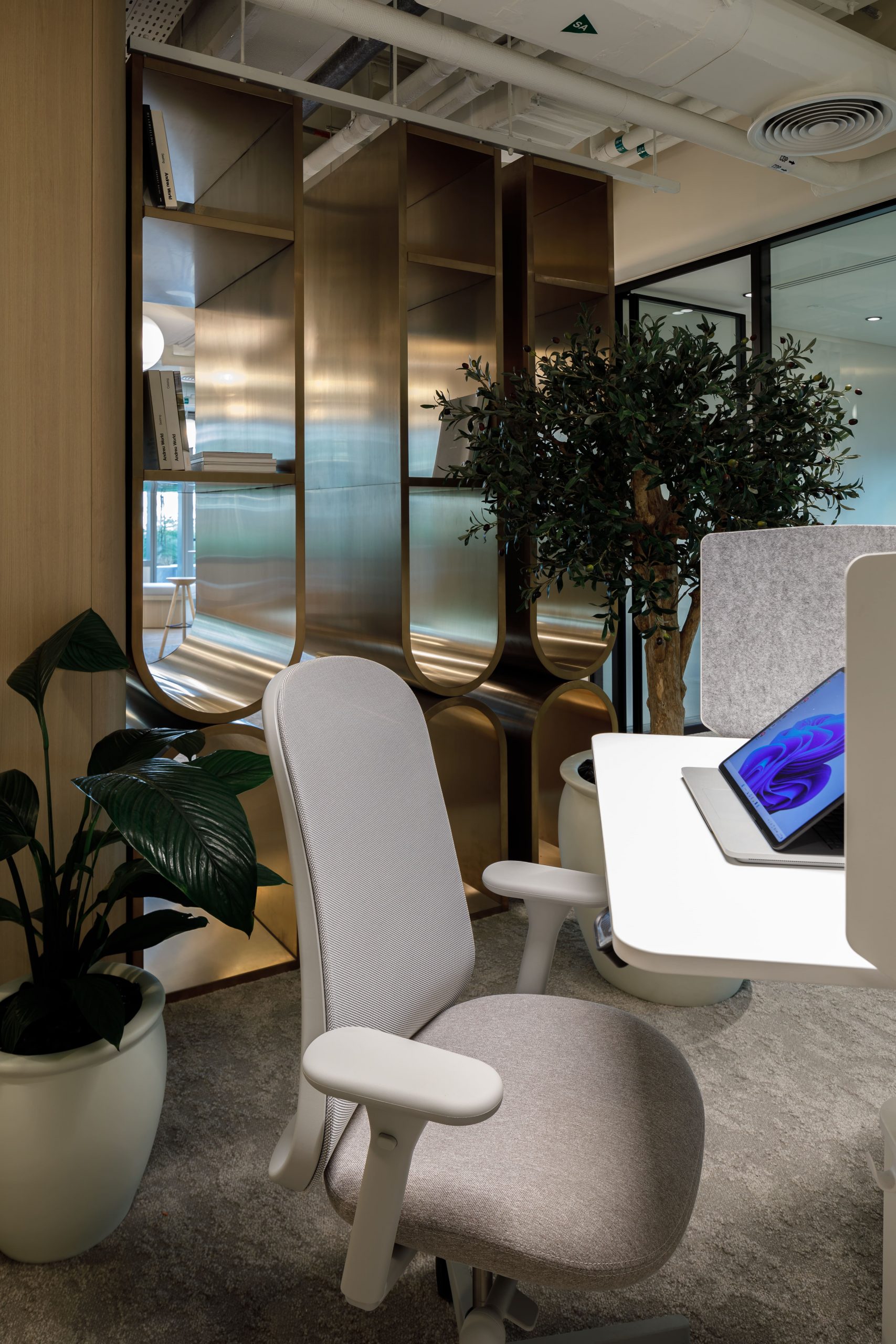
Functionality, too, is paramount. Ergonomic furniture and an integration of smart office solutions point to a design that is as environmentally responsible as it is user-friendly. This holistic approach has earned the Ora Office in Dubai the International Property Awards—a testament to dwp’s consistent excellence in design.
At the project’s core are key elements:
— Biophilic Design: Emphasizing a connection with nature through materials and sensory elements, the design reflects the brand’s resort experiences globally.
— A Balanced Approach: Open and closed rooms cater to different work needs, emphasizing both functionality and aesthetics.
— The CEO Suite: A personalized space, blending comfort, functionality, and aesthetics, aligned with the company’s vision.
— Terrace Panorama: An outdoor space offering awe-inspiring views of Dubai’s landmarks, providing an oasis in the urban landscape.
— Community Focus: The design encourages collaboration and focus, building a strong sense of community.
In sum, the Ora Office is more than a well-designed space; it’s a living entity that echoes human needs and environmental consciousness. It offers an innovative approach to embracing natural beauty, fostering collaboration, and blending functionality with aesthetics and its vision, creativity, and execution make it not just a place to work, but a space to live, innovate, and inspire.
Share
Tags: Abu dhabi, Agile workspace, Archi, Architect, Architecture, Artist, Asia, Bangkok, Bar, BIM, Blog, Boutique, Business, Civic, Construction, Content, Creativity, Culture, Design, Designer, Digital, Digital technology, Digital transformation, Digitisation, Drink, Dubai, Education, Experience, F&B, Food, Future, Health, Hicap, Ho chi minh, Hospitality, Hotel, Hotel design, Information, Innovation, Interior, Interior design, Interior designer, Interview, Knowledge, Lebua, Lifestyle, Luxury, Luxury design, Luxury interior, Marriott, Profile, Residential, Restaurant, Saigon, Sky, Studio, Success, Sustainibility, Tech, Technology, Thailand, Trends, Video, Vietnam, W hotel, Women
Universal Music Thailand’s Groundbreaking Office: A Symphony of Design and Brand Identity
Insights Blog
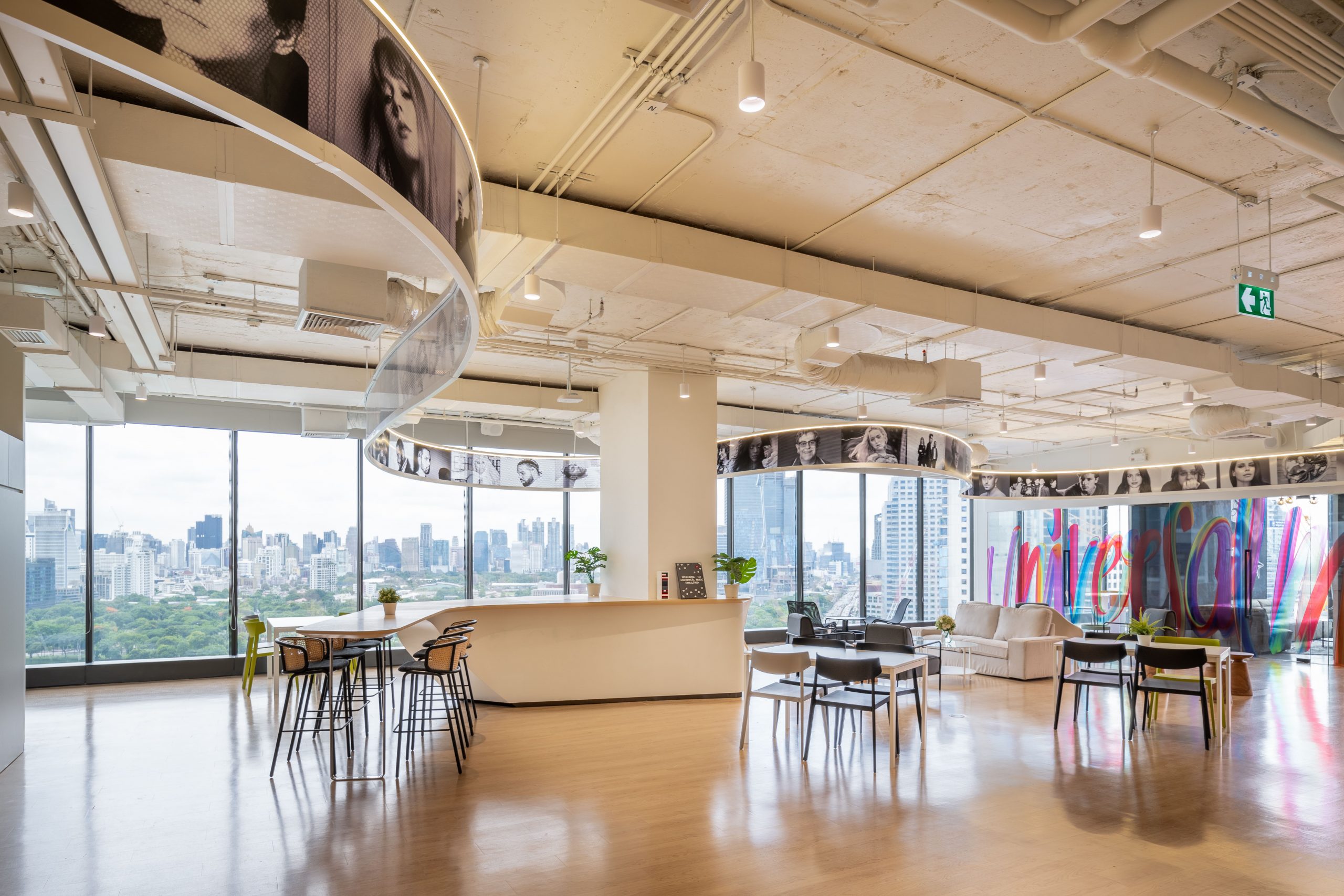
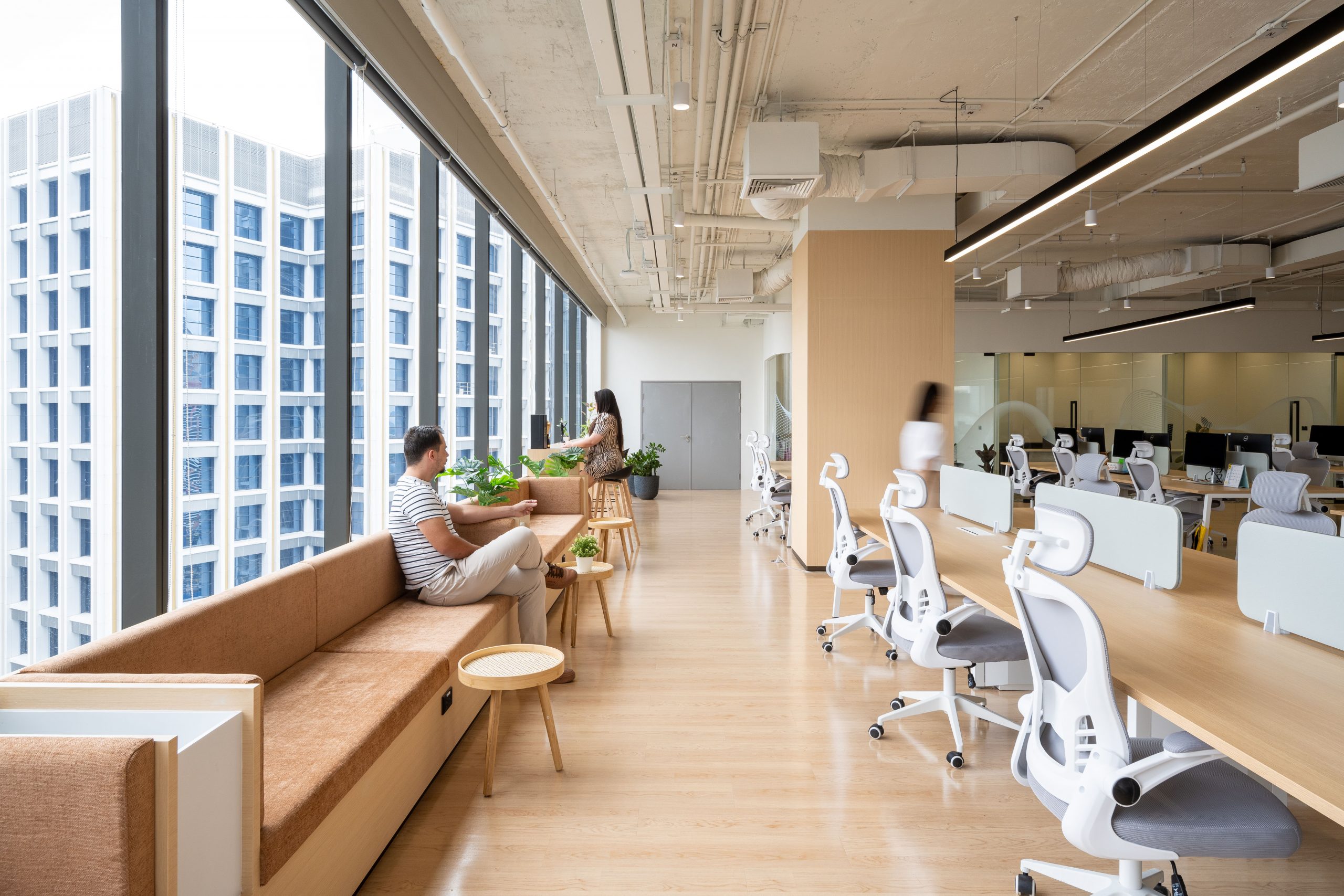
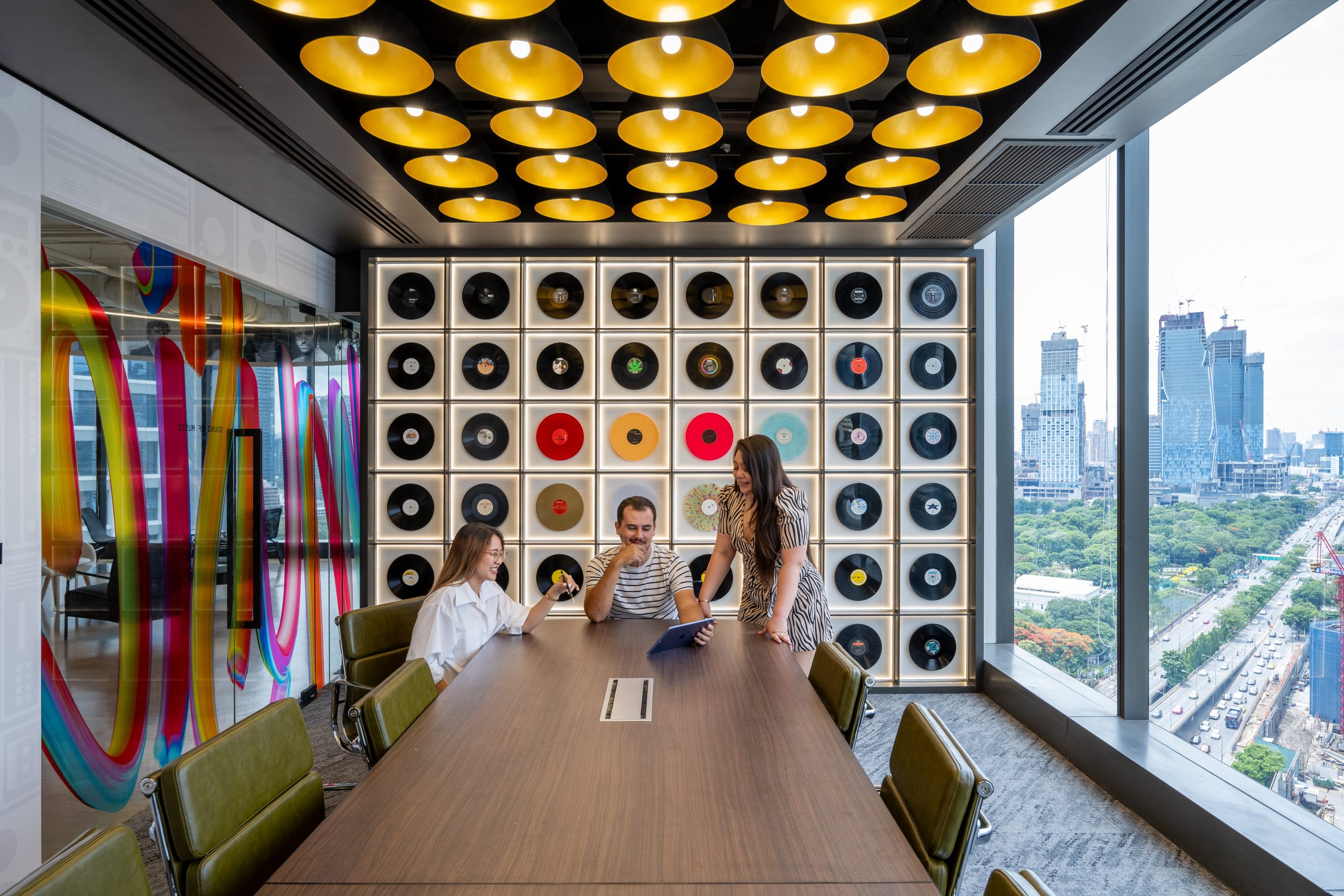
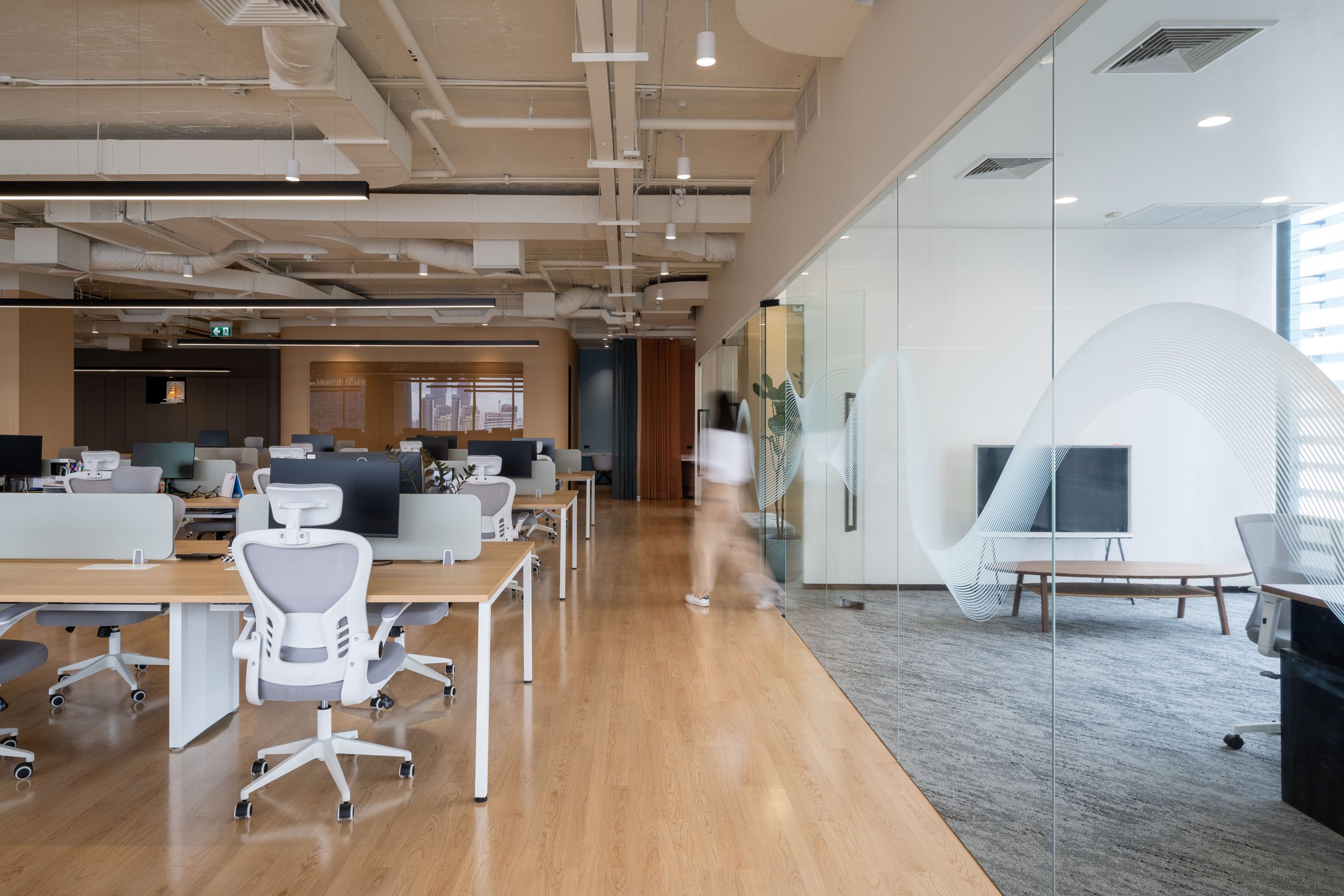
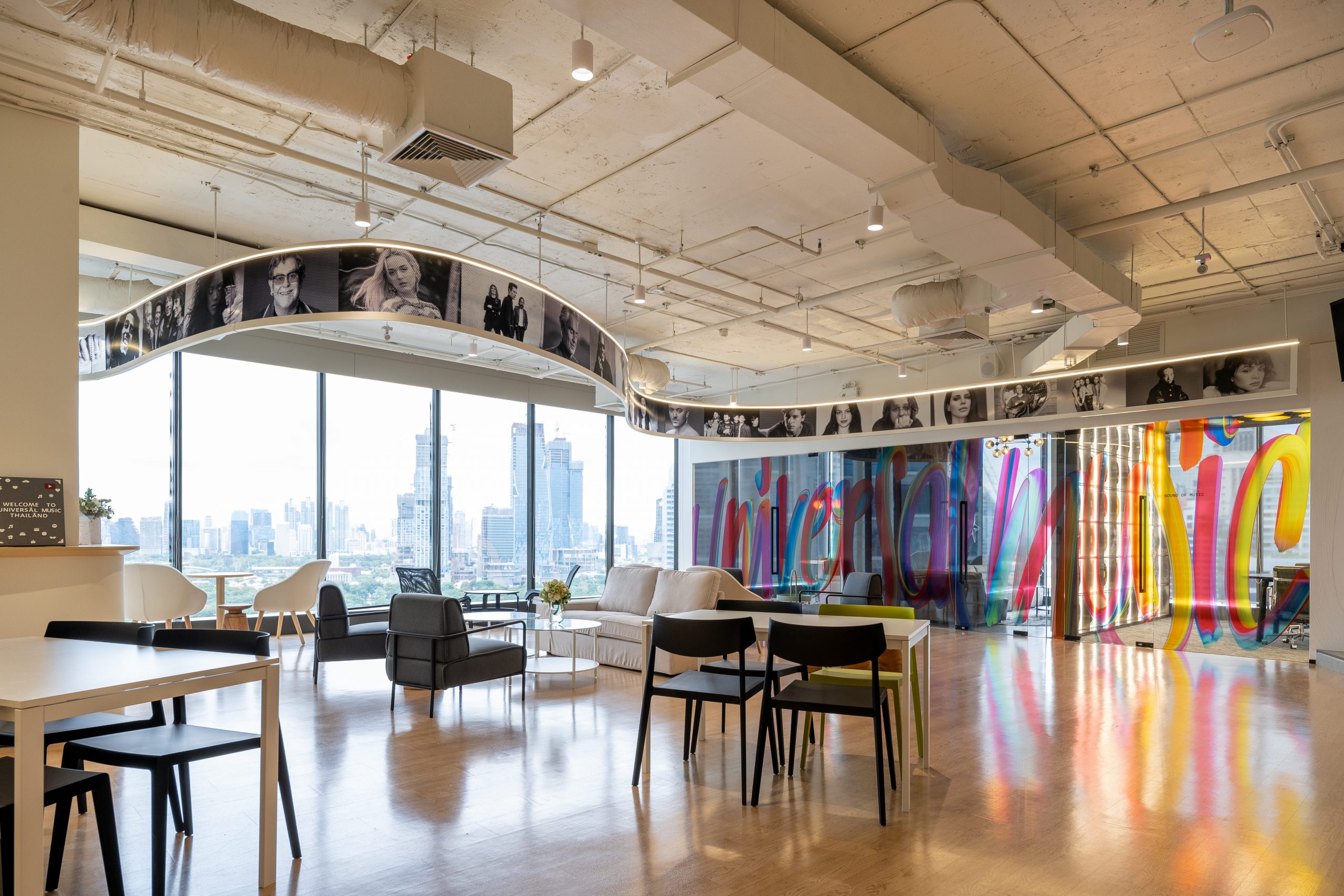
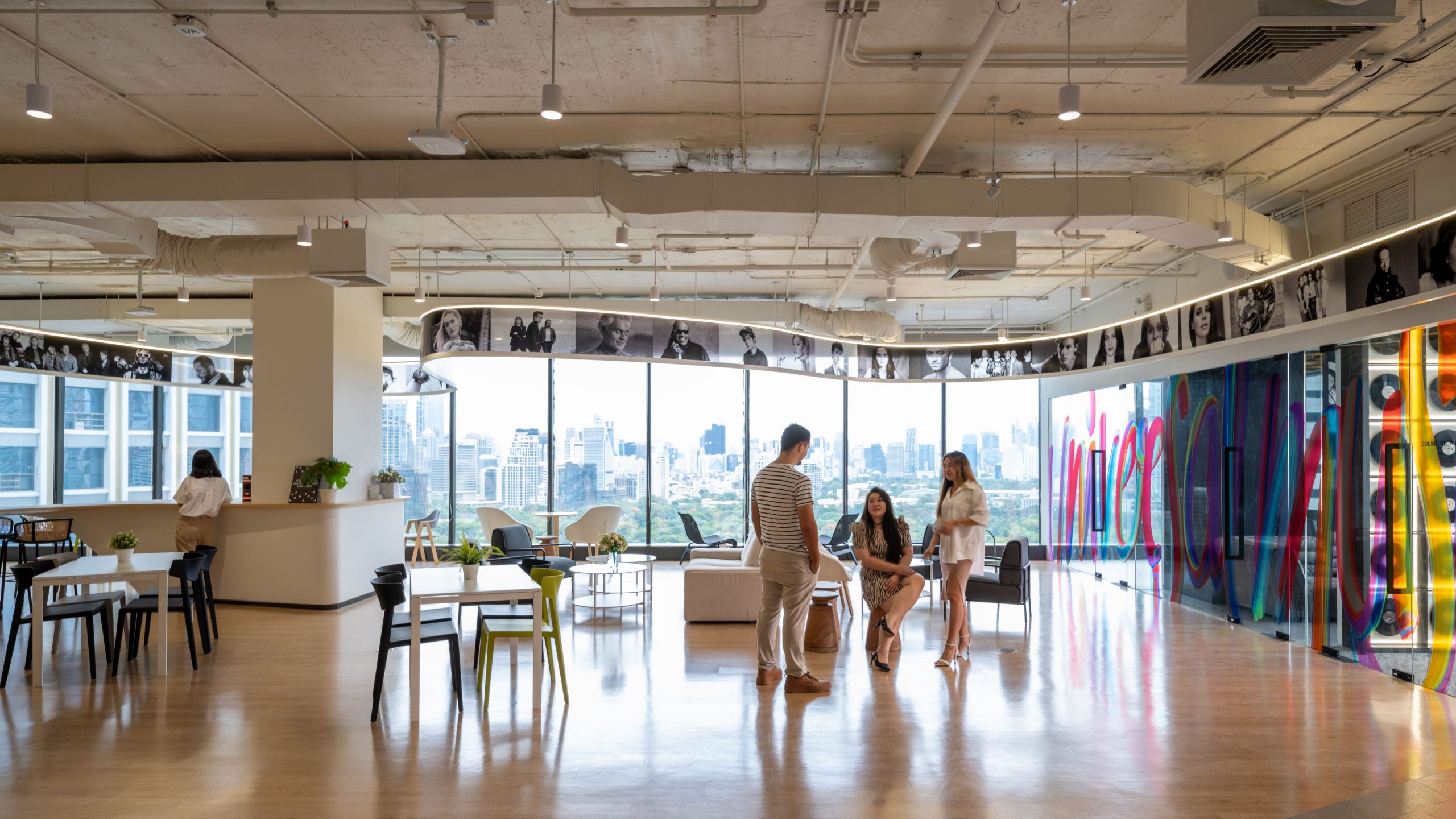
BANGKOK—In a landmark collaboration that signifies a paradigm shift in office design, Universal Music Thailand has engaged design worldwide partnership (dwp) to orchestrate a workplace environment that is as rhythmic as it is visually captivating. This alliance serves as a pioneering exemplar, seamlessly integrating a brand’s core identity into its tangible surroundings.
A Concerted Selection Process
Securing the commission was by no means a predestined outcome for dwp. Several competing firms presented their virtuosic design concepts, each hoping to capture Universal Music’s attention and approval. However, it was dwp’s avant-garde design proposal—aptly capturing the very essence and vibrancy of Universal Music—that inevitably set the stage for their role as the principal designers.
Choreographing Spaces through “The Movement of the Equalizer”
At the core of dwp’s spatial composition is the imaginative “Movement of the Equalizer” concept. This ingenuous design strategy endeavors to amplify the emotive power of music, channeling its kinetic energy throughout the various workspaces.
A Grand Overture
Scheduled for a grand unveiling in August, visitors to the office will encounter a stately reception area, highlighted by a commanding speaker counter—a symbolic tribute to the thriving music industry. The reception area is not merely a feast for the eyes; it is a technological tour de force. A cutting-edge LED wall, enhanced with artificial intelligence, doubles as both an interactive data hub and a vibrant visual display, offering real-time insights into Universal Music’s dynamic portfolio, including upcoming concerts and trending events.
The Harmonious Marriage of Nature and Light
Yet dwp’s architectural vocabulary extends beyond mere technological prowess. A vital part of the design is a carefully curated garden oasis, replete with abundant natural light. This tranquil space serves as a green sanctuary, reinforcing the design firm’s conviction that an optimal blend of natural elements can significantly elevate employee creativity and overall well-being.
The Office’s Heartbeat: The Town Hall
Much anticipated is the office’s dedicated town hall space. Conceived as the organization’s communal hub, the town hall is designed not only to galvanize cross-departmental synergies but also to function as a vibrant platform for artists to perform, thereby embodying Universal Music’s essence in the most literal sense.
Craftsmanship in Every Detail
dwp’s meticulous attention to materiality and texture is evident in every aspect of the design. From the specially-selected paint that imbues the walls with character and depth, to the warm hues and timber elements that contribute to an inviting atmosphere, each design decision is the result of deliberate consideration.
An Anticipated Crescendo
As this transformative initiative nears its completion, dwp would like to express its gratitude for the invaluable support from its skilled team and the unflagging trust invested by Universal Music Thailand. For aficionados of both design and music, this fusion of disciplines heralds a landmark moment. Stay tuned for updates on this audacious project, as the industry watches with bated breath for the revelation of this magnum opus of musical and design integration.
Share
Tags: Abu dhabi, Agile workspace, Archi, Architect, Architecture, Artist, Asia, Bangkok, Bar, BIM, Blog, Boutique, Business, Civic, Construction, Content, Creativity, Culture, Design, Designer, Digital, Digital technology, Digital transformation, Digitisation, Drink, Dubai, Education, Experience, F&B, Food, Future, Health, Hicap, Ho chi minh, Hospitality, Hotel, Hotel design, Information, Innovation, Interior, Interior design, Interior designer, Interview, Knowledge, Lebua, Lifestyle, Luxury, Luxury design, Luxury interior, Marriott, Profile, Residential, Restaurant, Saigon, Sky, Studio, Success, Sustainibility, Tech, Technology, Thailand, Trends, Video, Vietnam, W hotel, Women
A conversation with Matanee Osatanukroa from our Bangkok Studio and Adriana Graur based in Dubai Studio, we explore the Evolution of Office Interiors in the Age of AI
dwp – design worldwide partnership (dwp): We are delighted to be in conversation with Matanee Osatanukroa and Adriana Graur, eminent designers at dwp. Based out of Bangkok and Dubai respectively, these visionaries are reimagining office interiors using AI. Welcome to both of you.
Matanee:Thank you for having us.
Adriana: It’s a pleasure.
dwp: Matanee, how do you see AI reshaping the office design industry?
Matanee: AI is merging design artistry with intelligent functionalities to create spaces that look good and work smart. For instance, AI facilitates optimal energy use, light adjustments, and intuitive room booking, making spaces truly intelligent.
dwp: Adriana, in what ways is AI elevating office efficiency?
Adriana:AI is remarkably adept at automating routine tasks and enhancing space utility. By understanding employee behaviours and interactions, we can design more intuitive and adaptive work environments that lead to significant cost savings and a more personalised employee experience.
dwp: Matanee, beyond just task automation, how does AI contribute to employee engagement?
Matanee: The magic of AI brings us virtual assistants and cutting-edge communication platforms that obliterate geographical constraints, fostering unimpeded teamwork. Moreover, AI-driven insights offer workspace solutions that boost individual and collective productivity.
dwp: Can you shed light on how AI is pioneering ‘smart’ workspaces, Adriana?
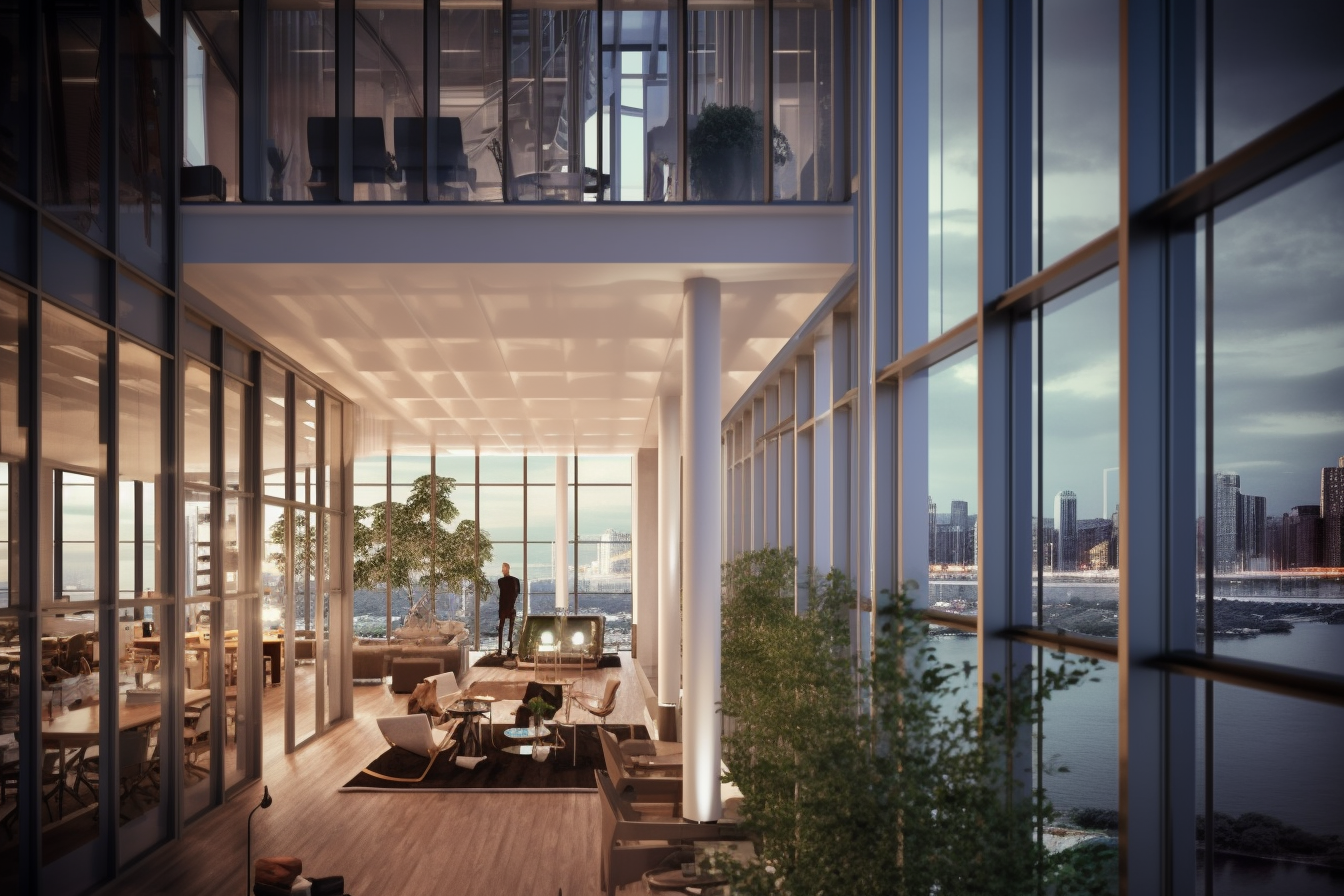
Adriana:With pleasure. AI helps us defy traditional workspace norms. For instance, we can project dynamic 3D data anywhere, transforming a regular room into a lively, immersive work setting that enhances collaboration and well-being.
dwp: It seems like AI is redefining interior design. Matanee, could you elaborate?
Matanee:Absolutely. Today, AI facilitates detailed and vivid 3D visualisations, making the design process more interactive and immersive. AI allows for on-the-spot modifications and a more collaborative design experience, pushing the boundaries of traditional design methods.
dwp: And in this AI-driven shift, Adriana, how relevant do you think the role of an interior designer remains?
Adriana:Invaluable. While AI provides data-centric insights, the innate ability of a designer to interpret and translate client desires into tangible designs remains irreplaceable. AI aids, but the human touch gives life to spaces.
dwp: Sustainability is a hot topic today. How does AI feature in this context, Matanee?
Matanee: AI is a linchpin for sustainable design by smartly managing resources based on real-time needs, thereby minimising wastage and championing eco-friendly practices.
dwp: Any ethical challenges with integrating AI in design?
Adriana: Certainly. We must be cautious about privacy, data security, and potential biases. Transparency and ethical AI practices are non-negotiable for establishing trust.
dwp: To conclude, Matanee, where do you see the future trajectory of office designs with AI?
Matanee: AI is orchestrating a transformation, crafting office spaces that prioritise creativity and human connection. Ethical considerations are paramount, but with AI’s potential, the future is thrilling and promising.
dwp: It’s been enlightening speaking with both of you. AI is not just a tool but a co-designer, and with experts like you at dwp, the future of workplace design seems to be in adept hands. Thank you for your insights.
Matanee & Adriana:Thank you for chatting with us.
Ai generated imagery by dwp | design worldwide partnershipStark Office, Bangkok designed by dwp | design worldwide partnershipAi generated sketch by dwp | design worldwide partnership
Share
Tags: Abu dhabi, Agile workspace, Archi, Architect, Architecture, Artist, Asia, Bangkok, Bar, BIM, Blog, Boutique, Business, Civic, Construction, Content, Creativity, Culture, Design, Designer, Digital, Digital technology, Digital transformation, Digitisation, Drink, Dubai, Education, Experience, F&B, Food, Future, Health, Hicap, Ho chi minh, Hospitality, Hotel, Hotel design, Information, Innovation, Interior, Interior design, Interior designer, Interview, Knowledge, Lebua, Lifestyle, Luxury, Luxury design, Luxury interior, Marriott, Profile, Residential, Restaurant, Saigon, Sky, Studio, Success, Sustainibility, Tech, Technology, Thailand, Trends, Video, Vietnam, W hotel, Women
dwp | design worldwide partnership Triumphs at International Architecture and Design Awards 2023
Insights Blog
In a whirlwind of design prestige and high-end craftsmanship, dwp | design worldwide partnership has proudly earned a duo of esteemed accolades at the International Architecture and Design Awards 2023. We are thrilled to announce our victory in two key categories: the Gold Award for the Hotel Interior Design Built category and the Silver Award for Residential Interior Design Concept category.
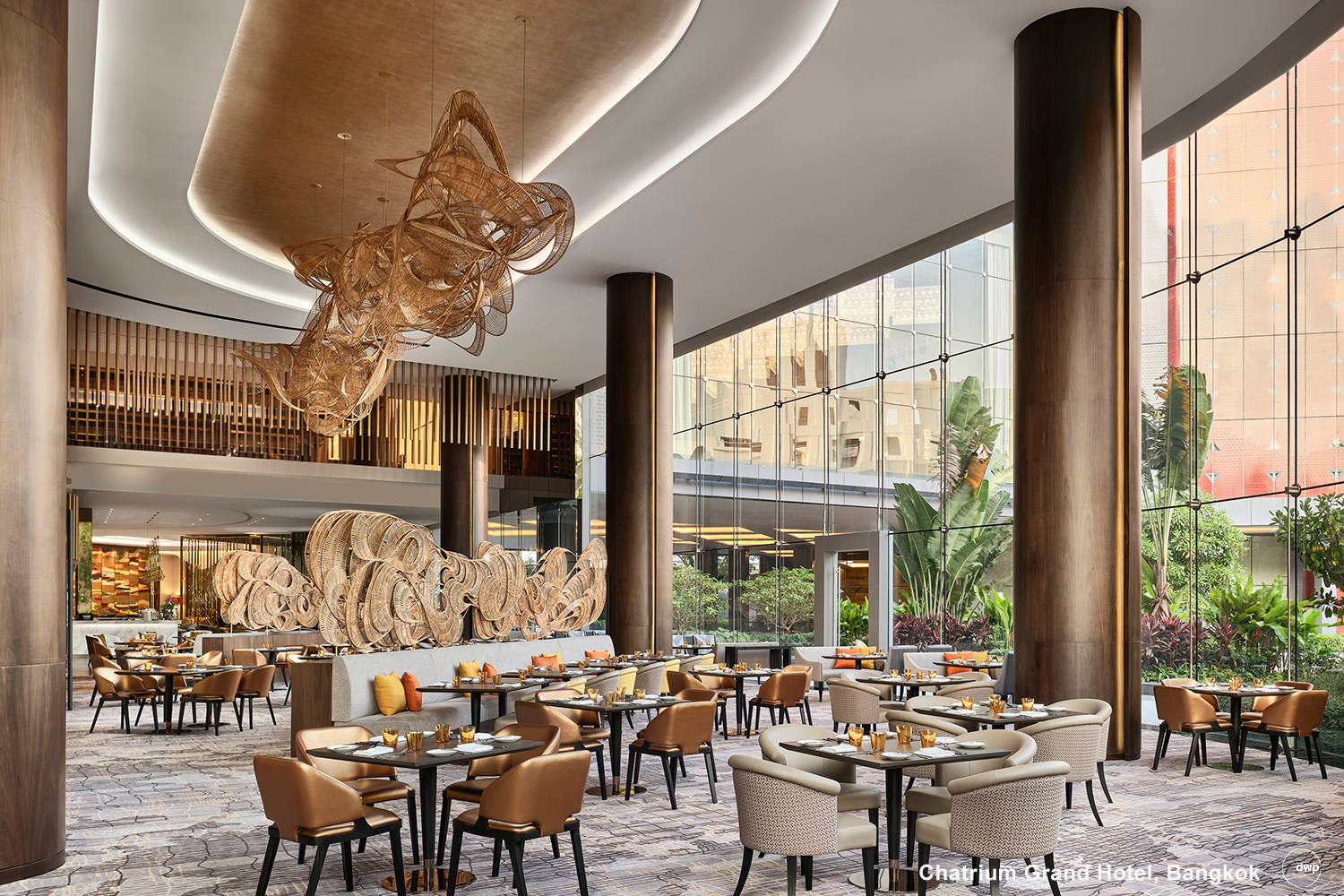
Our accomplished work on the Chatrium Grand Hotel in Bangkok has been recognised with the Gold Award. This project was a daring endeavour to harmonise the bustling rhythm of Bangkok with an oasis of tranquillity, all within the confines of a luxury hotel. Showcasing a marriage of traditional elements with a contemporary approach, our design captures the vivacious spirit of the locale while providing a serene and sophisticated retreat for guests. The award serves as a testimony to our commitment to design that is not just aesthetically pleasing but also resonates with its local culture and environment.
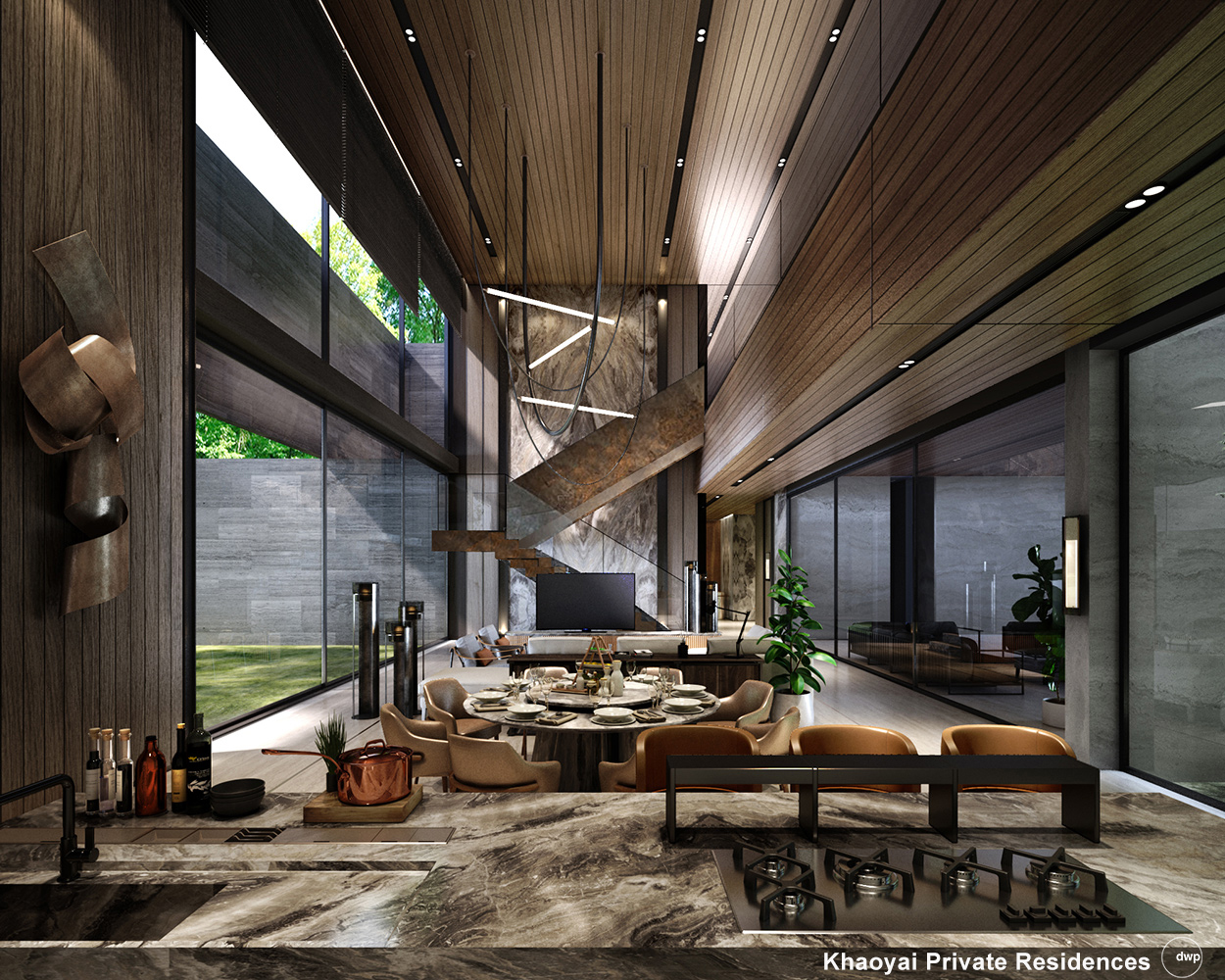
The Silver Award was bestowed upon our innovative design concept for the Khaoyai Private Residences. This project exemplifies dwp’s vision of creating unique, innovative living spaces that seamlessly blend functionality, sustainability, and aesthetic appeal. By delivering an avant-garde design concept, we were able to develop a residential space that went beyond fulfilling our clients’ requirements, to create a home that tells its own unique story. This recognition reiterates our dedication to constantly push boundaries in the design world and cultivate spaces that respond perfectly to our clients’ needs.
These accolades are not just awards; they serve as an affirmation of the unwavering commitment, creativity, and hard work that each member of our team invests into every project. They reflect the core values of dwp, underlining our pursuit of design excellence and innovative solutions that continue to shape the world of architecture and design.
Our success at the International Architecture and Design Awards 2023 also underscores our commitment to forging a strong connection between people and the spaces they inhabit, while considering the environmental, societal, and aesthetic impacts of our work. It is a reminder that great design is not just about creating beautiful spaces, but also about fostering experiences, nurturing communities, and contributing positively to the world around us.
We would like to express our heartfelt gratitude to the International Architecture and Design Awards for honouring our work, and to our clients for entrusting us with their visions.’
Share
Tags: Abu dhabi, Agile workspace, Archi, Architect, Architecture, Artist, Asia, Bangkok, Bar, BIM, Blog, Boutique, Business, Civic, Construction, Content, Creativity, Culture, Design, Designer, Digital, Digital technology, Digital transformation, Digitisation, Drink, Dubai, Education, Experience, F&B, Food, Future, Health, Hicap, Ho chi minh, Hospitality, Hotel, Hotel design, Information, Innovation, Interior, Interior design, Interior designer, Interview, Knowledge, Lebua, Lifestyle, Luxury, Luxury design, Luxury interior, Marriott, Profile, Residential, Restaurant, Saigon, Sky, Studio, Success, Sustainibility, Tech, Technology, Thailand, Trends, Video, Vietnam, W hotel, Women
Saudi Arabia’s First Vignette Collection Hotel: A Confluence of Luxury and Tradition
Insights Blog
At the heart of Saudi Arabia, a transformation is underway. The Carlton Al Moaibed Hotel is journeying to become the country’s first Vignette Collection Hotel. Set to open in 2024, this evolution is a collaboration between design firm dwp and IHG Hotels & Resorts. The hotel’s transformation aligns with Saudi Arabia’s Vision 2030, reflecting a growing demand for experiences that extend beyond typical luxury.
Adriana Graur, Design Director at dwp noted that “the redesign of Carlton Al Moaibed Hotel aims to blend regional culture with an elevated guest experience. Contemporary renditions of traditional Arabic motifs play a part in adding depth and connection to Saudi Arabia’s rich legacy.”
Similarly, Scott Whittaker, Group Creative Director, adds, “With the Vignette Collection Hotel, we wanted to explore the concept of luxury in the hospitality sector. We have aimed to create an establishment that sets a high standard while offering guests an authentic Arabian experience.”
Set in a vibrant community village, the new Vignette Collection Hotel offers a recreation and cultural engagement hub. It features a range of dining venues, a spa, a fitness club, and an outdoor pool. In addition, its multifunctional meeting rooms and convention centres encourage collaboration, making it suitable for both business and leisure travellers. Its convenient location close to Dammam City and good airport connectivity makes it an accessible choice for international visitors.
With dwp’s guidance, the hotel’s design combines comfort with local tradition, creating an intriguing Arabian hospitality experience. Arabic patterns and local artwork are given a modern interpretation, echoing Saudi Arabia’s heritage. From the lobby to the guestrooms, the design aims to create an atmosphere of tranquillity and elegance.
The Vignette Collection Hotel in Al Khobar represents a fresh perspective in Saudi Arabia’s hospitality industry. It is an example of successful collaboration and thoughtful design, inviting guests to experience a blend of tradition and luxury. As Saudi Arabia continues to develop as a global destination, this hotel is poised to welcome travellers worldwide.
Whittaker reiterates, “With the Vignette Collection Hotel, we aimed to create an establishment that doesn’t just redefine luxury but also invites guests to immerse themselves in a genuine Arabian journey.”
The Carlton Al Moaibed Hotel’s transformation is a significant development in Saudi Arabian hospitality. Fusing tradition and luxury aligns with Saudi Arabia’s Vision 2030 and its ongoing revitalisation efforts. With varied dining options, a spa, a fitness club, and an outdoor pool, the hotel offers a diverse array of amenities. Under dwp’s stewardship, the hotel’s design is a homage to Saudi Arabian heritage, employing modern interpretations of Arabic patterns and locally sourced artwork. This new addition to the Vignette Collection sets a strong precedent, inviting travellers worldwide to experience Saudi Arabia’s evolving hospitality landscape.
Share
Tags: Abu dhabi, Agile workspace, Archi, Architect, Architecture, Artist, Asia, Bangkok, Bar, BIM, Blog, Boutique, Business, Civic, Construction, Content, Creativity, Culture, Design, Designer, Digital, Digital technology, Digital transformation, Digitisation, Drink, Dubai, Education, Experience, F&B, Food, Future, Health, Hicap, Ho chi minh, Hospitality, Hotel, Hotel design, Information, Innovation, Interior, Interior design, Interior designer, Interview, Knowledge, Lebua, Lifestyle, Luxury, Luxury design, Luxury interior, Marriott, Profile, Residential, Restaurant, Saigon, Sky, Studio, Success, Sustainibility, Tech, Technology, Thailand, Trends, Video, Vietnam, W hotel, Women
Todays Opulence : The Progression of Luxury Lifestyle Experiences
Insights Blog
Todays luxury destinations and branded residential projects have evolved to the peak of high-end travel and living, offering exclusivity, and bespoke services. Yet beneath the facade of opulence, these locations are advancing a new era of consciousness, emphasizing sustainability, wellness, and rich cultural immersion.
Sarinrath Kamolratanapiboon, Executive Director at dwp, a leading design firm with studios across Asia and the Middle East, reflects on this evolution, stating, “We’ve seen a shift in what defines luxury. It’s no longer solely about opulence and comfort. Today’s discerning travelers and residents demand sustainability, wellness, and authentic cultural experiences. They’re seeking transformative journeys, not just destinations or places to live.”
Catering to refined and demanding clients, these destinations and residences underscore the delivery of phenomenal service and amenities, carefully tailored to suit individual tastes and needs. From personal butlers at one’s beck and call to luxurious suites adorned with the finest materials, no stone is left unturned in curating an environment of indulgence.
Despite their relentless pursuit of luxury, these enterprises are profoundly committed to sustainable endeavors, recognising the necessity to preserve our planet for future generations. “Sustainability isn’t just a buzzword for us,” explains Charlie Kelly, Managing Director, Middle East Region, “It’s integral to how we operate. We believe that luxury and sustainability coexist, and also mutually benefit.
We at dwp understand this and are committed to proving this through our designs and actions.”
These residences exceed expectations by offering state-of-the-art wellness facilities, including world-class spas, fitness centers, and custom wellness programs. From yoga retreats set against breathtaking vistas to holistic treatments rooted in ancient healing traditions, guests are encouraged to embark on transformational journeys of self-realization and wellbeing.
“Luxury now extends beyond expensive materials and lavish design,” observes Kamolratanapiboon. “An authentically luxurious experience fosters a profound and meaningful rapport with the local culture.” These destinations are created for clients, offering curated and meaningful experiences that immerse guests in local customs and cuisines that allow interaction with local artisans.
dwp, with its global footprint across Asia and the Middle East, melds clients’ aspirations with a deep understanding of each destination’s local culture, history, and context. “We pride ourselves on crafting designs that not only fulfill our client’s visions and respect and protect the environment and local communities,” Kelly remarks.
The commitment of dwp to creating an unforgettable guest experience shines through their meticulous focus on sensory components; ambiences radiating through the personalisation of decorative lights, integration of natural sounds, and distinctive aromas that enhance the sensory experience. Guests stepping into these environments are immediately immersed in an atmosphere of enchantment and refinement.
These destinations including branded residences, exemplars of responsible tourism and living, demonstrate that luxury can be both indulgent and conscientious. “The future of luxury travel and living is not just about places to visit or reside,” Kamolratanapiboon concludes, “They are transformative experiences that redefine the concept of luxury, leaving guests with memories that will last a lifetime.”
Share
Tags: Abu dhabi, Agile workspace, Archi, Architect, Architecture, Artist, Asia, Bangkok, Bar, BIM, Blog, Boutique, Business, Civic, Construction, Content, Creativity, Culture, Design, Designer, Digital, Digital technology, Digital transformation, Digitisation, Drink, Dubai, Education, Experience, F&B, Food, Future, Health, Hicap, Ho chi minh, Hospitality, Hotel, Hotel design, Information, Innovation, Interior, Interior design, Interior designer, Interview, Knowledge, Lebua, Lifestyle, Luxury, Luxury design, Luxury interior, Marriott, Profile, Residential, Restaurant, Saigon, Sky, Studio, Success, Sustainibility, Tech, Technology, Thailand, Trends, Video, Vietnam, W hotel, Women
Elevating Wellness in Hospitality: A Conversation with Khun Kanidtha Pattanapanitchakul
Insights Blog
From the idyllic tropical islands of Thailand’s to the bustling streets of Kuala Lumpur and Ho Chi Minh City, an evolution is taking place in the hospitality sector of the Asia Pacific. A shift towards wellness-focused amenities and experiences is rapidly reshaping the industry. No one understands this shift better than designer Khun Kanidtha, Hospitality Sector Leader based in dwp’s Bangkok studio who is spearheading several innovative hospitality projects across the region. We sat down with Kanidtha to discuss her perspective on this blossoming wellness trend.
Q: What are the wellness amenities that are in demand in the hospitality sector in Asia Pacific?
Kanidtha: The Asia Pacific region has witnessed a palpable surge in demand for wellness amenities. Guests now seek out experiences that holistically cater to their health and wellness. Fitness facilities have become an absolute must, equipped with top-notch gear and expert trainers. Spas and massage services, offering a diverse array of therapies, facial treatments, and body scrubs, are increasingly in demand. Yoga and meditation sessions are also growing popular, with guests eager to maintain their routines while traveling. For instance, at the Movenpick BDMS Wellness resort in Bangkok, we’ve integrated amenities like cryosaunas and floatation tanks. This high-tech wellness arsenal has become one of our key selling points.
In addition, hotel guests are now searching for wholesome, healthy food options. Locally-sourced organic cuisine that caters to a variety of dietary requirements is becoming more important. There is also a yearning for the calming influence of nature and greenery. Hotels offering mind and body activities, such as Tai Chi workshops, cooking classes, and creative arts programs, are witnessing a surge in popularity. All these amenities aim to ensure that travelers maintain their well-being during their stay and return home refreshed.
Q: It seems that there is a shift of perception of luxury, is new luxury more about being effortless and wellness-centered?
Kanidtha: Absolutely. Luxury today is less about blatant displays of opulence and more about crafting experiences that prioritize guests’ well-being. There’s an escalating demand for sustainable, mindful design that integrates wellness into architecture and hospitality. New luxury is not about material indulgence but focuses on curated experiences that cater to individual well-being. In a recent high-end residential project in Malaysia, we intertwined indoor and outdoor design elements to create experiences that deeply connect people with nature.
The role of technology cannot be overlooked in creating an effortless experience for guests. With advanced tech, we can offer a personalized, friction-free experience that elevates luxury to new heights. Contactless check-ins, for example, let guests skip the front desk and use their smartphones instead, seamlessly integrating into their digital lifestyle. These digital keys also make room access a breeze.
Q: What are the future trends in wellness in the hospitality sector?
Kanidtha: There’s a significant movement towards wellness travel as people are becoming more conscious of their health. People are seeking solace from their busy lives, hunting for ways to relax, disconnect, and rejuvenate. The inclusion of wellness amenities in hotels and resorts provide the perfect refuge for individuals seeking comfort and good health.
Moreover, wellness travel is a burgeoning industry worldwide. The Asia Pacific region, especially Thailand, with its scenic beauty, tropical climate, and tranquil surroundings, provides an ideal backdrop for wellness tourism. As such, hotels and resorts are innovatively incorporating wellness amenities to lure this new breed of travelers, eager to preserve their health even while vacationing.
Share
Tags: Abu dhabi, Agile workspace, Archi, Architect, Architecture, Artist, Asia, Bangkok, Bar, BIM, Blog, Boutique, Business, Civic, Construction, Content, Creativity, Culture, Design, Designer, Digital, Digital technology, Digital transformation, Digitisation, Drink, Dubai, Education, Experience, F&B, Food, Future, Health, Hicap, Ho chi minh, Hospitality, Hotel, Hotel design, Information, Innovation, Interior, Interior design, Interior designer, Interview, Knowledge, Lebua, Lifestyle, Luxury, Luxury design, Luxury interior, Marriott, Profile, Residential, Restaurant, Saigon, Sky, Studio, Success, Sustainibility, Tech, Technology, Thailand, Trends, Video, Vietnam, W hotel, Women
Making Strides in Sustainable Architecture: Princess Zahra Pavilion’s Global Recognition
Insights Blog
dwp enews chatted with Khun Waralak Thongsrikate based in dwp’s Bangkok studio about the award winning project:
Congratulations on the recent recognition of the Princess Zahra Pavilion at the Aga Khan University Hospital. It was awarded third place in the “Public Building” category at the esteemed Casalgrande Padana Grand Prix awards. This is quite an achievement, considering the event’s 30-year history and the stiff competition from over 1,800 global submissions from around 1,300 architects. What does this win mean to you?
Khun Waralak: It’s incredibly validating to see our work recognised at such a prestigious event. The Princess Zahra Pavilion isn’t just a remarkable piece of architecture; it’s a symbol of our commitment to sustainability and to the local community.
dwp: That’s indeed laudable. Your eco-conscious approach, from design to construction, is particularly striking. Can you tell us more about the sustainable elements of the Pavilion?
Khun Waralak: Absolutely. A significant element that enhances the Pavilion’s sustainability is the use of locally sourced materials. As lead designers, we travelled to Pakistan and visited local suppliers and chose materials that were abundant in the local environment, such as the ceramic tiles for the flooring and construction materials for the façade. This method reduced the carbon footprint typically associated with sourcing materials from remote locations. Simultaneously, it minimized transportation costs and provided a boost to the local economy.
dwp: So, a focus on environmental responsibility and local economic support played a key role in your design philosophy?
Khun Waralak: Absolutely. We aimed to show that it’s possible to design state-of-the-art healthcare facilities that are not just visually impressive and culturally resonant, but also environmentally conscious and designed to last for generations. Our win proves that the Princess Zahra Pavilion stands as an embodiment of that philosophy. We believe that such eco-friendly approaches in architecture are not just an option but an imperative for our collective future in our quest to “Design for a Better World”.
Share
Tags: Abu dhabi, Agile workspace, Archi, Architect, Architecture, Artist, Asia, Bangkok, Bar, BIM, Blog, Boutique, Business, Civic, Construction, Content, Creativity, Culture, Design, Designer, Digital, Digital technology, Digital transformation, Digitisation, Drink, Dubai, Education, Experience, F&B, Food, Future, Health, Hicap, Ho chi minh, Hospitality, Hotel, Hotel design, Information, Innovation, Interior, Interior design, Interior designer, Interview, Knowledge, Lebua, Lifestyle, Luxury, Luxury design, Luxury interior, Marriott, Profile, Residential, Restaurant, Saigon, Sky, Studio, Success, Sustainibility, Tech, Technology, Thailand, Trends, Video, Vietnam, W hotel, Women
Intersection of Art & Design in Hospitality Art Enhancing the Guest Experience
Insights Blog
Art is a powerful tool that has the ability to elevate an ordinary experience into an extraordinary one. In the world of design, art serves as an endless source of inspiration and boundless imagination. For architects and interior designers, integrating art into their design process is key to creating aesthetically pleasing and functional spaces.
Unique Unforgettable Experiences
dwp – design worldwide partnership (dwp.com) is an industry leader in design, known for its philosophy of creating simple, beautiful, and sustainable designs. With a focus on sustainability, dwp integrates art into its design process to create eco-friendly and immersive spaces for guests. The firm recognizes the importance of art in the hospitality industry and how it plays a critical role in creating unique and unforgettable visual identities for hotels. Whether it’s paintings, sculptures, or installations, art unifies a hotel’s design elements, creating a unique sensory experience for guests.
Collaboration
At dwp, integrating art into their design philosophy is a collaborative effort between operators, artists, and designers. This collaboration allows dwp to create customised spaces that transport guests on a journey of discovery, evoking their imagination and senses. The result is an immersive and sensory experience that satisfies guests’ thirst for discovery, museum-like scenography, and unparalleled space. The firm recognizes that integrating art into its design process is essential to creating a unique and unforgettable guest experience.
In today’s digital age, travel may not be a prerequisite to experiencing the world’s offerings. As a result, the hospitality industry must tackle the challenge of providing new experiences that can sustain a loyal audience.
Art & Technology
For dwp, sustainability is key to addressing this challenge, and sustainability principles are integral to their design process. However, with the ever-changing demands of the new generation, designers must continually strive for innovation and renewal. This requires the integration of cutting-edge technologies like artificial intelligence and predictive design to enhance the customer experience and create immersive spaces integrated with art that resonate with guests.
dwp Signature Program
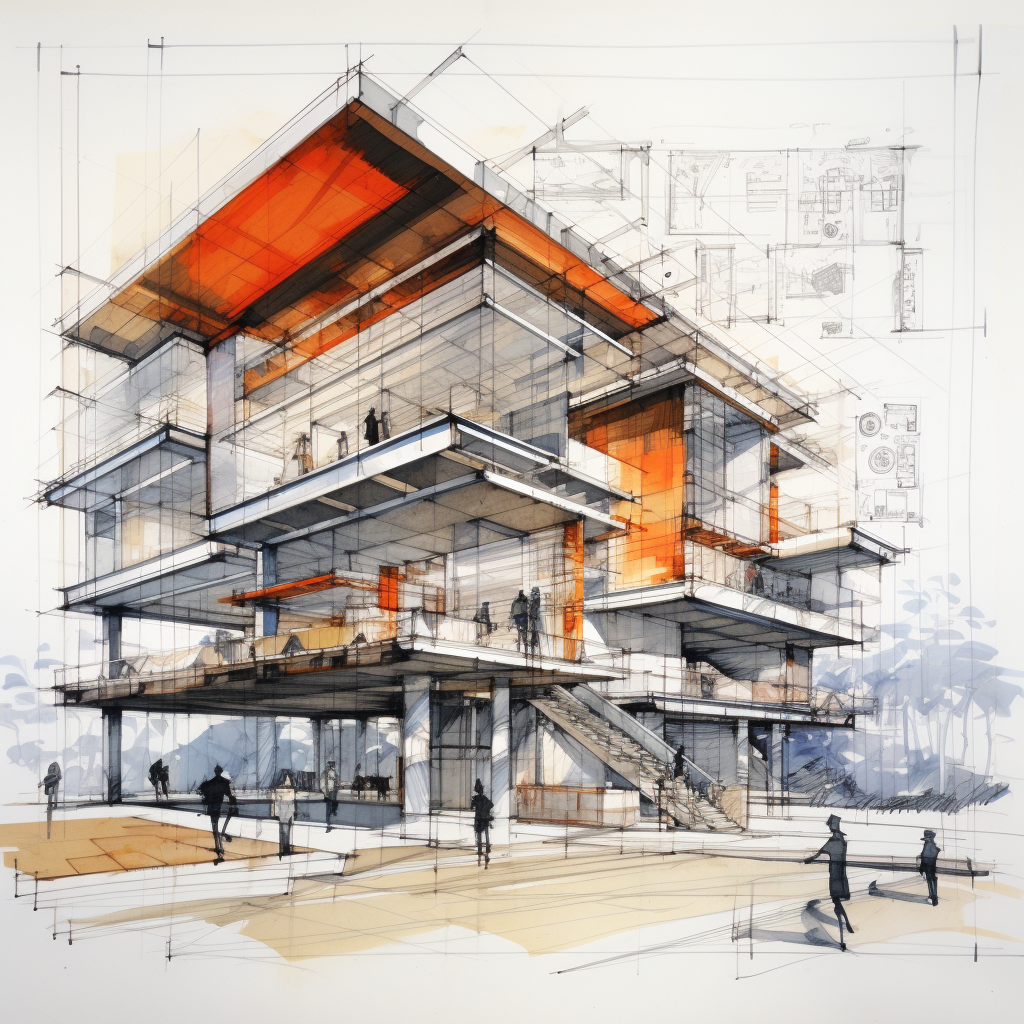
Through its signature program, dwp continues to push the boundaries of what is possible in integrating art and design. Visionary designers like dwp | Signature artists and creatives Jordy Fu and Matthew Campbell Laurenza create works of art that inspire, delight, and transport guests on a sensory journey that lingers long after their stay. With a focus on sustainability and a commitment to creating beautiful and functional spaces, dwp is changing the game in the design world. Their innovative approach to integrating art and architecture inspires the next generation of designers, and their work will undoubtedly continue to shape the future of hospitality design.
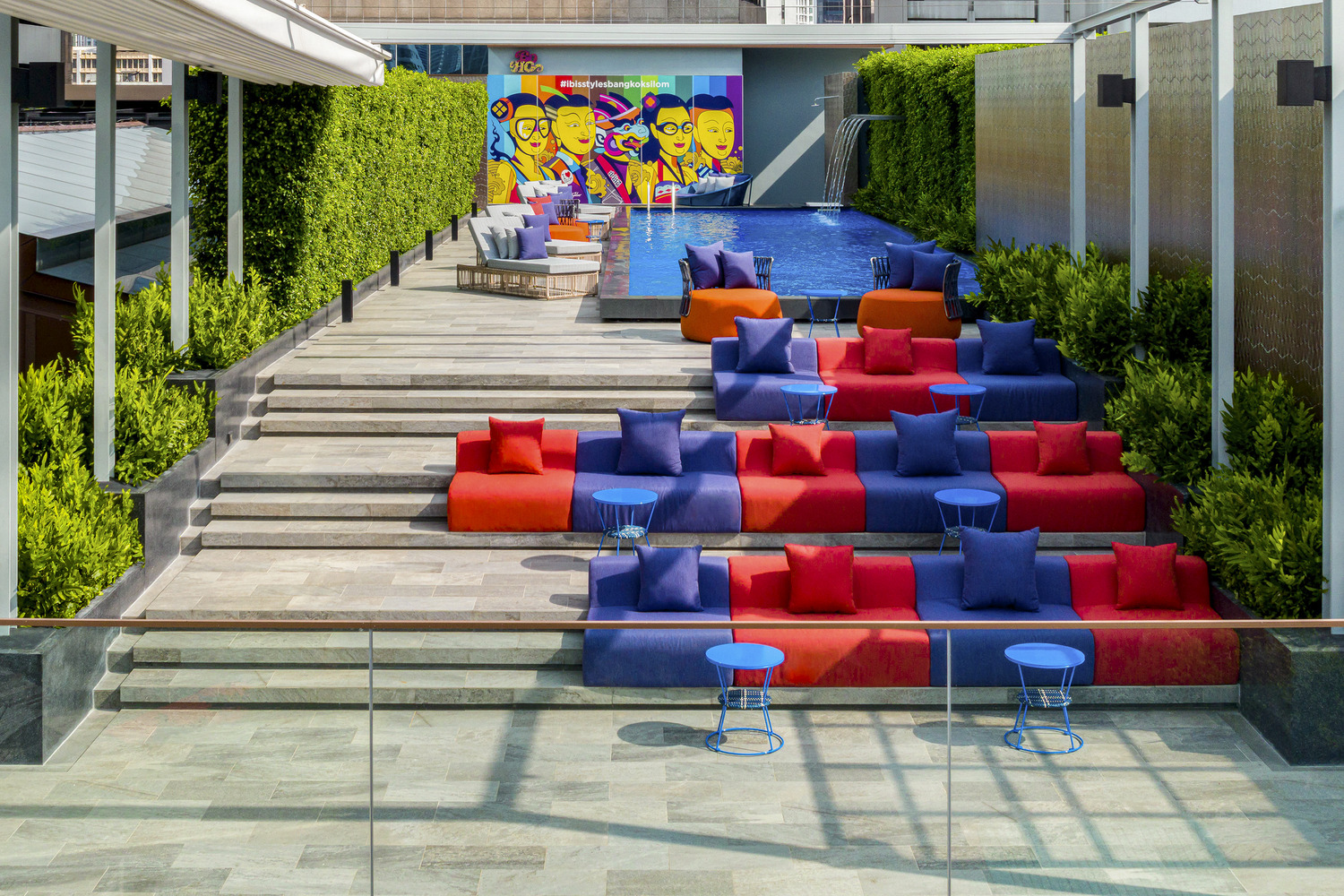
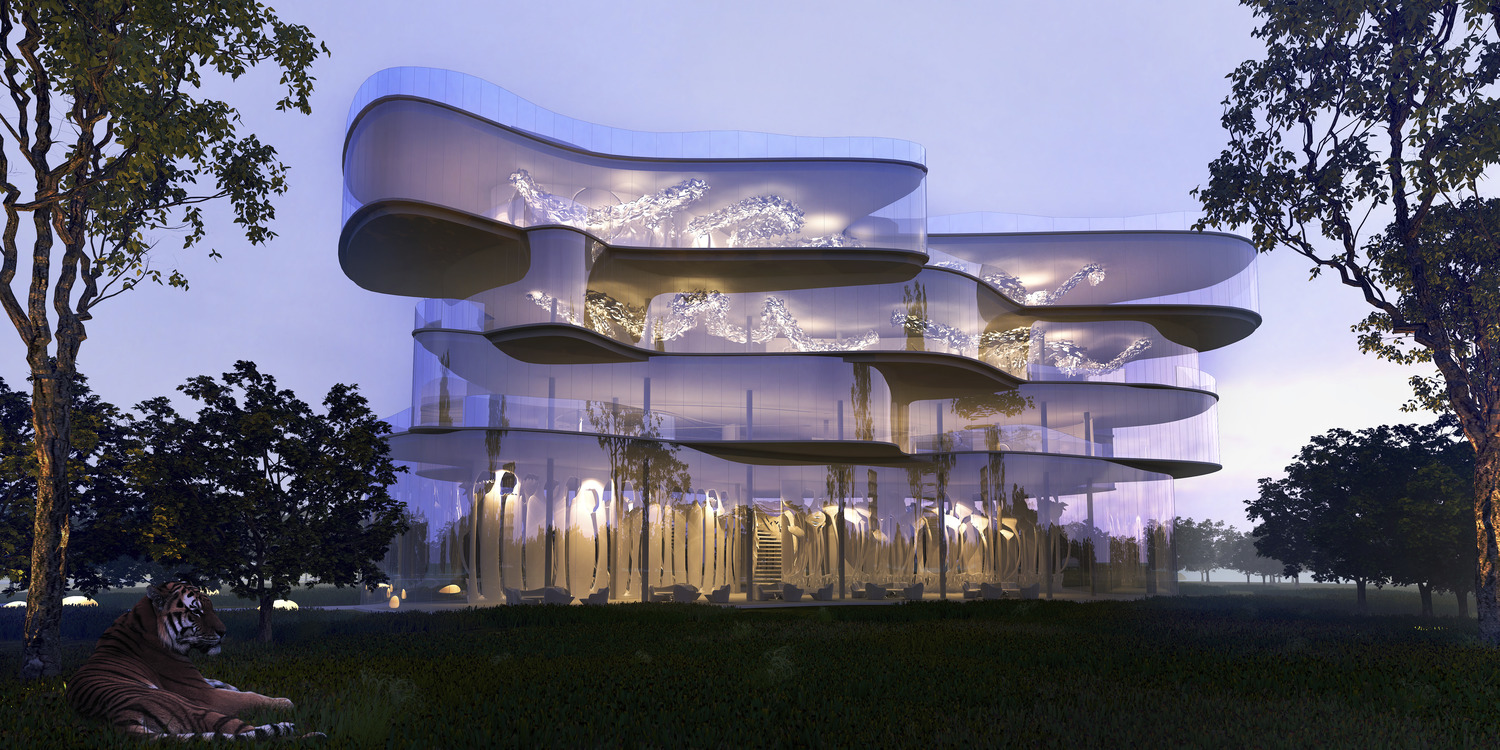
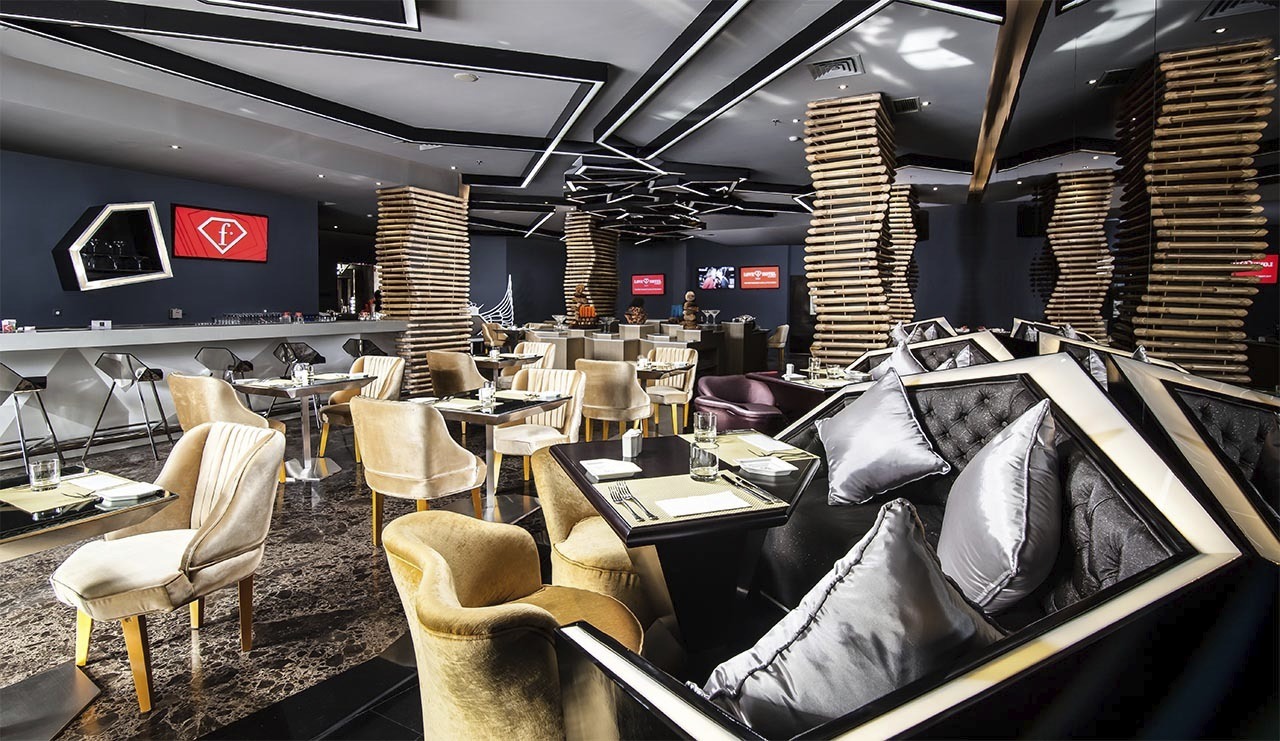
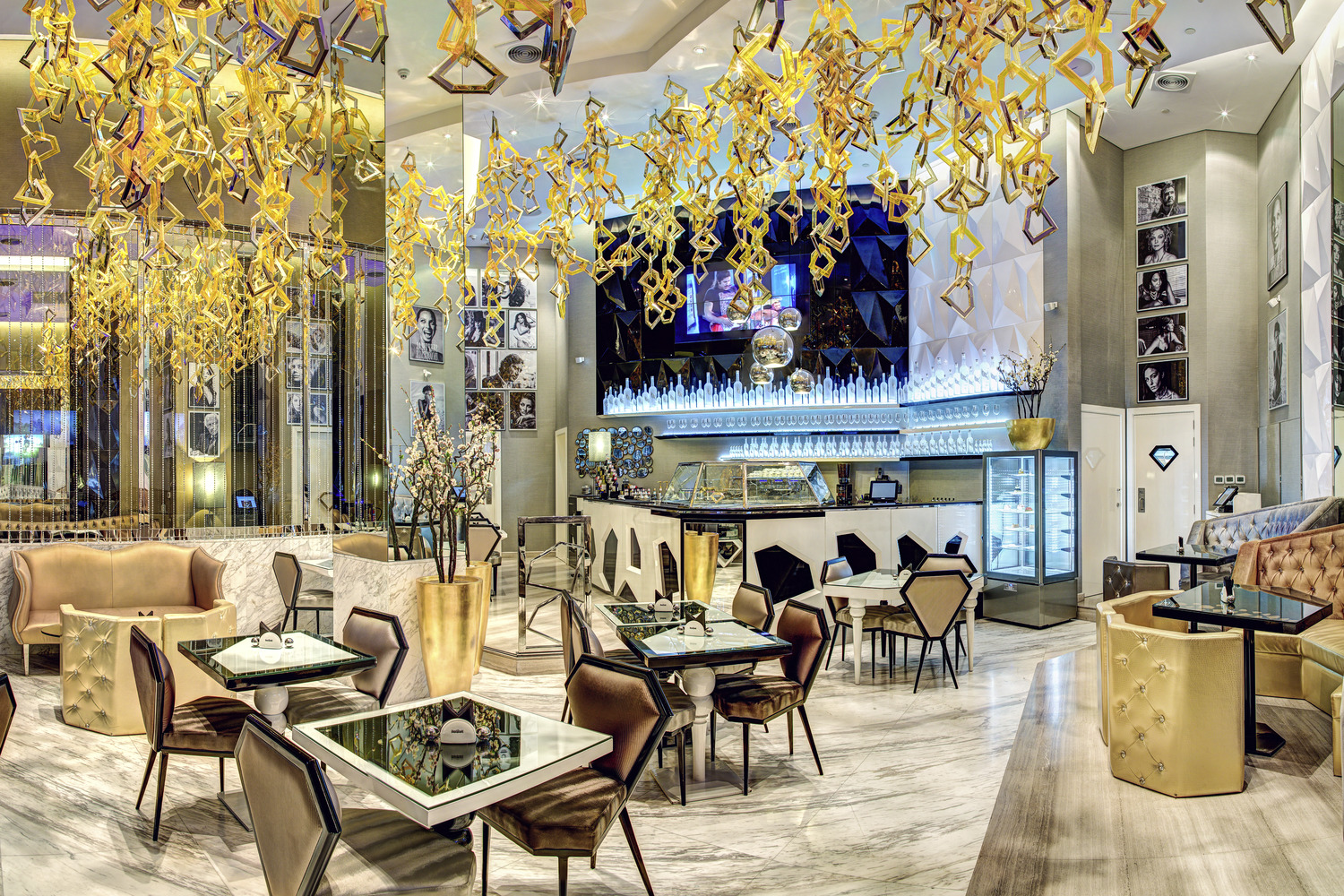
dwp designed Chatrium Grand Hotel, Bangkokdwp designed Chatrium Grand Hotel, Bangkokdwp designed Ibis Styles Bangkok Silom HotelTiger Resort by dwp|jordy fuFashion Hotel Legian by dwp|jordy fuFashion Hotel Legian by dwp|jordy fuAttitude Rooftop Bar by dwp|jordy fuXtep Office Xiamen by dwp|jordy fuLilanz Creative Centre by dwp|jordy fuInspired sculpture by dwp|matthew campbell laurenzaInspired sculpture by dwp|matthew campbell laurenzaInspired sculpture by dwp|matthew campbell laurenzaInspired sculpture by dwp|matthew campbell laurenzadwp generated ai imagedwp generated ai image
Share
Tags: Abu dhabi, Agile workspace, Archi, Architect, Architecture, Artist, Asia, Bangkok, Bar, BIM, Blog, Boutique, Business, Civic, Construction, Content, Creativity, Culture, Design, Designer, Digital, Digital technology, Digital transformation, Digitisation, Drink, Dubai, Education, Experience, F&B, Food, Future, Health, Hicap, Ho chi minh, Hospitality, Hotel, Hotel design, Information, Innovation, Interior, Interior design, Interior designer, Interview, Knowledge, Lebua, Lifestyle, Luxury, Luxury design, Luxury interior, Marriott, Profile, Residential, Restaurant, Saigon, Sky, Studio, Success, Sustainibility, Tech, Technology, Thailand, Trends, Video, Vietnam, W hotel, Women
Cookies are text files containing small amounts of information which are downloaded to your device when you visit a website. Cookies are then sent back to the originating website on each subsequent visit, or to another website that recognises such cookies. Cookies are useful because they allow a website to recognise your device.
The use of cookies and similar technologies is not limited to traditional websites and web browsers. Mobile applications which commonly communicate with websites and web services also can set cookies. Cookies do lots of different jobs, like letting you navigate between pages smoothly and efficiently, remembering your preferences, and generally improve the user experience. They can also help to ensure that advertisements you see online are more relevant to you and your interests. The category of the cookies used on our website, dwp’s website, is set out below.
Strictly necessary cookies
These cookies are essential in order to enable you to move around our website and to provide services and features on our website, such as delivering interactive services (i.e. online banking services, mobile application, etc.) and accessing secure areas of our website. Without these cookies, our website or some functions cannot properly operate, including some services you have asked for, and cannot be provided.
Performance cookies
These cookies collect information about how you use our website, for instance pages you visit on our website, pages you go to most often, and links you might click on. These cookies do not collect information that identifies you. All information these cookies collect is aggregated and therefore anonymous. We use this type of cookie to understand how you use our online services and website so as to improve how our website works and improve performance of our services.
Functionality cookies
These cookies help our website to remember information or choices you make (such as your username, language or the region you are in) and provide more personalized features (such as where a website may remember font sizes, or be able to provide you with ability to speak to customer services through a live chat). These cookies can also be used to remember changes you have made to font size, font type and other parts of web pages that you can customize. The information these cookies collect may be anonymised and they cannot track your browsing activity on other websites.
Targeting cookies or advertising cookies
These cookies are used to deliver advertisements more relevant to you and your interests and to limit the number of times you see general advertisements as well as help measure the effectiveness of our advertising campaigns. These cookies will be placed by advertising networks (e.g. Facebook, Google, etc.) with our permission and will remember how you have visited our website and information may be shared with other organizations such as advertisers. Quite often targeting or advertising cookies will be linked to website functionality provided by the other organizations. In the event that these cookies are used to collect, use or disclose your personal data, we will obtain your consent or proceed in accordance with personal data protection laws.
By using our website, you acknowledge that we will place these types of cookies for the above purposes. We may additionally collect, use or disclose your personal data forming part of such cookies, for the purposes set out in our Privacy Notice.
When we include links to third-party websites, please bear in mind that such third parties may have their own cookie policies. We recommend you read their policies before using their websites.