Designing the Workplace for the Creator Economy
Cloud 11 Offices
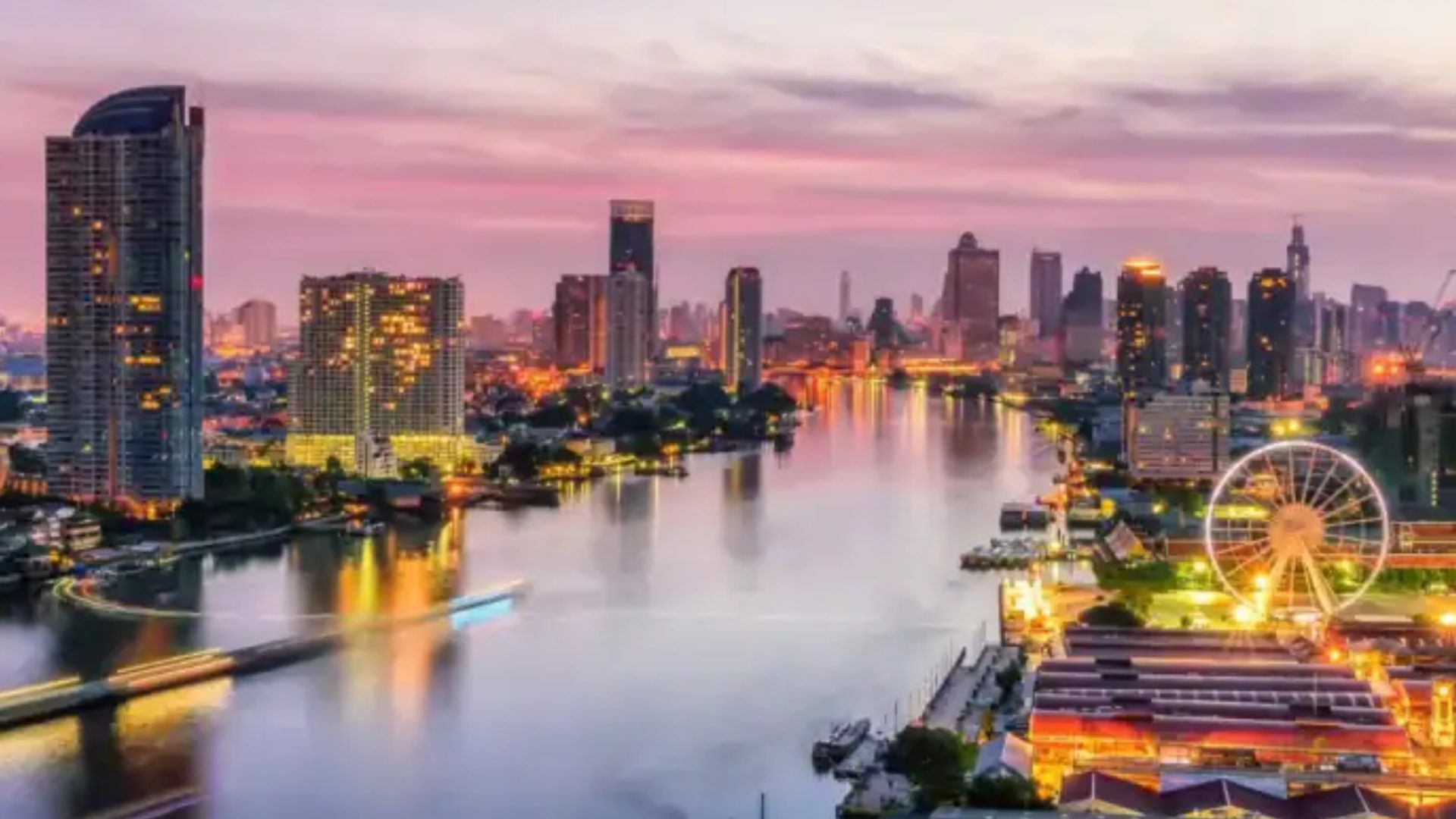
Bangkok is no stranger to ambition. Every so often, however, a development emerges that signals more than growth. It signals evolution. Rising within one of the city’s most anticipated mixed-use destinations, the Cloud 11 office project reimagines what a workplace can be in an era shaped by content, connectivity, and creative entrepreneurship.
Conceived as part of a major multi-purpose development designed to position Thailand at the forefront of the global entertainment and technology landscape, Cloud 11 is guided by a clear vision: to become a leading creator economy hub and elevate the entertainment industry through technology.
For dwp, the project extended beyond the design of another office building. The ambition was to shape an entirely new ecosystem.
A Workplace Typology for a New Generation
The brief called for an office environment built specifically for “Clouders”, a diverse spectrum of professionals spanning coders, animators, filmmakers, musicians, writers, marketers, game designers, and digital entrepreneurs.
These users differ significantly from traditional corporate profiles. They are boundary-pushers, culture-makers, and night-shifters. Many operate in agile teams. Others work across time zones. Some perform, stream, record, or broadcast as part of their daily workflow.
The brief raised a fundamental question.
What does the workplace look like when creativity becomes infrastructure?
dwp approached this challenge with a spatial philosophy that combines the precision of the corporate environment with the vibrancy of creative industries. The result is described by the team as a new workplace typology that integrates both worlds.
Structured yet expressive. High-tech yet deeply human.
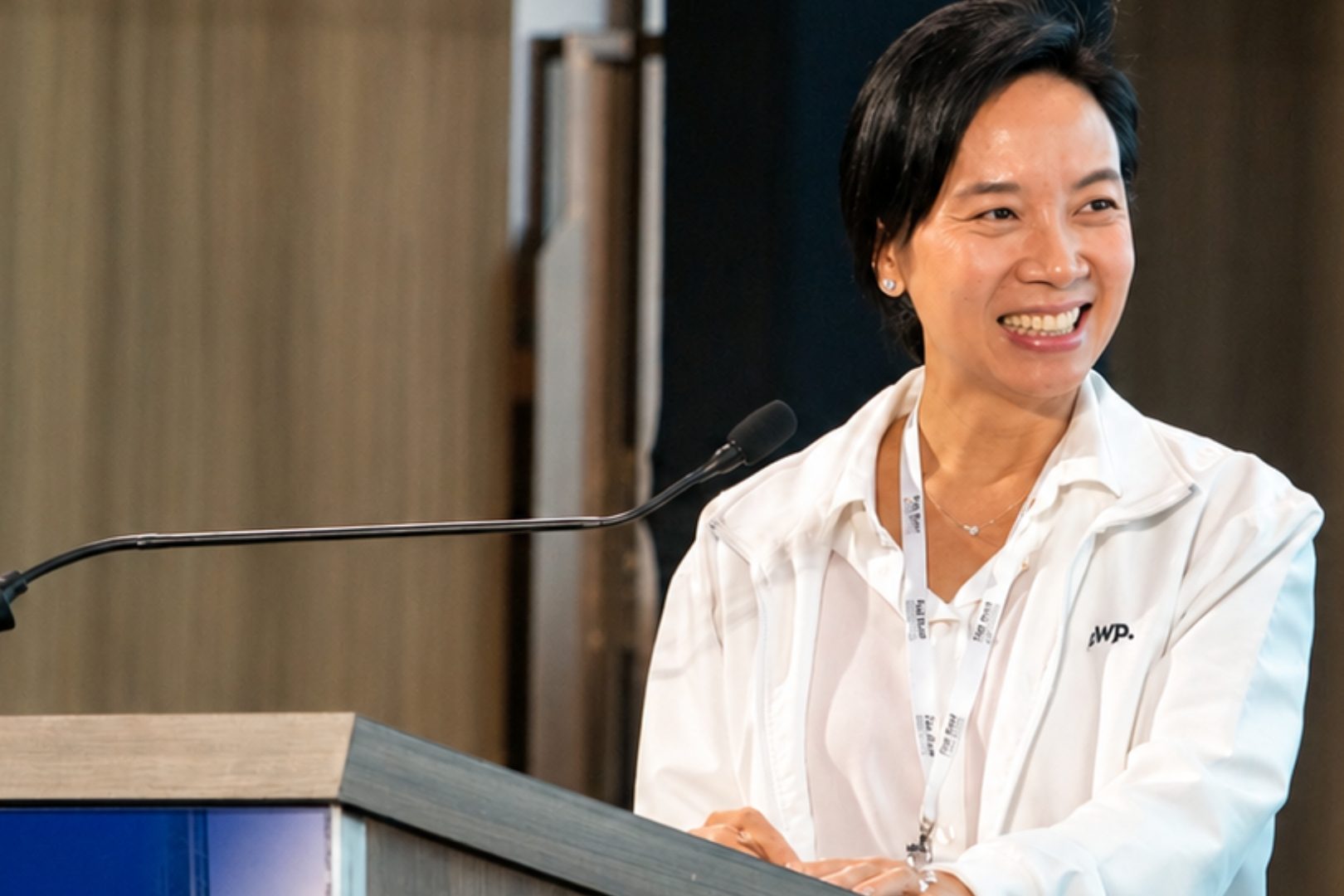
“The future of work is no longer defined by desks and departments,” says Khun Yukoltorn, Community Portfolio Director at dwp. “It is defined by interaction, experimentation, and cultural exchange. With Cloud 11, we set out to create an environment where corporate precision and creative energy coexist. The workplace reflects the same dynamism as the people it was designed for.”
This perspective positions the office as an active participant in the creative process.
Urban Escapism: Breaking the Grid
While the architecture establishes a strong presence within the city, the interior concept moves toward a more personal scale. dwp describes this approach as urban escapism, an organic design strategy that breaks away from the rigidity of the architectural grid to create an unexpected spatial journey.
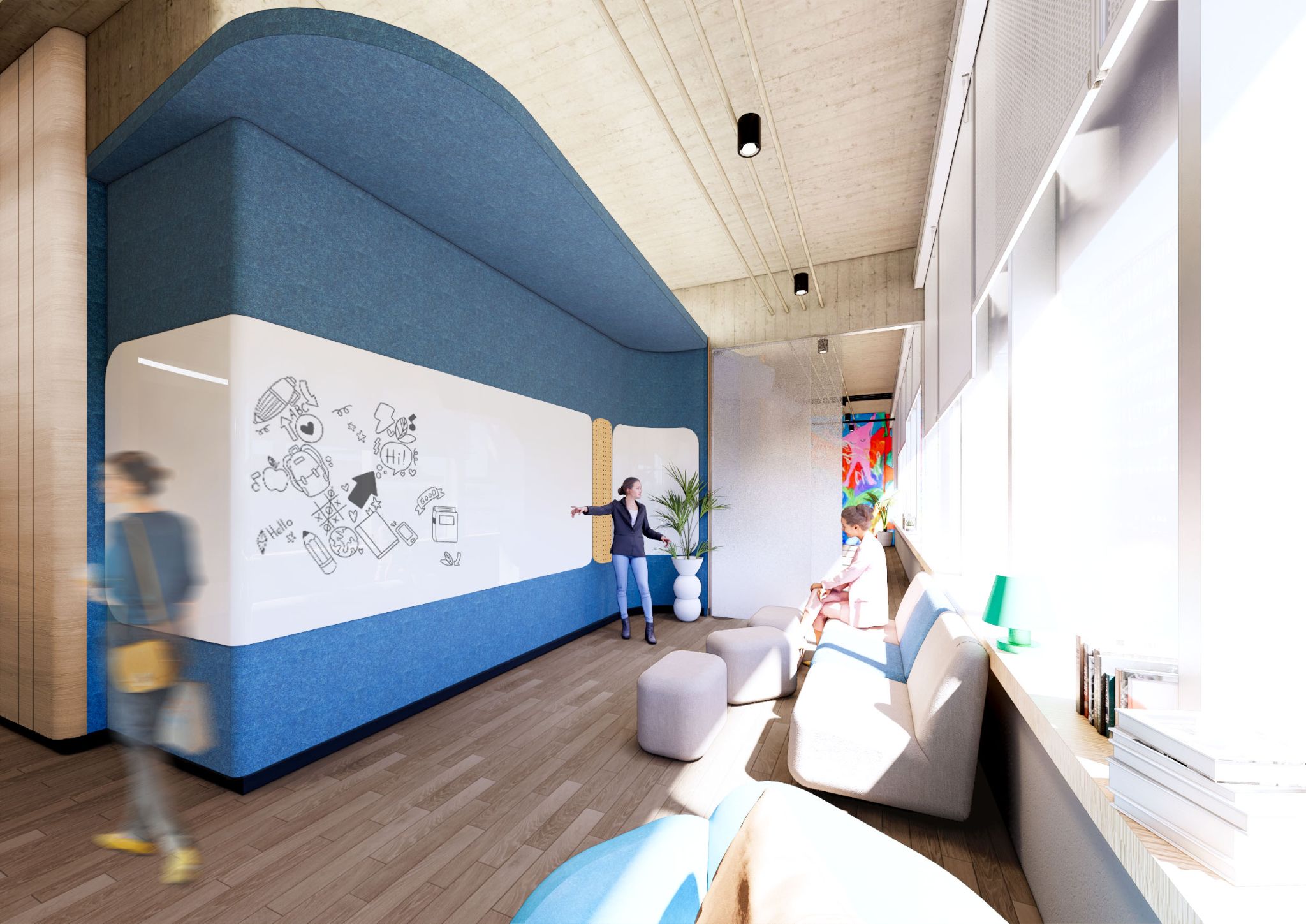
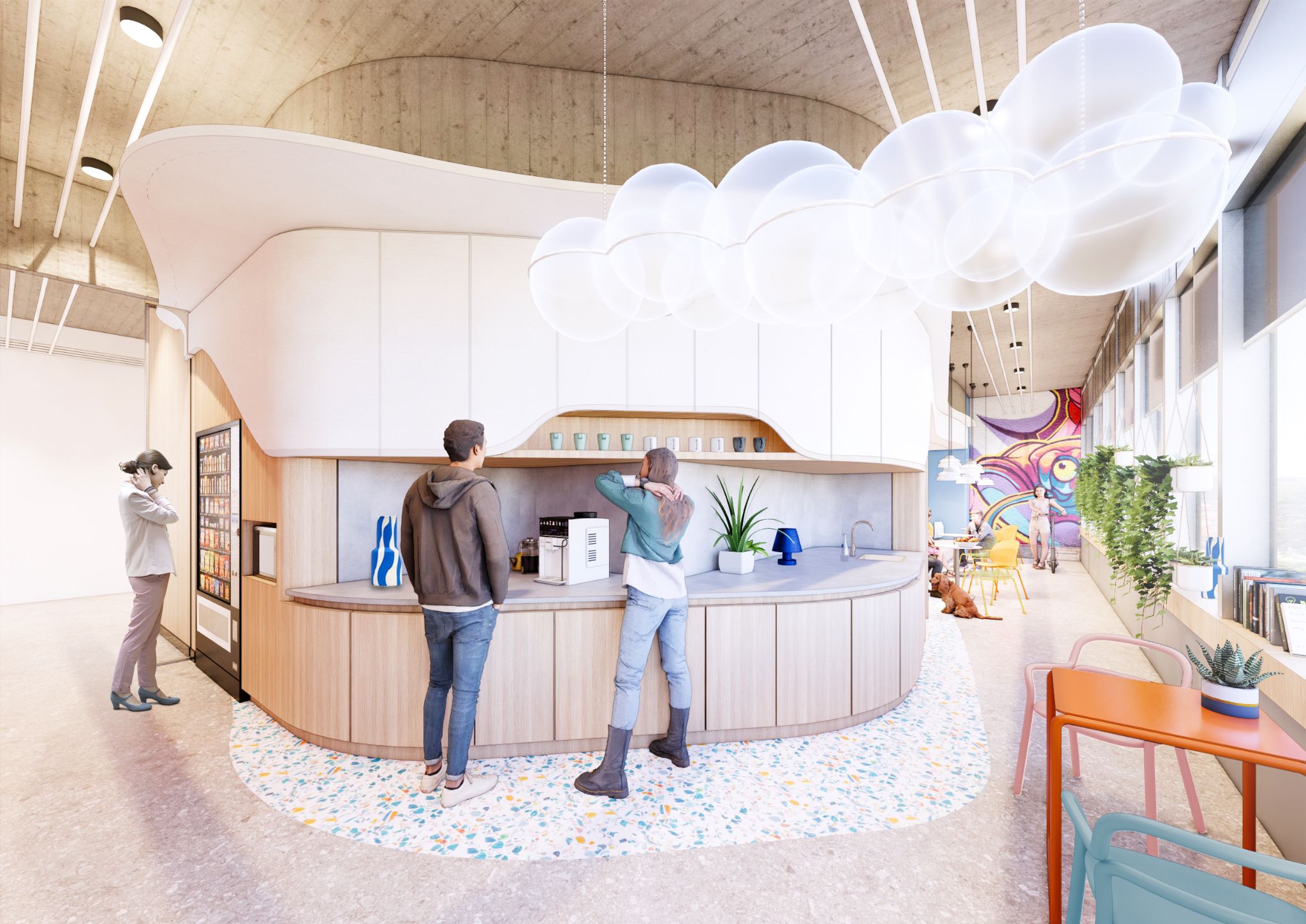
Rather than reinforcing the predictability often associated with large commercial towers, the interiors encourage exploration. Curves soften transitions. Materials introduce warmth. Landscaped atria reconnect occupants with nature.
Creative work rarely thrives within rigid spatial boundaries, and the design reflects this understanding.
Designing with the Language of Clouds
Inspired by the project’s name, the design references four cloud typologies, each expressed through one of the four office towers in orange, yellow, blue, and green.
The concept carries both poetic and practical value.
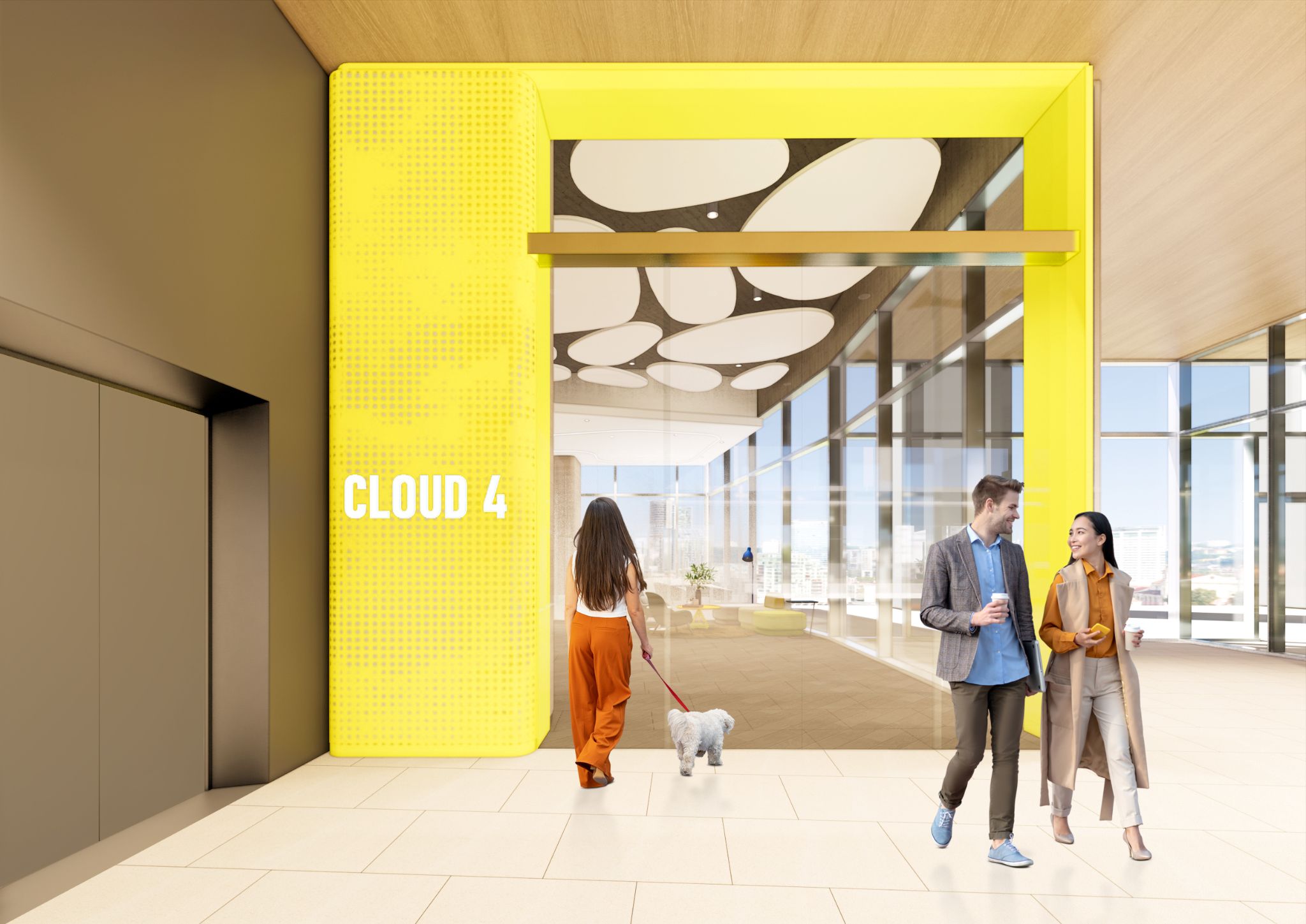
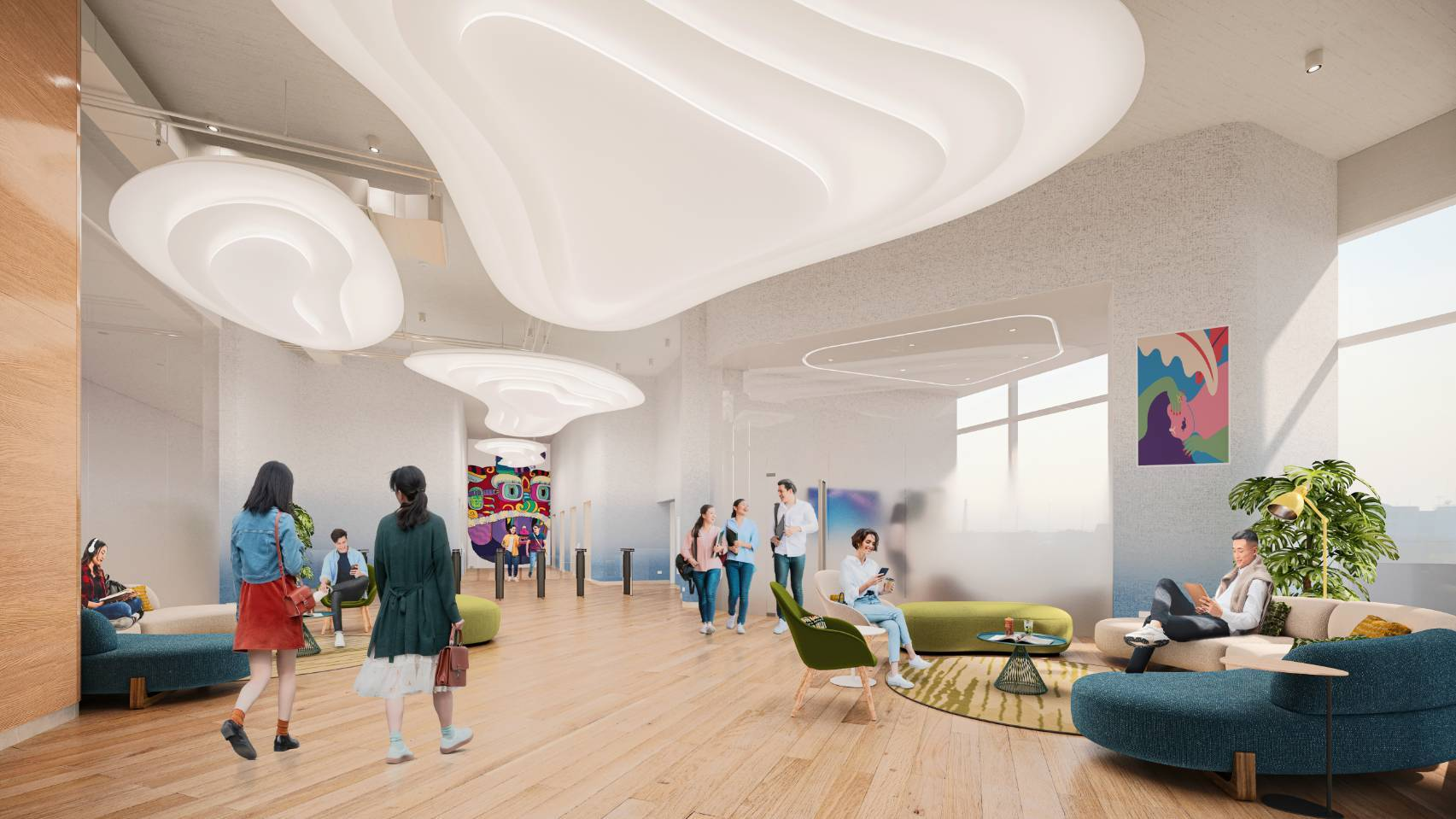
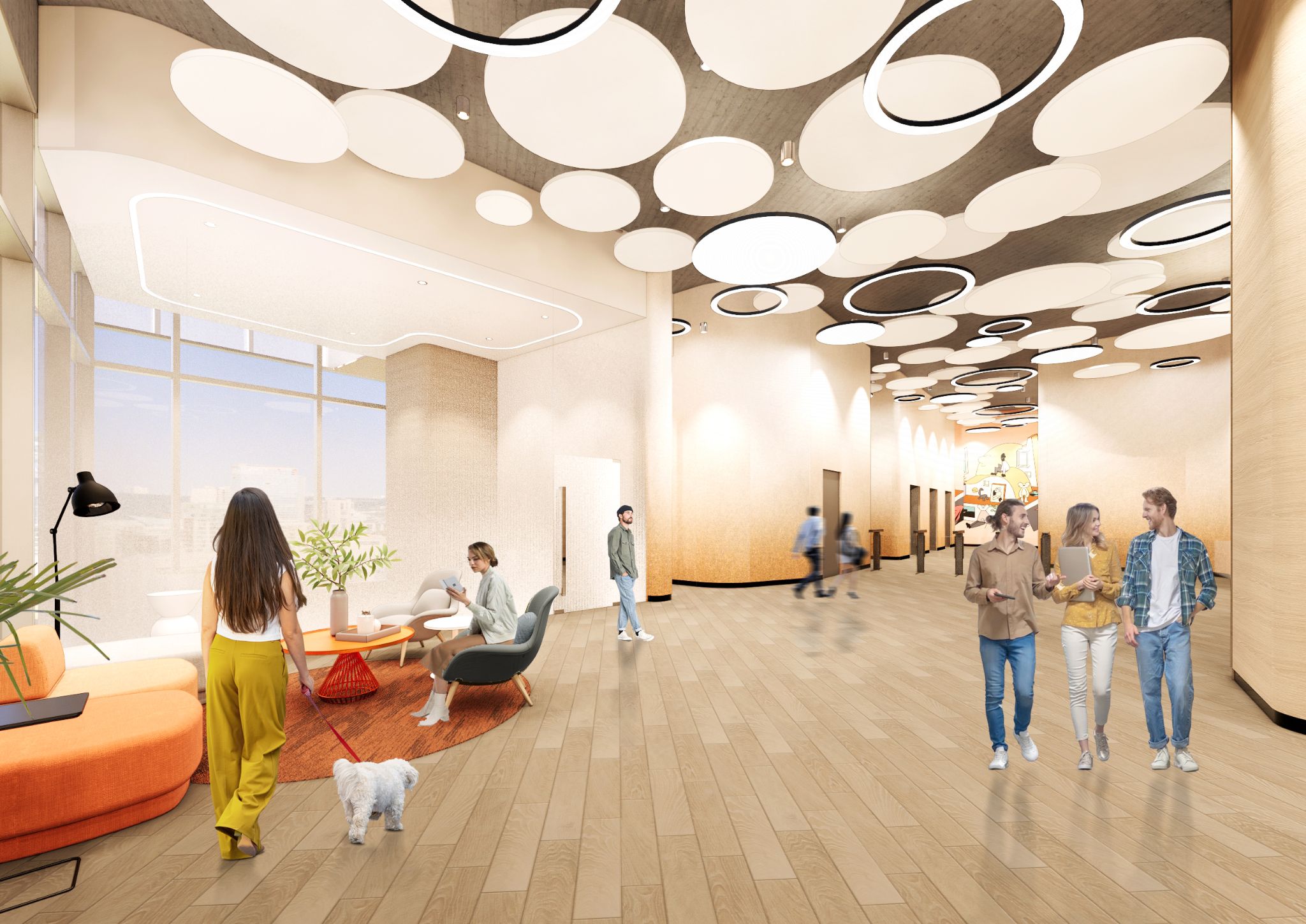
Feature ceilings translate cloud formations into architectural elements and integrate with each tower’s color identity to support intuitive wayfinding. At the entrance to each tower, perforated aluminum portals introduce cloud-patterned screens that create a memorable threshold moment.
Elsewhere, gradient finishes evoke the sensation of walking through cloud formations, while curved glass meeting rooms expand sightlines and enhance spatial elegance.
The resulting environment feels atmospheric and composed, creating an elevated workplace experience that remains approachable and grounded.
The Creative Neighborhood
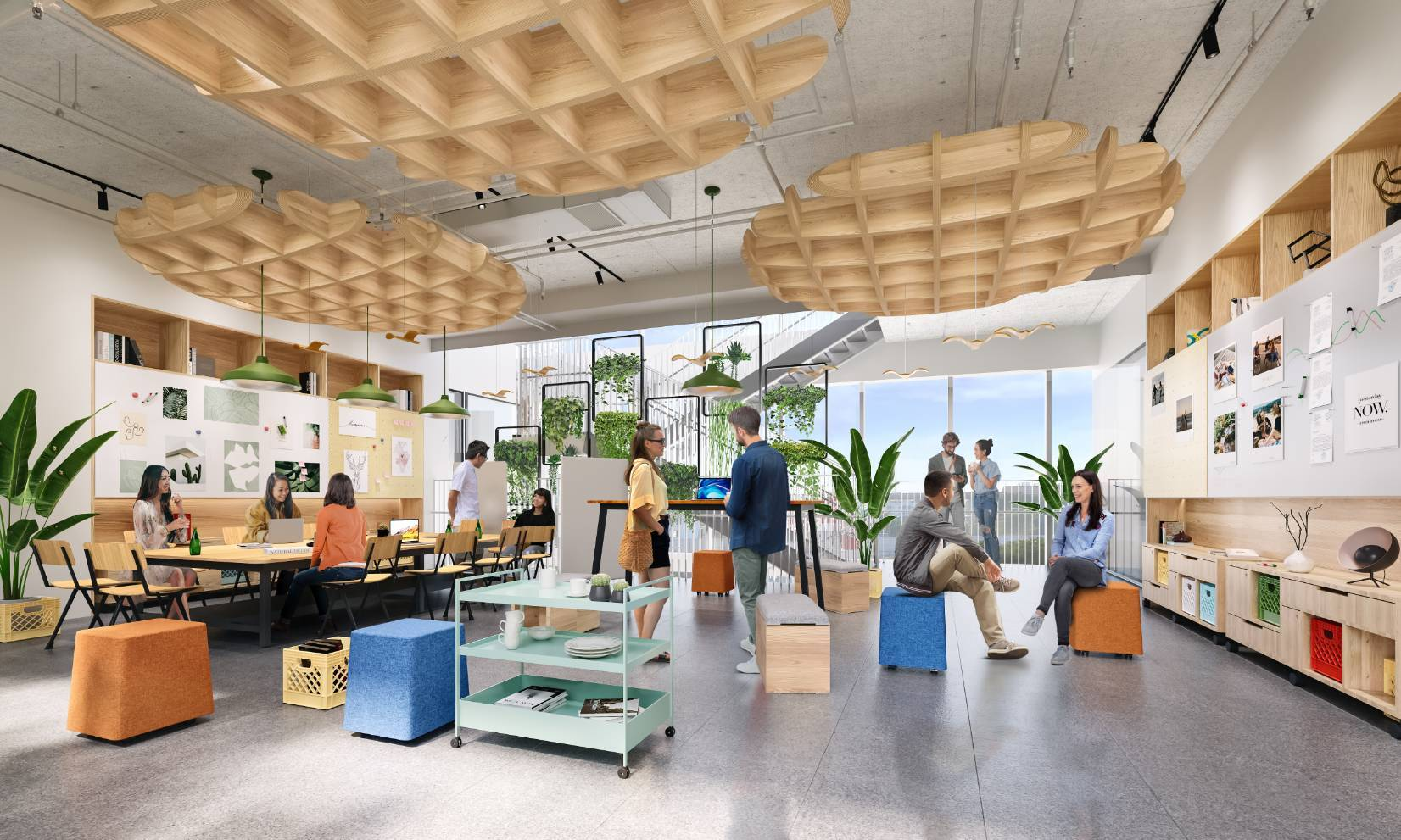
Innovation rarely emerges in isolation. In response, dwp organized the interiors into distinct “Creative Tech” neighborhoods designed to encourage belonging while supporting diverse working styles.
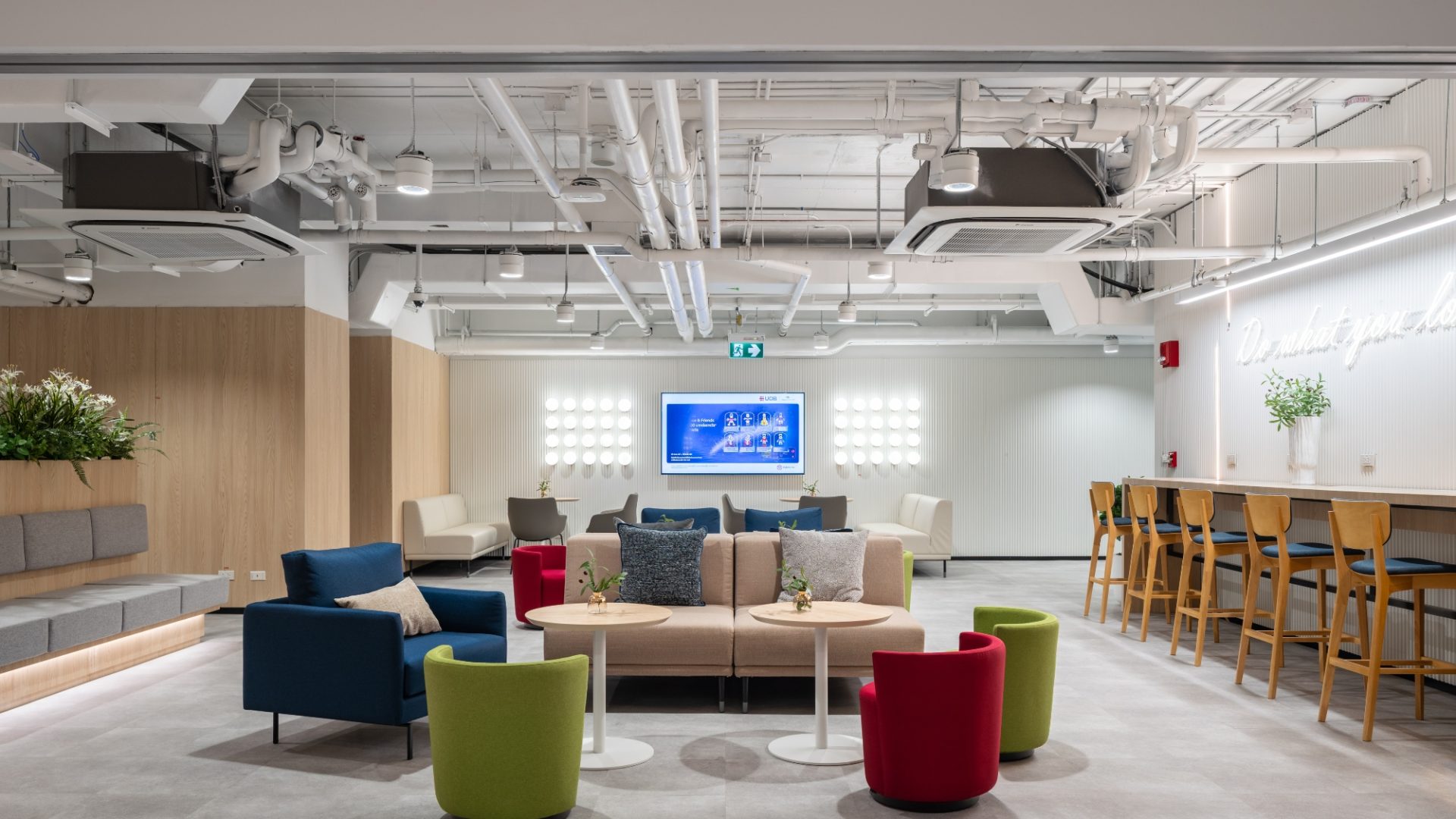
Activity-based environments allow users to shift between focus zones, bookable team spaces, hot seating areas, and collaborative hubs.
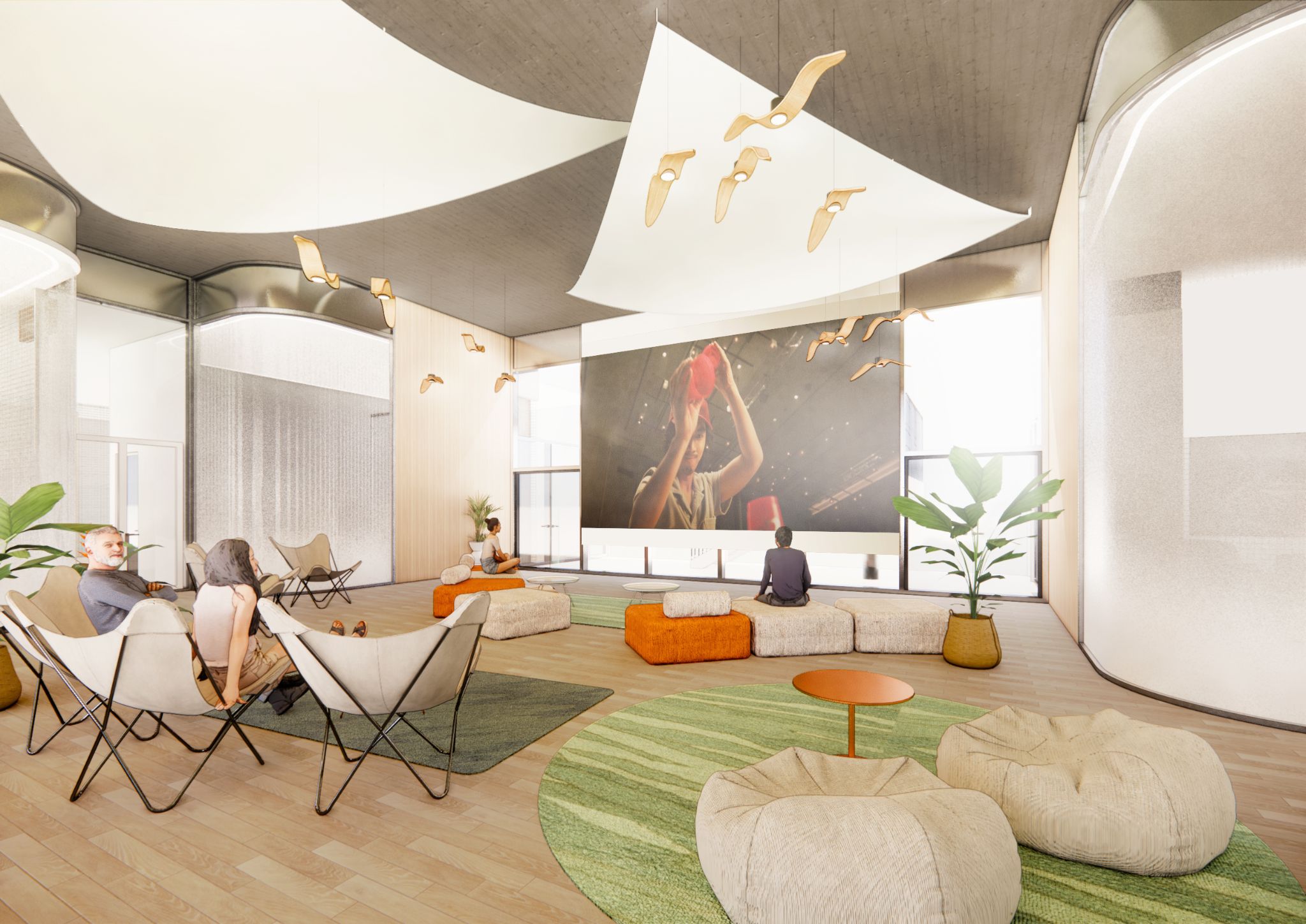
Outdoor atria spanning levels seven to ten create shared environments where tenants can relax, connect, and reconnect with nature.
Wellness is integrated throughout the workplace, from sleeping pods and quiet nooks to massage facilities and artificial skylights designed to support circadian rhythms.
These spaces sustain creative energy throughout the working day and beyond.
Technology Meets Humanity
Cloud 11 incorporates a service-oriented infrastructure that reflects the expectations of a digitally native workforce. Shared pantries, cloud-based applications, and pet-friendly policies contribute to a flexible and supportive workplace environment.
At the same time, the design remains grounded in human comfort.
Natural light is maximized wherever possible. Sanitary systems incorporate water-saving technologies, while motion-sensor lighting supports sustainability and user comfort.
Technology enhances the workplace experience while maintaining a strong focus on wellbeing.
Designing for a 24-Hour Culture
A defining insight of the project is the recognition that the creator economy operates beyond the traditional nine-to-five schedule.
Production teams, gamers, editors, and performers often work deep into the night, while corporate teams anchor daytime operations. dwp responded by creating an environment capable of supporting this continuous rhythm through flexibility and adaptability.
Lighting plays an important role in this strategy. Circadian rhythm lighting design is applied within the main lobby of each office tower and calibrated to reflect the natural progression of daylight throughout the day. By adjusting brightness and color temperature in alignment with the body’s biological clock, the system supports alertness, concentration, and overall wellbeing for occupants moving through the building at different times.
Research indicates that circadian lighting can enhance cognitive performance, improve mood, and reduce fatigue by aligning interior environments with natural human rhythms.
The result is a workplace capable of supporting activity throughout the day and night.
In many ways, Cloud 11 reflects Bangkok itself: energetic, layered, and constantly in motion.
The Challenge of Designing the Future
The originality of the project introduced significant complexity. The client envisioned a workplace dedicated to creators, start-ups, and cybertech companies at a scale rarely attempted before.
To address this challenge, dwp conducted extensive research into creator workflows, technological needs, and behavioral patterns. Weekly internal workshops helped refine the concept, while close collaboration with the client ensured alignment across vision, materiality, and experience.
Designing for the future demands foresight and conviction.
A Catalyst for Bangkok’s Creative Future
Although the project focuses on Millennials and Gen Z, Cloud 11 also embraces a broader community. Public spaces are integrated into the development, alongside initiatives that support local businesses and community programming.
This approach positions Cloud 11 as more than a commercial destination. It becomes Asia’s Creative Capital—a place where creativity, industry, community, and culture intersect.
The development also creates opportunities for the next generation of Thai creators to shape their own future.
Beyond the Office
Cloud 11 challenges long-standing assumptions about the role of the workplace.
Within this environment, the office becomes a platform for collaboration, experimentation, and cultural production.
A stage.
A laboratory for ideas.
By dissolving traditional boundaries between corporate structure and creative expression, dwp has created an environment that reflects the realities of a rapidly evolving professional landscape.
The project anticipates the future of work while supporting the creativity that will define it.
When creativity is given the space to grow, the possibilities expand in remarkable ways.
Tags: Abu dhabi, Agile workspace, Archi, Architect, Architecture, Artist, Asia, Bangkok, Bar, BIM, Blog, Boutique, Business, Civic, Construction, Content, Creativity, Culture, Design, Designer, Digital, Digital technology, Digital transformation, Digitisation, Drink, Dubai, Education, Experience, F&B, Food, Future, Health, Hicap, Ho chi minh, Hospitality, Hotel, Hotel design, Information, Innovation, Interior, Interior design, Interior designer, Interview, Knowledge, Lebua, Lifestyle, Luxury, Luxury design, Luxury interior, Marriott, Profile, Residential, Restaurant, Saigon, Sky, Studio, Success, Sustainibility, Tech, Technology, Thailand, Trends, Video, Vietnam, W hotel, Women