The Brief Behind the Brief
Every client asks for innovation. Almost none of them mean the same thing. The designers who understand that distinction are the ones who build spaces that work.
There is a word that appears in almost every design brief we receive. It sits near the top of the page, framed as a goal, offered as a direction. That word is innovation and it is, almost always, the wrong place to start.
Not because the ambition is misplaced. Clients who ask for innovation are asking for something real: a space that performs better, a brand that communicates more clearly, a building that belongs to its place and culture. But the word itself does none of that work. It is a container into which many different desires get poured. Treat it as a brief and you will almost certainly solve the wrong problem.
The designers and strategists who consistently deliver strong work do not begin with the brief as written. They begin with the question beneath it, because the most consequential design decisions are made in the gap between what a client says and what a client needs.
Innovation is not a direction. It is a signal that the client wants to move and it is the designer’s job to establish where.
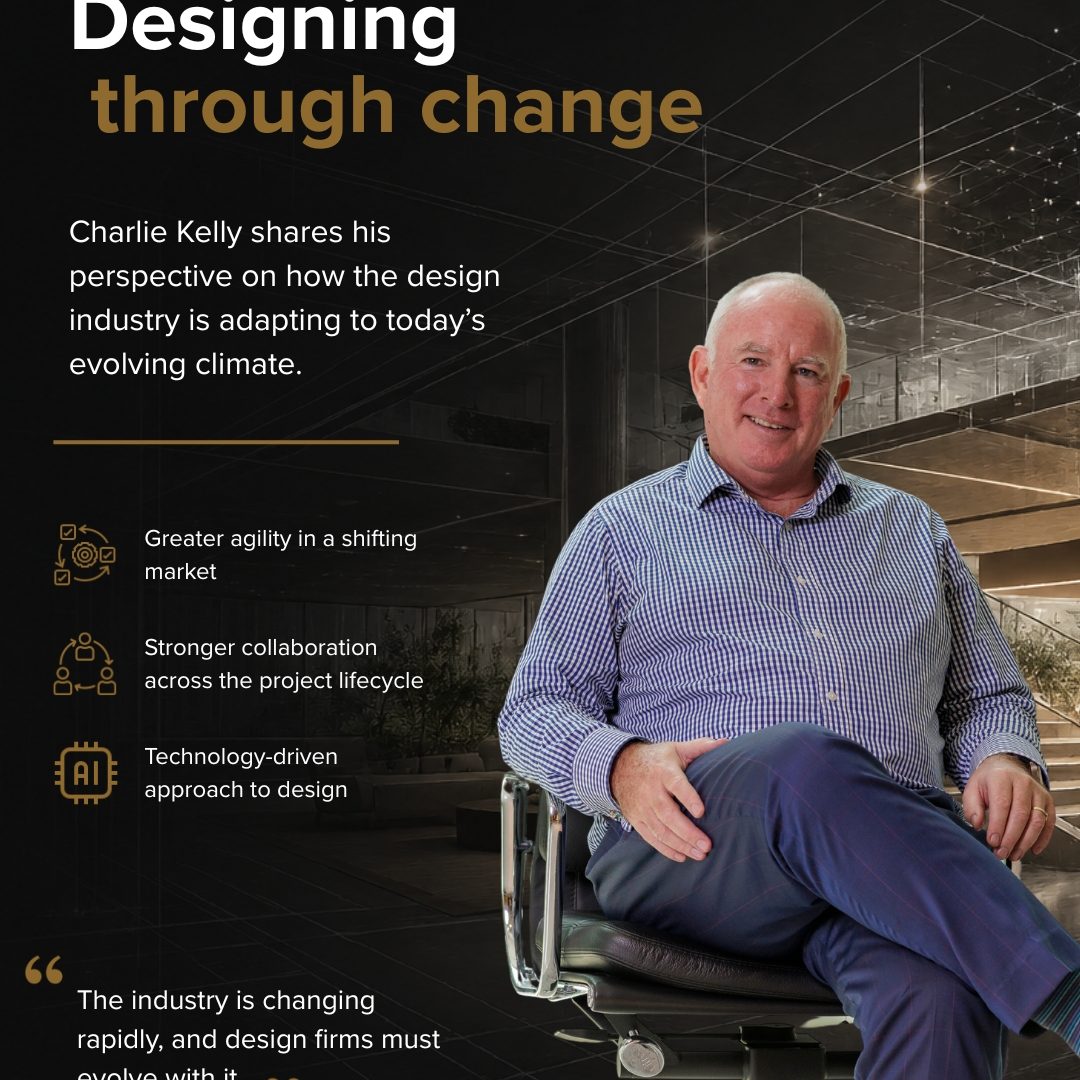
As Charlie Kelly, dwp. Managing Director Middle East, reflects, “The strongest projects rarely come from taking the brief at face value. They come from understanding what success actually looks like for the client, often before the client has fully articulated it themselves.”
Three intentions behind one word
Across years of projects spanning sectors and geographies, a pattern emerges. When clients invoke innovation, they are almost always expressing one of three distinct intentions; sometimes in isolation, often in combination. Identifying which one is primary is the first act of useful design.
Performance innovation — a desire for environments that operate better. Smarter systems, greater efficiency, spaces that adapt to the people within them.
Narrative innovation — a need to express identity more clearly. Spaces that communicate a brand’s story to the people who occupy them every day.
Contextual innovation — a requirement to belong. To respond to place, culture and community in a way that feels rooted rather than imported.
These are not theoretical distinctions. They produce entirely different spaces. Misread which one is driving the brief and you risk delivering something technically accomplished but fundamentally misaligned, a space that impresses in presentation and disappoints in use.
Three projects, three readings
Amazon · Dubai
When innovation means: make everything work better
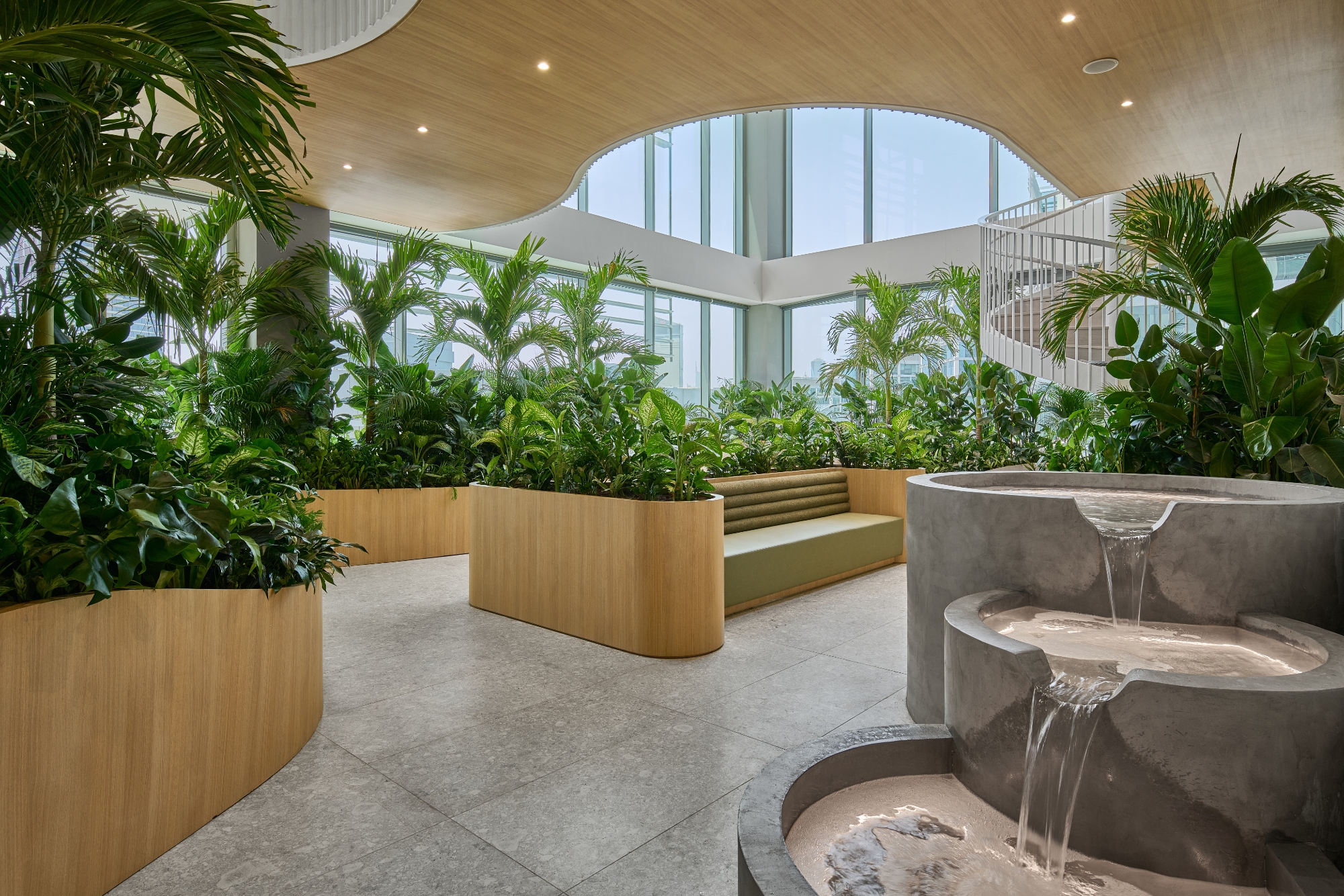
Amazon’s design language is built around systems thinking; speed, precision, adaptability. A reasonable assumption would be that their workplaces demand visible technological ambition: digital interfaces, data-driven controls, the aesthetics of efficiency made literal.
Reading the brief more carefully revealed a different intent. The Dubai workspace was not asking for technology as display. It was asking for performance as experience, an environment where high output feels effortless rather than engineered. The response was to treat the building as a working system: airflow, lighting and spatial sequencing calibrated to support sustained focus and wellbeing, with biophilic strategies functioning as infrastructure rather than decoration.
The result is a space that performs at a high level without announcing it. Nothing competes for attention. Everything works and that absence of friction is the point.
The insight: when performance is the true brief, the best design gets out of its own way.
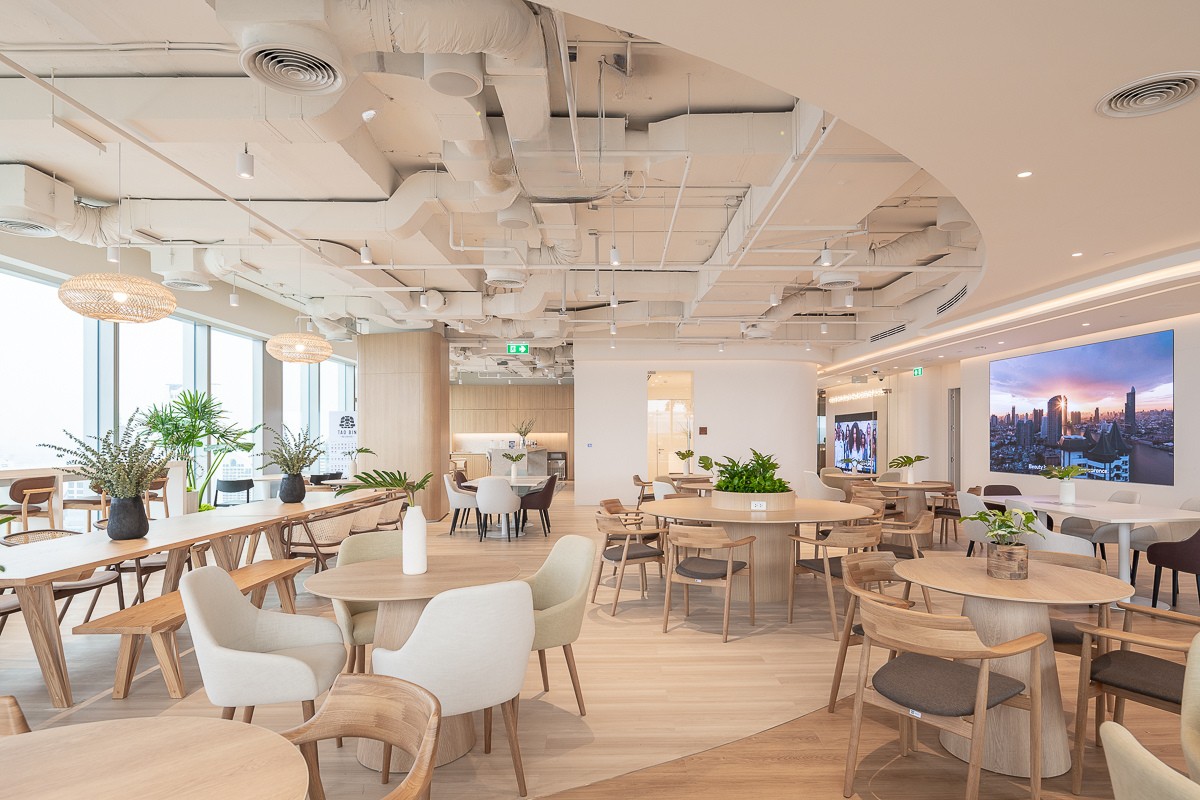
L’Oréal · Thailand
When innovation means: help people feel who we are
For a global beauty brand, innovation is inseparable from identity. It is in the products, the campaigns, the way the brand presents itself. The workplace should be an extension of that, but the brief rarely arrives so clearly. What arrives instead is a request for something “new,” “different,” “inspiring.”
The work of interpretation here was to recognise that the real brief was about belonging: how do you make the people who build this brand feel, every day, the values they are asked to represent? The Thailand office was designed as a spatial narrative; elegance, creativity and precision expressed through material choices, sequence and moment. Not a branded environment in the surface sense, but a considered experience of what L’Oréal stands for.
The discipline was in focus. Rather than trying to represent everything the brand is, the design committed to a clear register and held it throughout.
The insight: when narrative is the true brief, restraint is more effective than abundance.
Marriott · Various markets
When innovation means: be recognisable and relevant, simultaneously
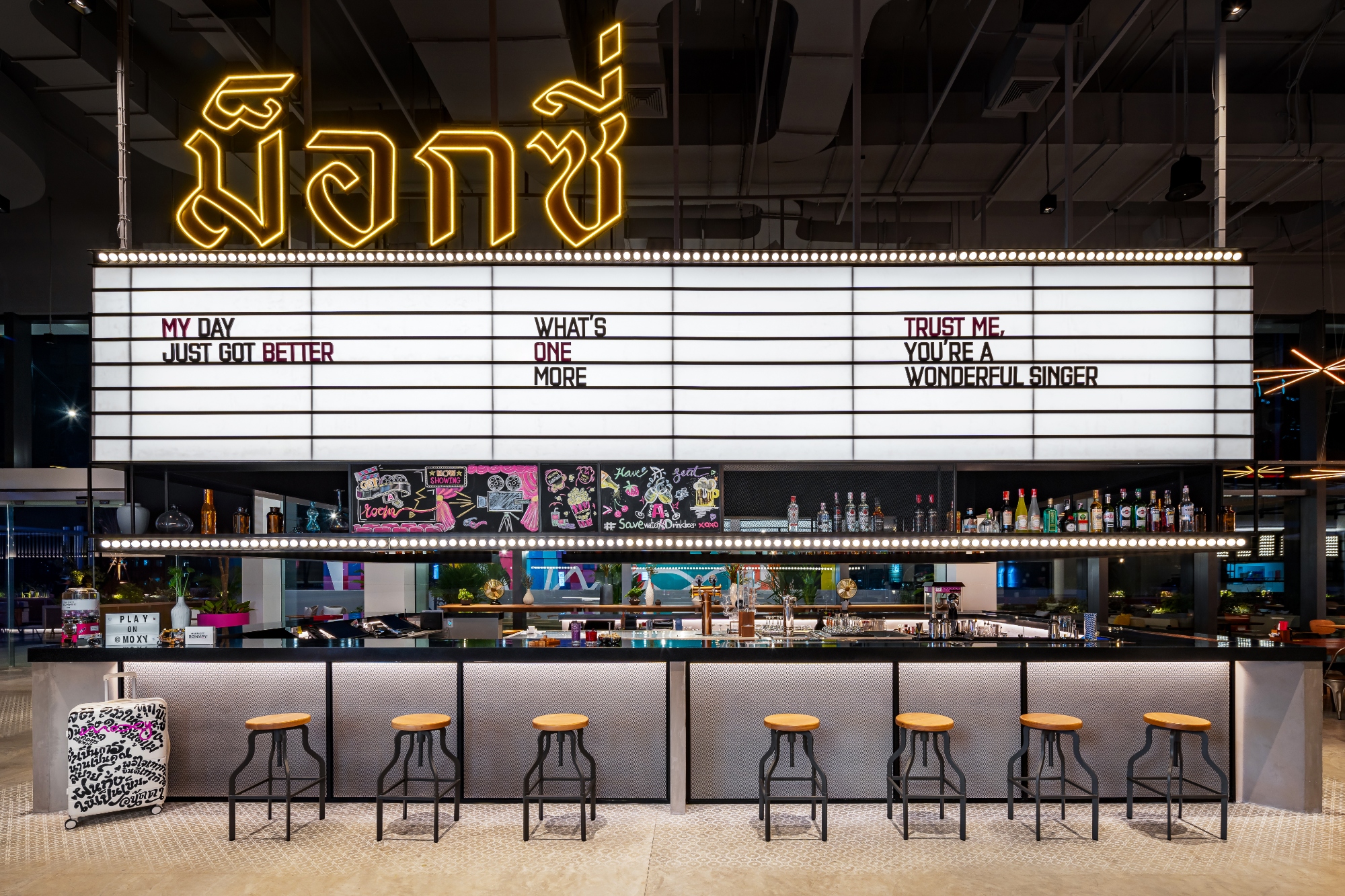
Global hospitality brands operate under a genuine tension. The consistency that makes a brand trustworthy across markets can also make it feel generic within any single one. Guests want to know where they are and they want to know where they are staying. Innovation, in this context, is the discipline of holding both.
Rather than resolving this tension by choosing one side, the approach is calibration. Brand standards are interpreted through local materials, spatial cues and cultural references, not as surface treatment, but as genuine expression of place. The result is environments that feel specific without feeling unfamiliar, grounded without losing the coherence that makes the brand legible.
This is perhaps the most demanding form of design work: the kind where success is invisible, where the guest simply feels right, and does not stop to consider why.
As Robert Troup, dwp. Studio Director in Bangkok, notes, “The real challenge is in creating spaces that feel authentic to their location while still carrying the clarity and consistency of a global brand. When that balance is right, the design feels effortless, even though it is anything but.”
The insight: when context is the true brief, the deepest cultural intelligence produces the lightest touch.
What this means for how we work
These three projects share something beyond their outcomes. In each case, the design team’s most important contribution came before a single concept was drawn; in the quality of listening, and in the discipline to look past the brief as presented in favour of the brief as meant.
That discipline begins with better questions. Not “what does innovation look like here?” but:
– What does this space need to achieve that it cannot achieve today?
– Who will feel the impact of this design most directly — and how?
– What would make this project a genuine success, twelve months after opening?
These questions do not slow the process. They sharpen it. They replace the open-ended pursuit of novelty with a precise, shared understanding of what the project actually needs to deliver, and for whom.
The clients who get the most from their design partners are those who expect to be challenged at the brief stage. Not to have their ambitions questioned, but to have them clarified, drawn out from the language of aspiration and into the language of intent.
Innovation, it turns out, is always specific. The work of design is to find out exactly how.
Tags: Abu dhabi, Agile workspace, Archi, Architect, Architecture, Artist, Asia, Bangkok, Bar, BIM, Blog, Boutique, Business, Civic, Construction, Content, Creativity, Culture, Design, Designer, Digital, Digital technology, Digital transformation, Digitisation, Drink, Dubai, Education, Experience, F&B, Food, Future, Health, Hicap, Ho chi minh, Hospitality, Hotel, Hotel design, Information, Innovation, Interior, Interior design, Interior designer, Interview, Knowledge, Lebua, Lifestyle, Luxury, Luxury design, Luxury interior, Marriott, Profile, Residential, Restaurant, Saigon, Sky, Studio, Success, Sustainibility, Tech, Technology, Thailand, Trends, Video, Vietnam, W hotel, Women