dwp.Intelligence
2026 – The Year Ahead
Design at the Speed of Thought
Faster Iterations, Better Outcomes for Our Clients
This month Scott Whittaker, dwp Group Creative Director discusses the most significant change to the design business in 30 years and how dwp is building the infrastructure for architecture and design’s next chapter, dwp.intelligence
This moment is different!
The architecture and interior design industry has spent decades promising transformation. CAD replaced the drawing board but left the thinking unchanged. BIM improved coordination but rarely improved buildings. Rendering software made presentations more seductive without making architecture more humane.
What we are experiencing with artificial intelligence is not a tool upgrade. It is a capability expansion. For the first time, systems can engage with design problems at the conceptual level—iterating, evaluating, and proposing in ways that genuinely augment human creativity. The question is no longer whether AI will change design practice. The question is whether firms will shape that change or merely react to it.
At dwp, the choice has been made.
The Intelligence Layer
The dwp.intelligence platform, developed in-house over the past 18 months, embeds AI and machine learning into every stage of the design process. This is not a bolt-on application or a third-party subscription. It is infrastructure—the connective tissue linking our global studios, three decades of project archives, and the collective expertise of over 200 professionals across five time zones.
dwp has operated as a fully cloud-based business for over a decade. That decision, made long before the current moment, has enabled a rapid transition to what might be called an AI-Native design practice. The platform will learn from every project delivered, building institutional memory that will inform each subsequent brief.
Intelligence in design now extends the reach of creative thinking across geography,
time, and complexity.
The practical applications are already visible. In Bangkok, teams are using generative tools to explore hospitality concepts that would previously have taken weeks in a matter of days. In Dubai, the workplace design team is developing models that allow
the client to experience spaces at early concept stgae .
What Remains Unchanged
Technology of this power carries risk. The danger is that it enables mediocrity at greater speed.
Our task, then, is to ensure it enables design excellence instead. dwp’s design philosophy of Simple Elegance—removing the unnecessary to reveal the essential—becomes more important as the tools become more powerful.
Human-centred design, cultural sensitivity, and sustainability remain the foundations. AI offers new ways to find the essence, but the judgement and outcome remains in the hands of our architects and designers.
Our clients still need partners who listen carefully, who understand context, who bring experience to complex problems. Buildings still need to work for the people who inhabit them, to respond to climate and culture, to age gracefully over decades of use.
Design still requires the capacity to imagine how life might be better and to craft
spaces that enable that possibility.
Our operational shift
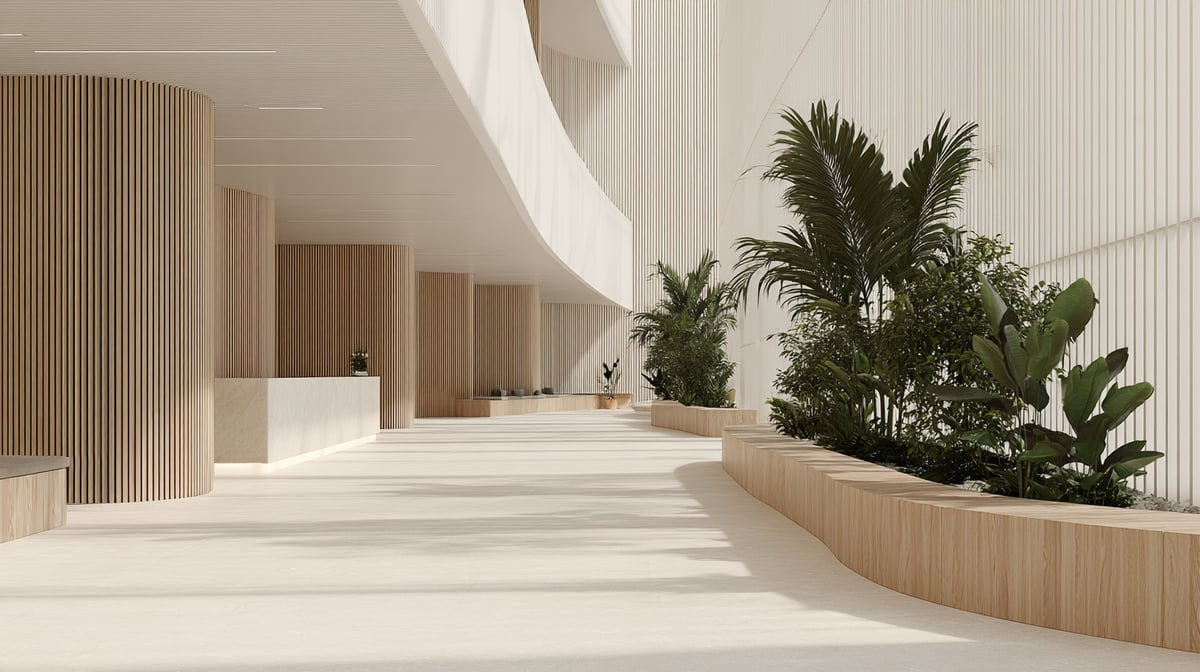
The integration of artificial intelligence into design practice is no longer experimental. It is operational. Through dwp.intelligence, our suite of AI tools compress concept development timelines, enable rapid iteration across multiple design options, and surface insights from accumulated project knowledge.
Our position is clear: AI amplifies human creativity rather than replacing it. The technology handles tasks that previously consumed days of studio time, freeing designers to focus on the qualitative judgements that define exceptional work.
By the end of 2026, AI-assisted workflows will be standard across all dwp studios. Client-facing applications will bring intelligence directly into the design conversation. Proprietary briefing and analysis tools will ensure that every project benefits from everything the practice has learned before.
Commitment to Our Clients
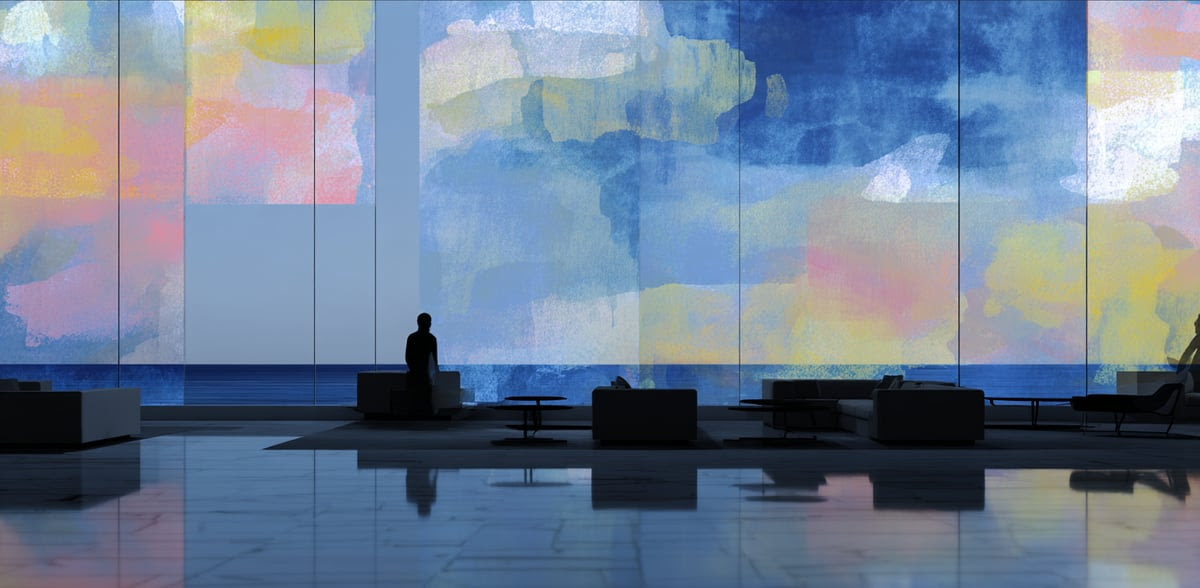
The firms leading design in the next decade will be those that master this integration earliest. Not the firms with the largest headcounts or the longest client lists, but those that combine human judgement with intelligent capability in ways that produce genuinely better outcomes.
The year ahead will be demanding. Global markets are in motion—economically, politically, demographically. Competition is intensifying. Client expectations continue to rise. Execution with discipline must be maintained alongside the creative ambition
that distinguishes our work.
The infrastructure is in place. The capabilities are expanding. Our commitment to design that serves our clients remains absolute.

Scott Whittaker
Group Creative Director
Chair, dwp Design Council