dwp.perspectives | When does a hotel become expensive?
By Danny Bentley, Sustainability and BIM Manager, dwp.
LEED Green Associate · EDGE Expert
When does a hotel become expensive?
Is it during construction? When energy bills start arriving? When systems need replacing? Or when an operational problem becomes too difficult and too costly to correct?
For me, that question is also personal. I grew up around hotels. My father owns a hotel, and from a young age I saw the everyday realities of keeping one running: energy, maintenance, guest comfort, and the constant decisions involved in operations.
At the time, I never thought of those things as sustainability. They were simply part of running a hotel well.
That is why this question resonated so strongly with me at PHIST 2026.
The panel, “How Technology is Transforming Hotel Energy & Design,” brought together perspectives from design, engineering, energy systems, IoT, and AI. But underneath the technology was a much simpler idea:
What if we knew earlier?
Today, we have far greater ability to predict how a building might perform before it is built. That changes the role technology can play in hospitality design.
Build it twice
One of the principles I strongly believe in is that we should effectively build a hotel twice – first digitally, then physically.
Digital design and simulation allow us to test decisions before committing them to construction.
At dwp, this is increasingly part of how we approach design. We use digital modelling, simulation and performance analysis alongside the creative design process to help us understand the impact of our decisions earlier. The aim is not to allow technology to drive the design, but to use it to inform better design, creating places that are engaging and memorable, while also being more sustainable, efficient and considered in how they will perform over time.
We can examine energy and water use, solar exposure, shading, daylight, comfort and material choices. We can compare options and understand the likely consequences of a decision while there is still time to do something about it.
That is important because the earlier we make a good decision, the more influence it can have.
And the opposite is also true.
Change it while it’s cheap
During design, moving a window or adjusting a façade strategy may take minutes.
During construction, the same change can become expensive.
Once the hotel opens, that same decision could mean twenty years of unnecessary cooling, maintenance, and operating cost.
The presentation I gave at PHIST illustrated this relationship very simply: our ability to influence performance is highest at the beginning of a project, while the cost of change increases as the project progresses.
That is why sustainability cannot be something we add towards the end of the design process.
By then, many of the biggest opportunities have already passed.
The question should be asked much earlier: What can we understand now that will help this hotel perform better for the next 20 or 30 years?
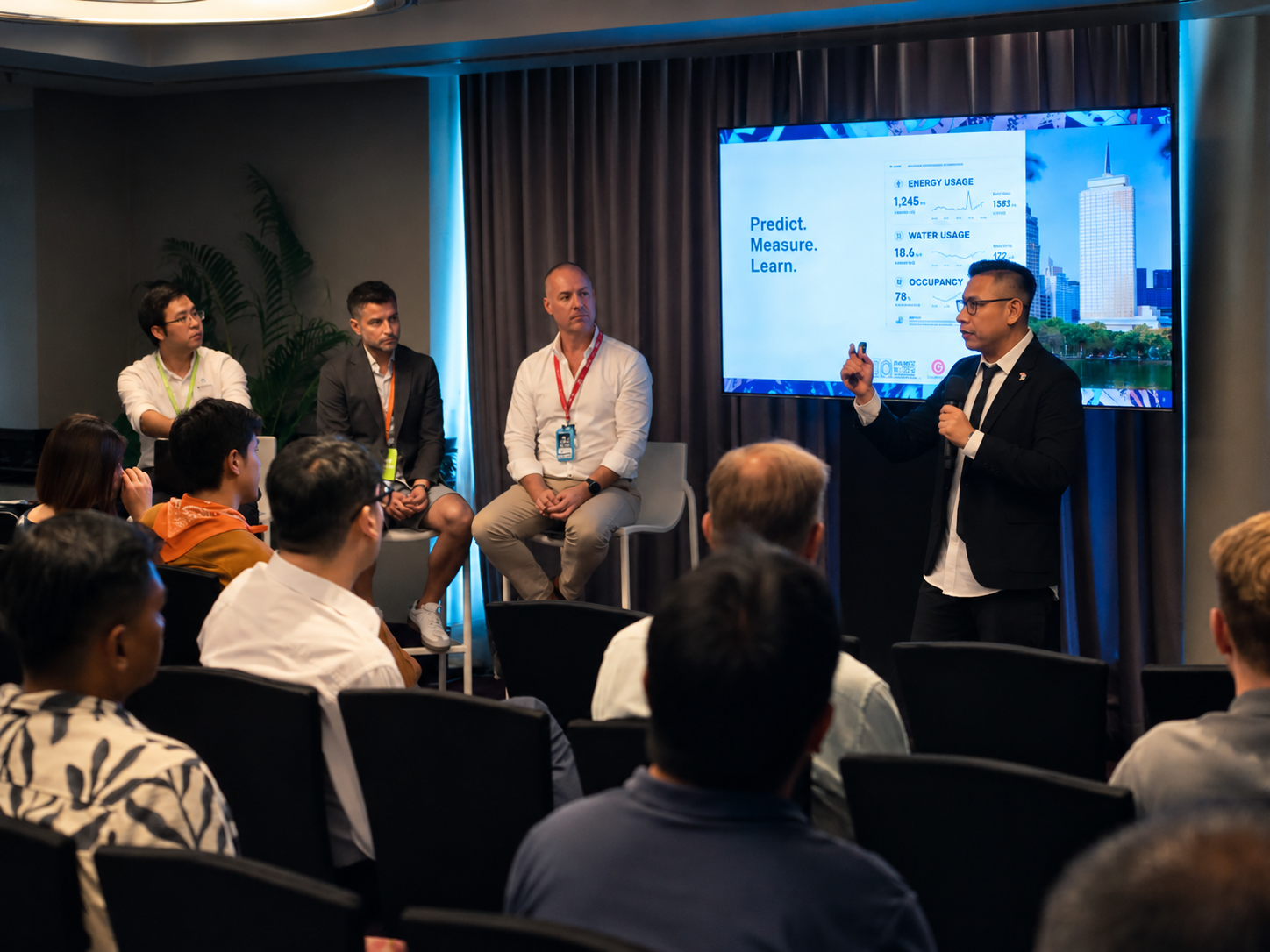
Predict. Measure. Learn.
Design simulation allows us to predict.
But prediction alone is not enough.
Once a hotel opens, sensors, IoT systems, and operational technology allow us to measure how the building is actually performing.
How much energy is it consuming? How much water? What happens as occupancy changes? Are spaces performing in the way we expected? Where are systems inefficient?
And increasingly, AI can help us interpret that information, identify patterns and support better operational decisions.
This creates a very simple process:
Predict. Measure. Learn.
Technology becomes most valuable when those three things are connected.
Close the loop
This is where I think our industry has a significant opportunity.
Too often, design and operation are treated as two separate phases.
A design team finishes a project, the hotel opens, and the operational data largely stays with the building.
But what if that information came back into the design process?
The real value of performance data is not simply helping one hotel operate more efficiently. It is helping us design the next hotel better.
The process becomes a loop:
Design. Test. Build. Measure. Learn. Then design again.
As the diagram in my PHIST presentation put it: each building teaches the next one.
That is a much more powerful way to think about technology.
Technology needs a reason to be there
None of this means that hotels need more technology simply for the sake of having it.
A smart hotel is not necessarily the hotel with the most sensors, the most automation or the newest AI platform.
Technology should solve a problem.
It should help us understand something earlier, reduce unnecessary consumption, improve comfort, support an operator, or enable a better decision.
If it is not doing one of those things, we should question why it is there.
The objective is not a more technological hotel.
It is a better-performing hotel.
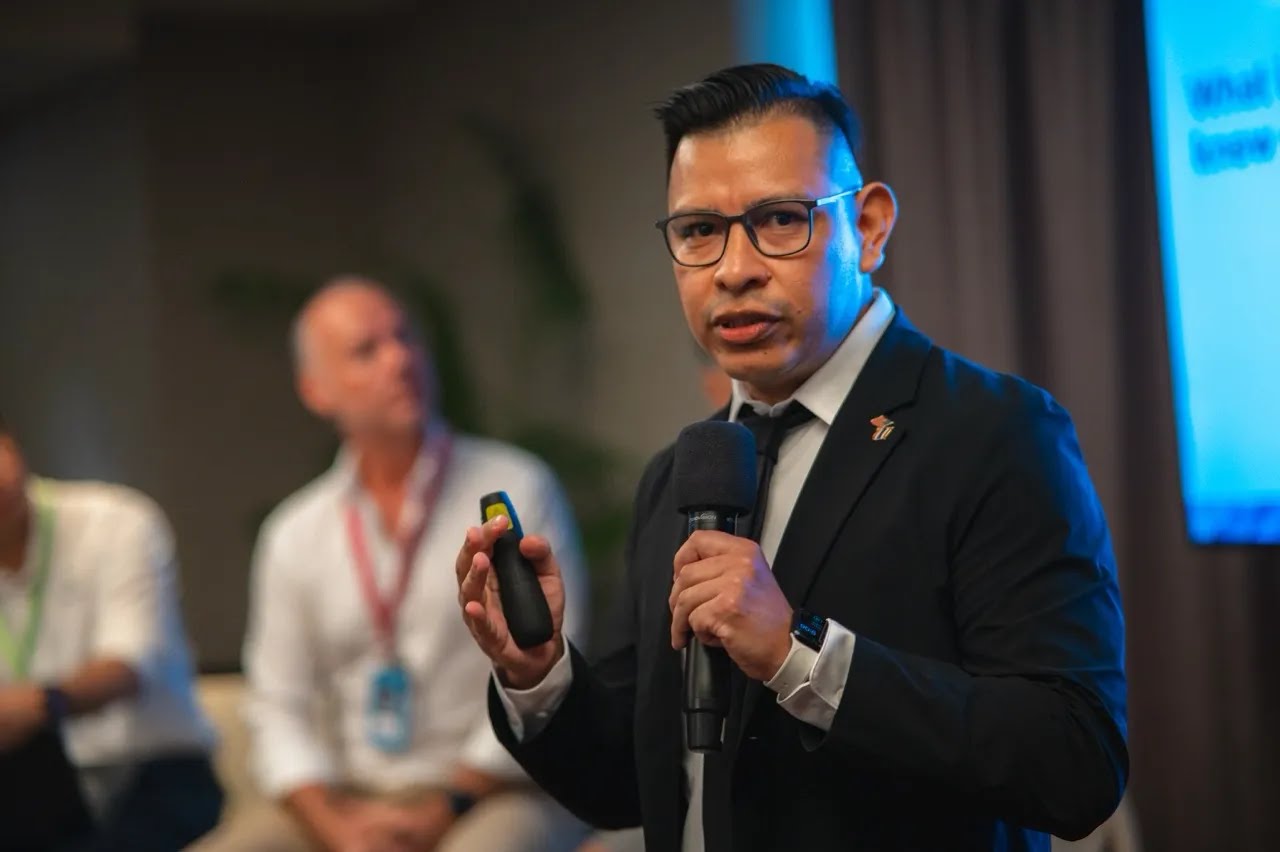
Design once. Learn every day.
Hotels are long-term investments.
Decisions made during design influence energy, water, maintenance, operational expenditure, and guest comfort for decades.
That is why the relationship between technology and sustainability is ultimately also a commercial one.
Better information allows us to make more informed decisions earlier, when there is still time to influence the outcome. Those decisions can reduce operating costs, improve performance, and create buildings that are more resilient over their lifetime.
The final message from my PHIST presentation was deliberately simple:
Design once. Learn every day.
If we can connect design intent with real-world performance, every completed hotel becomes a source of knowledge for the next.
That makes technology more than a tool for operating buildings.
It becomes a way of continuously improving how we design them.
And ultimately, that should mean something very tangible:
Better for the guest.
Better for the operator.
And ultimately, a better investment.
Tags: Abu dhabi, Agile workspace, Archi, Architect, Architecture, Artist, Asia, Bangkok, Bar, BIM, Blog, Boutique, Business, Civic, Construction, Content, Creativity, Culture, Design, Designer, Digital, Digital technology, Digital transformation, Digitisation, Drink, Dubai, Education, Experience, F&B, Food, Future, Health, Hicap, Ho chi minh, Hospitality, Hotel, Hotel design, Information, Innovation, Interior, Interior design, Interior designer, Interview, Knowledge, Lebua, Lifestyle, Luxury, Luxury design, Luxury interior, Marriott, Profile, Residential, Restaurant, Saigon, Sky, Studio, Success, Sustainibility, Tech, Technology, Thailand, Trends, Video, Vietnam, W hotel, Women